Luzhou Laojiao Reports a 43.37% First-Half Profit Drop
Weak demand for premium baijiu led the Chinese distiller to slash mid- and high-end production by 77.40%.
Thursday, August 27, 2026
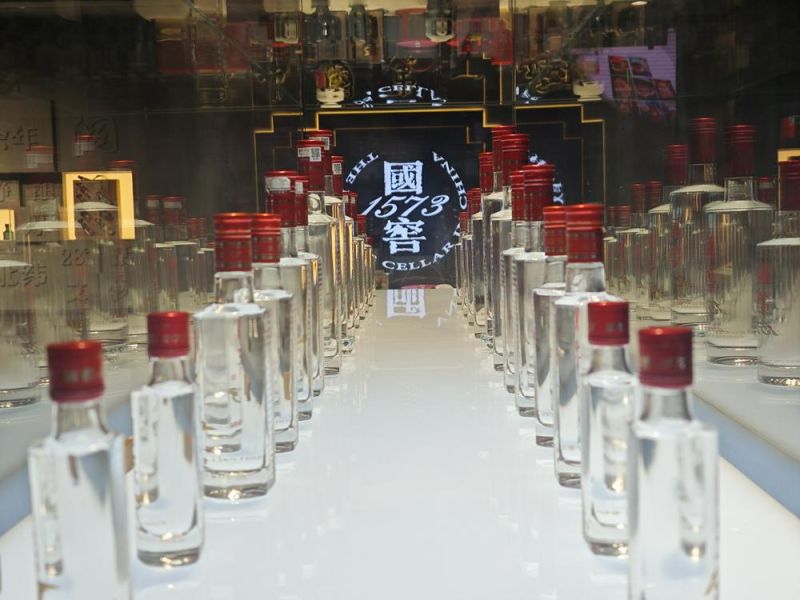
Luzhou Laojiao, one of China’s largest baijiu makers, reported a sharp drop in first-half sales, revenue, and profit on Tuesday as weaker demand for premium liquor pushed the company to cut production far faster than it reduced shipments.
In its half-year report, the company said revenue for the first six months of 2026 fell 36.35% from a year earlier to 10.472 billion yuan, while net profit attributable to shareholders dropped 43.37% to 4.339 billion yuan. Net cash flow from operating activities declined 65.68% to 2.082 billion yuan.
The pressure was most visible in the company’s mid- and high-end baijiu business, which includes products with a tax-inclusive selling price of at least 150 yuan a bottle, such as Guojiao 1573. Sales volume in that segment fell 42.53% to about 13,900 tons in January through June, down by roughly 10,300 tons from the comparable period last year. Production in the same category dropped even more sharply, plunging 77.40% to 4,801 tons, or about 16,400 tons less than a year earlier.
The company said the production cut reflected a deliberate decision to control output based on sales demand and inventory conditions. That points to a direct response to slower sell-through at the retail level and elevated channel inventories in China’s premium baijiu market.
Luzhou Laojiao said the earnings decline was mainly caused by weaker terminal demand and lower product sales in a difficult industry environment. The broader baijiu sector has been going through a deep adjustment period, with premium demand under pressure and distributors becoming more cautious.
The company’s quarterly figures showed that the downturn intensified in the second quarter. Revenue for the April-to-June period was 2.447 billion yuan, down about 65.5% from a year earlier. Net profit attributable to shareholders fell about 79.45% to 631 million yuan, while recurring net profit dropped 80.1% to 608 million yuan.
The mid- and high-end baijiu business generated 9.2 billion yuan in first-half revenue, down 38.86%. Because that revenue decline was smaller than the 42.53% fall in sales volume, the implied revenue per ton rose by about 6.4% based on a simple calculation from the company’s reported numbers. That suggests the company’s supply-control strategy may have helped protect pricing or product mix to some extent, though the calculation does not separate the effects of actual price changes, promotions, or shifts among product lines.
Luzhou Laojiao has been trying to defend the price structure of its core brands by limiting supply. According to the company and market data cited by Chinese financial media, the wholesale price of Guojiao 1573, 52% alcohol by volume and 500 milliliters, has remained relatively stable this year at around 825 yuan a bottle, though that is about 15 yuan below the level at the start of the year. The product’s wholesale price remains above that of Wuliangye, another major premium baijiu brand.
The strain has also shown up in the company’s distribution network. Contract liabilities at the end of June stood at 2.437 billion yuan, down about 31% from a year earlier, a sign that distributors were less willing to make advance payments. Luzhou Laojiao also reported a net reduction of 162 domestic distributors in the first half, a decline of nearly 10%.
Outside the premium segment, sales of lower-priced liquor products, defined as those with a tax-inclusive selling price below 150 yuan per bottle, fell 9.8% to about 22,400 tons in the first half.
The company’s first-half results came in weaker than many brokerage forecasts in China. Recent estimates from several securities firms had generally projected a 23% to 36% drop in first-half net profit and a 30% to 60% decline for the second quarter, according to Cailian Press. The reported drops were steeper than those expectations.
For the second half of the year, Luzhou Laojiao said it would continue its policy of controlling volume and supporting prices for core products while helping distributors reduce inventories. The company also said it would deepen its presence in county-level markets, push ahead with channel digitalization and product innovation, and continue work on the first phase of an intelligent brewing upgrade project with a planned investment of 4.783 billion yuan to expand reserves of high-quality base liquor. It also said it would maintain its existing dividend plan, including a 2026 payout ratio of no less than 75% and a minimum cash dividend of 8.5 billion yuan.