The World Cup pushed British pub lager sales up 9.2%.
Oxford Partnership found overall beer and cider sales rose 5.8%; ale lost further ground.
Thursday, August 13, 2026
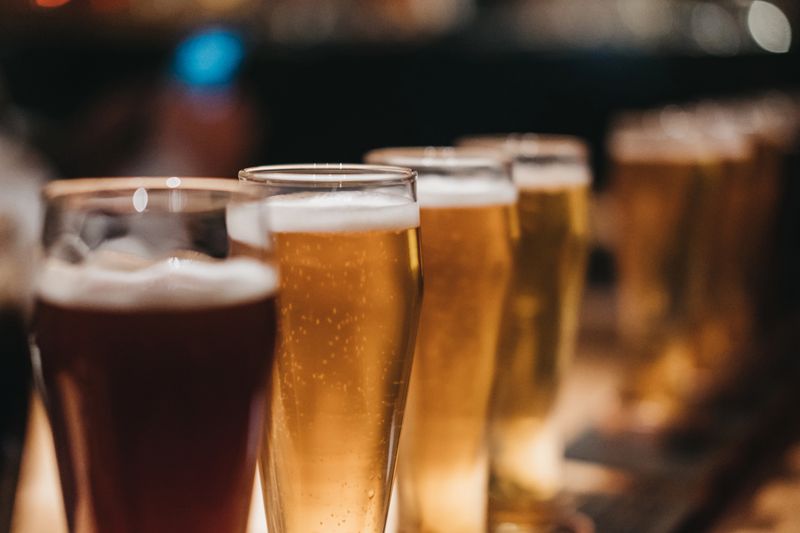
British pubs and bars got a lift from the men’s World Cup this summer, but the gains did not spread evenly across beer styles. Data published Wednesday by Oxford Partnership show that outlets in the British hospitality trade sold more lager and cider during the tournament, while ale continued to lose ground.
Across the competition, which ran from June 11 to July 19, venues sold an average of nine additional pints a day and took in about £1,891 more per outlet than on comparable days in 2025, according to the research group. Those two headline figures combine beer and cider sales rather than beer alone.
Total beer and cider sales rose 5.8% over the comparable period last year. Within that market, lager sales increased 9.2%, while ale fell 6.8%. That left a 16-point gap between the two categories during one of the busiest stretches of the summer for pubs.
The strongest part of the lager market was international, or “world,” lager, which grew 13.4%. Stout rose 1.9%, well below the pace of the overall market, and craft beer slipped 0.4%. The spread between international lager and ale reached 20.2 points, a sign that match-day drinking favored familiar lager brands more than traditional ale or smaller craft offerings.
Oxford Partnership’s figures point to a clear shift in what customers ordered when football brought bigger crowds into venues. The World Cup helped lift overall trade, but it also appears to have concentrated demand in categories that are already dominant in many bars. That matters for publicans because beer growth during major tournaments is often judged as a broad lift for the category. In this case, the report suggests the benefit was narrower, with lager and cider doing most of the work.
Cider, in fact, outpaced lager, rising 11.7% from the same period in 2025. That increase helped push the combined beer-and-cider total higher and explains why the market as a whole grew even though ale and craft both declined.
Oxford Partnership did not spell out in the release whether every percentage change by style referred to volume or value, although the study uses pints as its main measure and reports average pints sold per outlet. That leaves some uncertainty around the category breakdown, even as the broad direction of trade is clear.
The single strongest day for draft beer and cider sales came during the England-Norway match on Saturday, July 11, when outlets sold an average of 303 pints each. Saturdays provided the best trading base throughout the tournament, and the report said four of the five strongest days came on Saturdays. England’s involvement added another boost to demand, reinforcing the usual advantage that weekend fixtures hold for pubs.
The venue breakdown shows that location mattered too. City-center sites recorded the highest daily sales rate cited in the report, at 178.1 pints, but they also posted the weakest year-over-year growth, at 1.8%. Oxford Partnership said kickoff times may help explain that pattern. With relatively few matches starting around the end of the workday, some consumers appeared more likely to leave central business districts, go home and then choose where to watch. That would have reduced the ability of city-center venues to turn regular commuter traffic into World Cup occasions.
Urban outlets, by contrast, delivered the largest growth, rising 8.5% year over year, even with a slightly lower daily sales rate than city-center venues. Local pubs sold 164.1 pints a day on average and grew 6.5%, suggesting that neighborhood trade benefited when fans watched closer to home.
For brewers and pub operators, the category split may be the most important part of the World Cup data. Major tournaments can increase foot traffic, but they do not automatically lift every style. In this case, the strongest gains came from lager, especially international lager, and from cider. Ale moved in the opposite direction even as overall beer-and-cider sales rose.
Oxford Partnership also said this year’s World Cup created a bigger on-trade effect than the Euro 2024 tournament because it lasted longer. A longer event gives operators more chances to build repeat visits and extend momentum across several match days. Yet the 2026 figures suggest that a longer schedule did not change the basic consumer pattern inside the pub: when football crowds arrived, they ordered more lager and cider, while ale remained under pressure.