Italy’s out-of-home food and drink market reached 84.6 billion euros in 2025
Consumers are spreading spending across more occasions and formats, preserving wine’s central role at the restaurant table
Tuesday, November 17, 2026

Views › 505
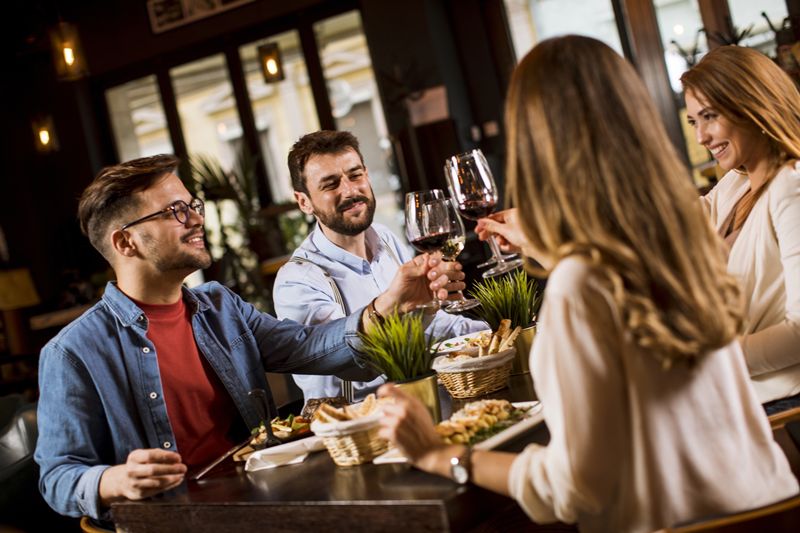
Out-of-home drinking and dining in Italy are changing as consumers spread their spending across more occasions, pay closer attention to price and format, and look for drinks that match different meals and times of day. Even with that shift, wine remains the main reference point at lunch and dinner, especially in restaurants, according to market data cited by WineNews and an analysis from Partesa, a company that sells, distributes and advises businesses in the hospitality sector.
WineNews reported, citing calculations by the FIPE Study Center based on Tradelab data, that Italy’s out-of-home market reached 84.6 billion euros in 2025. The sector has slowed, the report said, as household budgets remain under pressure and consumer habits continue to evolve. But it still holds a central place in Italian social life and remains a core channel for beverage sales.
Partesa, which says it works daily with more than 32,000 clients and offers more than 7,000 products, described a market in which consumers are making more deliberate choices about how much they drink, what they drink and when they drink it. The company said the traditional aperitivo remains a key moment, but the market is no longer organized around a few fixed rituals. Consumption is becoming more fragmented across the day, and categories once tied to specific seasons or settings are now appearing more broadly.
At bars, aperitivo is still closely linked to socializing. Cocktails, led by the Spritz, along with sparkling wines and vermouth, remain major draws. But beer is gaining ground in that slot as well, including premium and nonalcoholic versions. Partesa said lower-alcohol options are also becoming more common, reflecting demand from customers who want lighter drinks without leaving the occasion behind.
Lunch, especially in casual dining, is moving toward quicker and more practical choices that fit the meal and the setting. In those places, beer often serves as an alternative to wine, particularly in informal environments. Wine still keeps an important role, helped in part by by-the-glass service, which allows customers to control spending and consumption more easily than ordering a full bottle. Nonalcoholic offerings are also expanding during daytime occasions, broadening the range of options for people who want a drink with food but not necessarily alcohol.
Dinner remains the moment when the link between drinks and food is strongest. Partesa said wine still occupies the central position in that relationship, and selection is closely tied to the style of cuisine and the menu. But pairing is widening beyond wine. Beer is earning more space on drink lists, supported by a broader range of styles and a consumer base that is more open to matching beer with food beyond traditional combinations such as pizza. The company said beer is increasingly being paired with contemporary restaurant dishes and international cuisine, reflecting a wider view of what a meal pairing can be.
Spirits are also entering that change, though in a different way. Cocktails designed to accompany food are expanding mixology beyond its more established roles at aperitivo and after dinner. Late-night consumption still belongs mainly to spirits and mixed drinks, with pubs, wine bars and evening bars serving longer social occasions where brand recognition, drink quality and the overall experience matter more.
The broader pattern, according to Partesa, is that Italy’s beverage market remains rooted in conviviality and meals, but consumers are no longer behaving in the same way across all occasions. Economic pressure is shaping that behavior. Customers may reduce quantity, switch category or change format. That can mean ordering a glass instead of a bottle, or choosing beer instead of wine. For restaurant and bar operators, the result is a need to offer several entry points for different budgets and preferences without lowering perceived quality.
That pressure is also changing how venues build their drink programs. Partesa said the answer is not to create endless menus, but to create focused ones. A more selective list can match the identity of the venue, the spending habits of its customers and the food being served, while also helping operators manage inventory and operating costs. In that view, a large assortment does not automatically mean better service. A more precise assortment may be more effective if it covers the main consumption moments with coherent options by price, format and style.
Another sign of that shift is the growing presence of no- and low-alcohol products on menus. What was once a niche offer is becoming a stable part of the list in bars and restaurants. Partesa also pointed to ready-to-serve draft cocktails, especially Spritz, as a practical tool for operators. Those products can speed service, support consistency and make cocktail offerings possible in restaurants or venues that do not have specialized bar staff.
Piero Protti, commercial strategy and operations manager at Partesa, said the out-of-home market is becoming more complex because the change is not only about what people drink, but also when, how and why they choose a drink. He said venues now need “smart” drink lists that fit their customers and the different moments of consumption, and he described Partesa’s role as helping operators turn that complexity into opportunity through analysis of each venue’s specific needs.
The picture that emerges is of a market under pressure but still active and adaptive. Consumer caution has not removed beverages from Italy’s eating-out culture. Instead, it has pushed the sector toward more flexible formats, a broader pairing culture and more targeted drink lists, with wine still holding its strongest ground where Italian drinking habits have long been most firmly established: at the table.