Diageo’s profit from Moët Hennessy ties fell by more than half by 2025
The decline to $219 million leaves Chief Executive Dave Lewis weighing how to revive a strained partnership without a costly breakup
2026-08-04
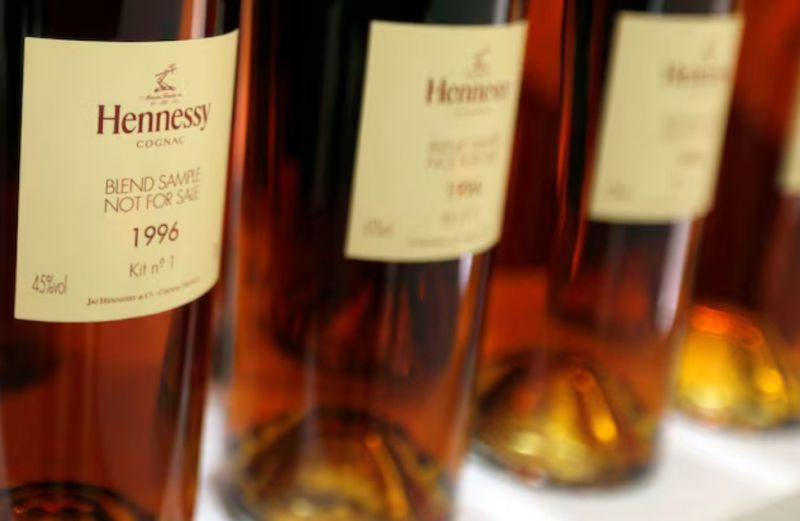
Diageo’s long partnership with Moët Hennessy, once a valuable part of the spirits group’s business, has become less profitable and more difficult to manage, adding another issue for the company’s new chief executive, Dave Lewis, as he prepares a broader turnaround.
The alliance dates back to 1997, when Diageo was created through the merger of Guinness and Grand Metropolitan. Through that deal, Diageo inherited Guinness’s 34% stake in Moët Hennessy, the wine and spirits division of LVMH, along with a network of joint distribution ventures in several markets. For years, the arrangement gave Diageo exposure to champagne and cognac while linking two of the biggest names in global drinks.
That contribution has weakened sharply. Company filings show Diageo recorded $455 million in profit from its Moët Hennessy stake and related joint ventures in the year ending June 2023. By 2025, that figure had fallen to $219 million, a drop of more than half, as LVMH’s drinks division struggled during a wider slowdown in the spirits industry.
The decline comes at a sensitive moment for Diageo. Lewis is due to present his recovery plan this week as the company faces weaker demand in key markets, changing consumer habits and stronger competition from alternatives including cannabis-infused drinks. The United States remains Diageo’s largest market, and its problems there are separate from Moët Hennessy. Still, investors and analysts say the partnership may come under closer review once more urgent issues are addressed.
Some shareholders believe the structure no longer fits the current market. Fintan Ryan, an analyst at Goodbody, said the partnership made sense in an earlier period but may deserve another look now. He said arrangements like this often remain in place until management decides to challenge them.
The financial strain is only part of the story. Relations between Diageo and Moët Hennessy have been tense in recent years. In 2020, Diageo began arbitration after Moët Hennessy withheld €181 million in dividends linked to 2019 results following the outbreak of Covid-19. The dividend was eventually paid by 2021, but the dispute damaged ties between senior executives.
One Diageo investor told Reuters that top leaders at the two companies barely spoke for years after that disagreement. David Samra, managing director at Artisan Partners, which is among Diageo’s largest shareholders, said there had been very little dialogue between senior executives. More recently, according to one investor cited by Reuters, Diageo finance chief Nik Jhangiani has tried to improve relations through direct meetings and dinners with Moët Hennessy leadership.
The operating partnerships have also caused friction. In France, where scotch whisky is an important category for Diageo, a joint distribution business run by Moët Hennessy was accused by sources of favoring its own brands over Diageo’s. That issue contributed to Diageo’s decision to end the French venture, according to two people with direct knowledge of the matter cited by Reuters.
Accounts for that French joint venture showed that Diageo brands regularly generated between 60% and 75% of profits. After the pandemic, however, growth increasingly came from Moët Hennessy labels rather than Diageo products. The split was completed last year.
The French market matters because it is a major outlet for scotch whisky, one of Diageo’s core categories. Yet Johnnie Walker, its leading whisky brand globally, does not rank among the top 10 scotch brands by market share in France, according to GlobalData. A consultant working for Diageo told Reuters that whichever side controlled a joint venture tended to put its own products first.
Ending even one venture proved expensive. Diageo said separating from the French arrangement cost $145 million, mostly in termination fees. The company also had to build its own sales force and customer relationships in France from scratch, requiring time and investment.
That experience helps explain why a full break with Moët Hennessy would be difficult. Diageo still has eight joint ventures with the business. All are majority owned by Diageo, but six are managed by Moët Hennessy. The two groups also compete directly in categories such as scotch whisky, making cooperation more complicated.
Diageo does have an option to sell its stake back to Moët Hennessy under terms described in LVMH filings. But exercising that option would mean accepting a 20% discount to fair value. In 2025, Diageo’s interests in Moët Hennessy were valued at about €4.3 billion. With valuations across the spirits sector near multi-year lows, analysts and investors told Reuters that selling now would make little financial sense.
Lewis has also indicated he is not seeking to dispose of the stake at this stage. That leaves investors focused less on a breakup than on whether both sides can make the relationship work better and restore stronger returns.
There are some signs conditions may improve. LVMH reported that organic sales at its wines and spirits division rose 5% in the first half of the year, suggesting that part of the market may be stabilizing after a difficult period.
For now, however, Diageo’s partnership with Moët Hennessy stands as a legacy asset that has become harder to justify on performance alone. It still offers strategic reach in luxury drinks and international distribution, but it has also brought disputes, uneven execution and lower earnings at a time when Diageo is under pressure to improve results quickly.
Diageo and LVMH declined to comment to Reuters on the state of their relationship. Investors say what matters most now is whether Lewis can improve cooperation without taking on another costly restructuring while he tries to revive growth across the wider business.
