Beer Dominates Alcohol Consumption Across Latin America
Market data show lager far outpaces spirits, wine and RTDs in volume, led by Brazil and Mexico
2026-07-16
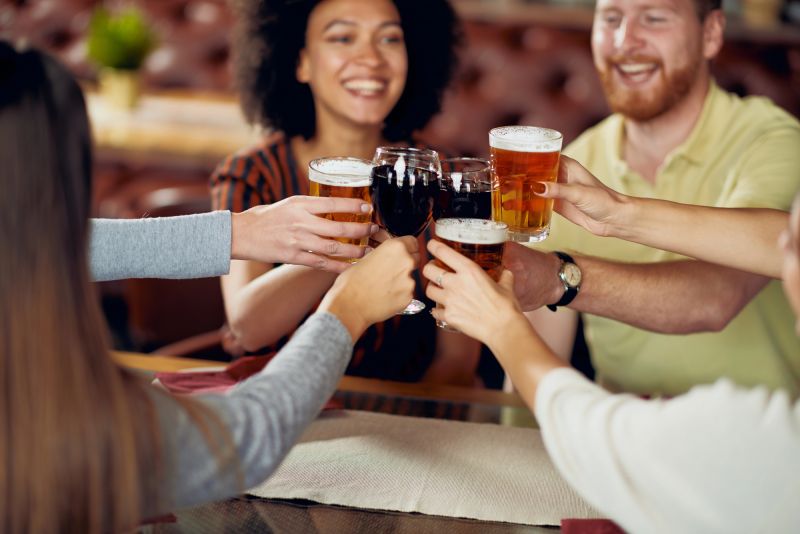
Across Latin America in 2026, beer remains the drink that dominates daily life, retail shelves and social occasions. The clearest winner is industrial pale lager, sold cold, widely distributed and priced for routine purchase. Market data available through mid-2026 show that no other alcoholic category comes close in finished beverage volume across the region.
The scale is large. Kirin Holdings reported that the area it classifies as Central and South America consumed 37.647 billion liters of beer in 2024. Brazil accounted for 15.304 billion liters, Mexico for 10.787 billion and Colombia for 2.634 billion. Together, those three markets represented about 76% of that bloc’s beer volume. Brazil ranked as the world’s third-largest beer market that year, Mexico fourth and Colombia fourteenth.
That dominance does not mean beer is the only drink that matters. It means beer is the most consumed by liters, frequency and reach. In much of Latin America, it fits the climate, the price point and the way alcohol is bought. It is sold in neighborhood stores, supermarkets, bars, beach kiosks and restaurants. It works for soccer matches, family meals, parties and casual gatherings. Large brewers have also built strong cold-chain and returnable bottle systems that smaller categories cannot match.
Regional estimates from Euromonitor also point in the same direction. The firm has described beer as the leading alcoholic category in Latin America by both volume and value, with average consumption around 57.4 liters per person across the region in its reporting base. It placed Mexico at 78.5 liters per person and Brazil at 69.1 liters, while Kirin’s separate methodology put Mexico at 83.4 liters, Brazil at 70.3 liters, Panama at 86.1 liters and Puerto Rico at 61.8 liters in 2024. The exact figures vary by source, but the ranking does not: beer leads by a wide margin.
The second major universe is distilled spirits, but here Latin America stops looking like a single market and becomes a map of national identities. Mexico stands out for tequila and mezcal. Brazil has cachaça. Colombia has anise-flavored aguardiente. Peru and Chile have pisco. Bolivia has singani. Much of Central America and the Spanish-speaking Caribbean revolve around rum or cane spirits, while Argentina has its own unusual marker in fernet mixed with cola.
These drinks are central to identity, gifting, tourism and cocktail culture. They often carry more symbolic weight than their share of total liquid volume would suggest. In most countries, they do not surpass beer in liters consumed as finished beverage, but they matter strongly in value per liter and in how each country presents itself to visitors and export markets.
Mexico offers one of the clearest examples of this split between image and domestic volume. Tequila is one of Latin America’s best-known drinks abroad, yet beer remains far larger at home by liters consumed. The Tequila Regulatory Council reported that Mexico produced 495.8 million liters of tequila in 2024 and exported 400.3 million liters, equal to about 80.7% of annual production. That shows how international the category has become. By contrast, Mexico’s beer consumption reached 10.787 billion liters in the same year according to Kirin.
Brazil shows a similar hierarchy with different products. Beer remains first by a large margin, while cachaça holds its place as the country’s signature spirit and a major domestic category in its own right. Public data from Brazil’s Agriculture Ministry showed more than 7,200 registered cachaça products and 1,266 producing establishments in 2024. That gives cachaça both industrial scale and artisanal depth, even if it still trails beer heavily in total volume.
In Colombia, beer leads the overall alcohol market while aguardiente remains the strongest local spirit category in many regions and celebrations. In Peru and Chile, pisco carries strong gastronomic meaning and national prestige, but beer still accounts for most alcoholic beverage volume sold or produced on available measures. In the Dominican Republic and other Caribbean markets, rum is often the flag-bearing spirit for exports and identity, yet beer tends to dominate everyday drinking volume.
Wine occupies a different place altogether. It remains especially important in the Southern Cone, above all in Argentina, Uruguay and Chile, where wine culture runs deep and shapes food traditions, tourism and national image. Even there, however, beer often sells more liters than wine.
Wine also faces a structural slowdown that mirrors broader global trends. The International Organisation of Vine and Wine said world wine consumption fell 2.7% in 2025 to 20.8 billion liters. Argentina posted its fifth straight annual decline, falling to about 750 million liters on an apparent consumption basis that year. In Argentina, per capita wine consumption dropped to a historic low of 15.7 liters in 2025 according to figures cited from the National Viticulture Institute.
Uruguay remains one of the region’s strongest wine cultures by habit and table presence, but even there beer has moved ahead by volume. In 2024, Uruguay sold about 98.3 million liters of beer compared with 52.2 million liters of domestic wine according to public reports based on fiscal and industry data. Chile presents another version of the same pattern: wine is crucial to exports and reputation, but beer accounts for a larger share of domestic alcohol volume.
If there is one category showing momentum rather than sheer size, it is RTD beverages, or ready-to-drink products such as canned cocktails, coolers and other premixed alcoholic drinks. IWSR reported that RTDs were the only major alcohol category to grow globally in 2025, rising 3% by volume. In Brazil they grew 10% year over year during the first half of 2025.
Their appeal is straightforward: convenience, recognizable flavors, moderate strength and a clear unit price. They also fit modern retail channels well, especially convenience stores and take-home purchases. For producers, RTDs offer a way to extend established beer or spirits brands into new occasions without asking consumers to buy full bottles or mix drinks themselves.
Still, RTDs remain much smaller than beer across Latin America as a whole. Their importance lies less in current scale than in what they reveal about changing habits: consumers are drinking more selectively, experimenting more with format and flavor, and often looking for lower-commitment purchases.
That shift matters because Latin America is not immune to the broader reset affecting global alcohol consumption. IWSR said total beverage alcohol volumes fell 2% worldwide in 2025, marking a third consecutive annual decline. But regional performance was uneven rather than uniform. Brazil’s beer volume fell 4% in 2025 on IWSR’s reading, while Mexico’s beer market grew 2% during the first half of that year and Colombia’s total alcohol market rose 1%.
The result is not a simple story of expansion or retreat. It is a story of divergence by country and category. Beer remains foundational even where growth slows. Spirits remain culturally powerful even where they are not consumed most often by volume. Wine keeps its strongest footing in southern markets but faces weaker long-term demand patterns than before.
Affordability has become one of the main forces shaping what people buy across the region. Inflation pressure and weaker household purchasing power have favored standard lager, multipack promotions, returnable bottles and off-premise sales through small stores rather than bars or restaurants alone. Premiumization has not disappeared, but it has become selective: consumers may still pay more for tequila with origin credentials, aged rum or imported lager, but they want a visible reason for doing so.
This helps explain why several trends can coexist at once: economy lager can hold mass volume while premium-accessible beer grows in urban segments; artisanal cachaça can gain prestige while mainstream cane spirits remain price-driven; sparkling wine can attract younger drinkers even as total wine consumption weakens; canned cocktails can expand without threatening lager’s lead.
Another adjacent trend is low- and no-alcohol beer, which is growing quickly from a small base but should not be confused with growth in alcohol consumption itself. Euromonitor has projected annual growth of 11.1% for low- or no-alcohol beer in Latin America between 2023 and 2028. For brewers this expands occasions and protects brand ecosystems; for market analysis it belongs next to alcohol rather than inside it when products contain no alcohol.
Distribution also helps explain why lager remains so hard to displace. The region’s biggest brewers control refrigeration networks, returnable packaging systems and dense retail relationships across countries including Brazil, Mexico, Colombia, Peru and Argentina through groups such as AB InBev affiliates, Heineken operations and CCU in parts of the Southern Cone. That infrastructure gives mainstream beer an advantage not only over craft brewers but also over many wine and spirits producers trying to scale nationally.
Small neighborhood stores remain decisive in many markets because they sell cold single units close to home at manageable prices. Supermarkets matter more for premium assortment and formal retail confidence, while bars and restaurants remain important for cocktails, tourism spending and higher-margin occasions rather than pure volume.
There are also limits to what formal sales data can capture. Traditional fermented drinks such as pulque in Mexico or chicha-based beverages in Andean countries remain culturally relevant but are often undercounted in commercial datasets if they are homemade or sold informally. The Pan American Health Organization estimated that 13.8% of alcohol consumed in the Americas in 2019 was unrecorded, though that figure covers the wider hemisphere rather than Latin America alone.
Looking ahead through the rest of this decade, most forecasts suggest continuity at the top with change underneath it. Beer is likely to remain first by a wide margin because no other category matches its combination of price access, climate fit and distribution strength across so many countries at once. RTDs are likely to keep gaining share from specific occasions rather than from the whole market overnight. National spirits should remain strong where identity matters most: agave spirits in Mexico, cachaça in Brazil, aguardiente in Colombia, pisco in Peru and Chile, rum across much of Central America and the Caribbean.
Wine will probably continue shifting away from older patterns of habitual daily drinking toward fewer but more intentional purchases tied to food culture, tourism or premium positioning. That may support value for some producers even if total volume stays under pressure.
So what does Latin America drink today? Above all else it drinks lager beer: cold industrial pale lager sold at accessible prices across nearly every channel imaginable from São Paulo to Mexico City to Bogotá to Lima to Santo Domingo. After that shared regional answer comes a much more local one shaped by cane spirits, agave distillates, grape brandies, bitters and wine traditions that differ sharply from one country to another.
The broad picture for 2026 is clear enough despite differences among sources: lager owns the volume; local spirits carry much of the identity; wine still defines parts of the south; and RTDs are becoming the region’s main engine of experimentation and incremental growth.
