Organic wine sales keep rising as the global wine market shrinks
Younger drinkers are driving demand for bottles marketed as sustainable, low-intervention and more transparent about how they are made
2026-06-18
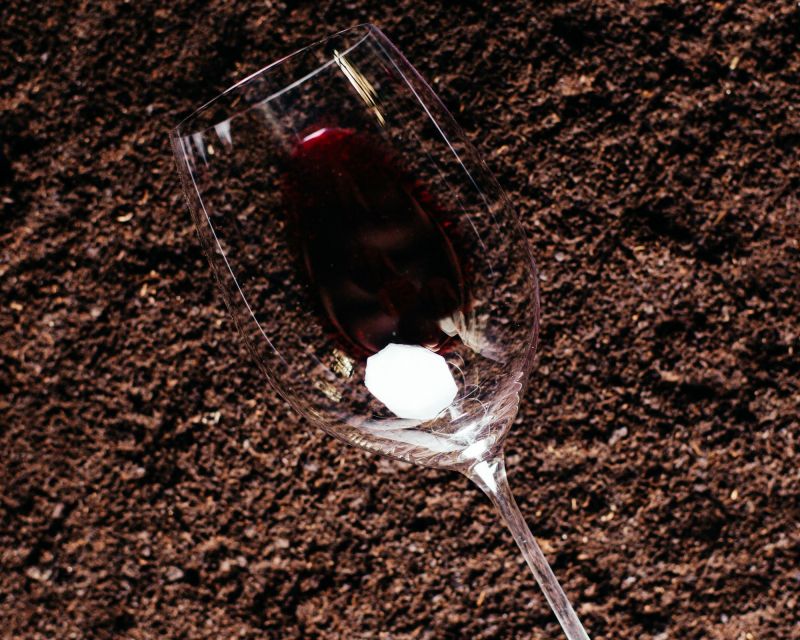
The global wine business is shrinking in volume, but one part of the market is still growing fast: wines sold as organic, biodynamic, natural, vegan and, increasingly, regenerative. That shift is becoming one of the clearest signs of how the industry is adapting to climate pressure, weaker consumption and a younger buyer who wants more information about how a bottle was made.
The International Organisation of Vine and Wine, or OIV, said global vineyard area fell for a sixth straight year in 2025 to about 7 million hectares, down 0.8% from 2024. Global wine production was estimated at 227 million hectoliters, the third consecutive year of historically low harvests after extreme weather in major producing regions. Consumption also declined, to 208 million hectoliters, as inflation, geopolitical tension and changing habits weighed on demand.
Yet the broad decline has not stopped consumers from paying more for wines tied to environmental claims and lower-intervention production. Market researchers cited in industry reports estimate the global organic wine market was worth roughly $12.78 billion to $13.34 billion in 2025 and could rise to about $14.74 billion to $14.83 billion in 2026. Longer-term forecasts point to a market of roughly $29.09 billion to $36.47 billion by 2033 or 2034, depending on the firm, with annual growth rates generally above 10%.
The appeal is strongest among younger drinkers. Industry analyses from IWSR and consumer data firms show Millennials and Gen Z are driving demand for wines marketed as sustainable or low-intervention. Search activity for terms such as “no additives” and “chemical free” has risen sharply in wine-related queries, according to Tastewise data cited by producers and trade analysts. IWSR has also reported that alternative wine categories offer strong opportunities even as availability remains limited in many mainstream retail and restaurant channels.
Part of the challenge is that “alternative wine” is not one category but several, each with different rules and different meanings.
In the European Union, organic wine is the most clearly regulated segment. Under EU rules, organic, ecological and biological wine refer to the same certified production model. Grapes must be grown without synthetic pesticides, herbicides or artificial nitrogen fertilizers. But certification does not mean a hands-off cellar. EU rules still allow a range of processing aids and winemaking interventions, including selected yeasts and some additives.
Sulfur dioxide remains one of the main dividing lines. Under EU organic standards, total sulfites are capped at 100 milligrams per liter for dry red wines and 150 milligrams per liter for white and rosé wines. Those limits are lower than for conventional EU wines, where the ceilings are 150 mg/L for dry reds and 200 mg/L for whites and rosés. In the United States, standards differ: wines sold as USDA organic cannot have added sulfites, while wines labeled “made with organic grapes” can contain added sulfites up to 100 mg/L.
Biodynamic wine goes further than organic farming by treating the vineyard as a self-contained living system. The approach is rooted in ideas introduced by Rudolf Steiner in the 1920s and combines ecological farming with specific soil preparations and work timed to lunar and cosmic calendars. Certification is handled mainly by private groups rather than governments.
Demeter International is the best-known certifier and requires full-farm conversion rather than mixed production. Its standards also tighten cellar practices and sulfur limits, allowing up to 70 mg/L in dry red wines and 90 mg/L in whites. Biodyvin, another influential group based in France, permits somewhat higher levels but also imposes strict tasting and production requirements.
Natural wine remains the least standardized category and the most contested. There is still no EU-wide legal definition of “natural wine,” leaving producers to rely on private associations or national frameworks. In practice, most natural wine producers start with organic or biodynamic grapes, ferment with native yeasts and avoid common interventions such as acidification, heavy filtration or commercial additives.
France has gone furthest in formalizing the category through its “Vin Méthode Nature” framework. That system recognizes wines made with indigenous yeasts under two levels: one with no added sulfites and naturally occurring sulfur below 20 mg/L, and another allowing limited additions up to 30 mg/L. Other associations across Europe use different thresholds. Spain’s association of natural wine producers has adopted a stricter line, setting total sulfur at no more than 20 mg/L.
That lack of harmonization has commercial consequences. Producers say it creates confusion for buyers and leaves room for greenwashing by companies using loosely defined language on labels. It also complicates exports because importers and restaurants often rely on private seals rather than public law when deciding what qualifies as natural.
Vegan wine addresses a different issue altogether: animal-derived fining agents used during clarification. Many consumers assume all wine is vegan because it comes from grapes, but conventional winemaking often uses egg whites, casein from milk, gelatin or fish bladder proteins to remove suspended particles and soften texture. Vegan-certified wines replace those materials with alternatives such as bentonite clay or plant proteins from peas or potatoes.
A bottle can be vegan without being organic if it comes from conventionally farmed grapes but avoids animal products in the cellar. The reverse is also true: an organic wine may not be vegan if animal-based fining agents were used.
Regenerative viticulture is newer in commercial terms but increasingly important in climate discussions. Rather than focusing only on reducing harm, regenerative farming aims to improve soil health, biodiversity and carbon storage. In vineyards that usually means less tillage, permanent cover crops, compost use, water-retention strategies and sometimes grazing animals between rows.
In Spain, the Association of Regenerative Viticulture has promoted this model since 2021 with support from wineries including Familia Torres, Clos Mogador and Can Feixes. Advocates argue that healthier soils help vines withstand drought and heat while turning vineyards into carbon sinks rather than net emitters.
These production models are also shaping style trends. Pét-nat sparkling wines continue to gain attention because they are made through a single fermentation finished in bottle rather than through the more controlled traditional method used for Champagne. The result is often cloudy, lightly sparkling and lower in alcohol. Orange wines, made by fermenting white grapes on their skins like red wines, have also moved further into the mainstream as restaurants look for bottles that fit modern tasting menus and consumers seek unfamiliar textures without leaving familiar grape varieties behind.
Regulation is moving too, though not always evenly across categories. The EU’s broader wine policy changes adopted this year include new rules on labeling and support measures aimed at helping producers respond to climate stress and weak demand for conventional wine. Regulation (EU) 2026/471 updates parts of the bloc’s market framework for wine while expanding tools for promotion, restructuring and crisis management.
One notable change concerns alcohol-free and reduced-alcohol wines. Under the new framework, products derived entirely from grapes with alcohol below 0.05% by volume can be labeled “alcohol-free 0.0%.” A separate reduced-alcohol category applies when alcohol content is at least 30% below the minimum normally required for its category or appellation rules. Mandatory labeling rules for these products are set to become binding across member states by September 2027.
The EU has also increased support for investments tied to climate mitigation and sustainability goals. According to European institutions, projects linked to energy transition, water savings or similar environmental improvements can receive co-financing of up to 80%. At the same time, Brussels has strengthened crisis tools that allow member states to fund vineyard removal where disease pressure or structural oversupply makes continued production unsustainable.
Spain shows how these pressures are playing out on the ground. The country remains home to the world’s largest vineyard area overall, but land planted for winemaking fell below 900,000 hectares in 2025 to 889,470 hectares, according to Spanish industry statistics cited by trade groups. That was down 2.4% from a year earlier.
Organic vineyards have held up better than the broader sector even after a slight setback. Spain recorded 164,861 hectares of organic vineyard area in 2024, equal to about 18% of its total vineyard surface. Castilla-La Mancha had the largest absolute area under organic cultivation at 68,541 hectares, while Catalonia reached 34,314 hectares and nearly 59.8% of its vineyard area under organic management. Murcia had the highest proportional share nationally at 68.8%, according to Spanish sector data.
The national total slipped by 0.9% in 2024, marking the first recorded decline since official tracking began in 2001. But regional patterns suggest continued momentum in premium areas rather than broad retreat. Rioja’s organic vineyard area rose 11.8%, Aragón increased 12%, and the Basque Country climbed 19.3%, reflecting a push toward higher-value production as bulk wine faces weaker margins.
Italy offers another sign of how far this transition has gone in parts of Europe. Industry figures there show more than 127,000 hectares under organic vine cultivation, equal to about 18.1% of total vineyard area.
Commercially, red organic wine still dominates sales value globally with about 62.1% share in some market estimates for 2025. But white organic wine is expected to grow steadily as warmer weather shifts drinking habits toward lighter styles. Packaging is changing too: glass bottles still account for about 91% of sales by value in some forecasts, but canned organic wine is projected to expand faster than most other formats because it suits single servings, outdoor use and lower transport weight.
Even so, barriers remain clear. IWSR surveys indicate that roughly 17% to 23% of regular drinkers say they struggle to find natural, orange or biodynamic wines in standard retail stores or non-specialist restaurants. Prices are often higher because certification costs money, yields can be lower under stricter farming systems and cellar work tends to require more labor.
That means alternative wines still occupy a relatively narrow space compared with conventional brands sold through supermarkets and large distributors. But their influence now extends well beyond their share of volume. They are shaping how wineries talk about farming, ingredients and transparency at a time when climate risk is rising and younger consumers are asking harder questions about what is inside the bottle and how it got there.
