Climate Change Threatens Napa and Sonoma’s Wine Future
A new study finds wildfire risk could shift California’s vineyard advantage toward cooler coastal regions like Mendocino and Monterey
2026-07-08
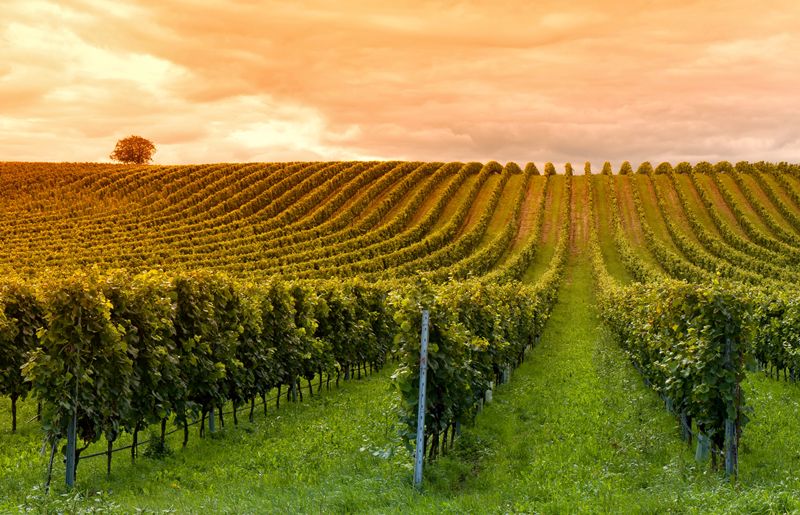
New research suggests that climate change and rising wildfire danger could reshape where wine grapes can be grown in California, with some of the state’s best-known regions facing weaker long-term prospects while cooler coastal areas farther north or south may become more viable.
The study, reported by Phys.org, used models that combined two pressures at once: climate suitability for wine grapes and wildfire risk. That approach matters in California, where growers have spent years dealing not only with hotter conditions and shifting harvest dates, but also with smoke exposure, fire damage and insurance strain.
According to the report, the projections point to likely declines in parts of Napa and Sonoma under both moderate and high warming scenarios, identified as RCP4.5 and RCP8.5. At the same time, Mendocino and Monterey appear to gain relative advantages in some future scenarios as temperatures change and risk patterns shift across the state.
The findings add to a growing body of work showing that temperature alone is no longer enough to judge the future of a wine region. In California, wildfire has become a second major variable. Fires can destroy vines, buildings and equipment, but they can also leave grapes exposed to smoke compounds that affect flavor and marketability even when flames never reach a vineyard.
That has direct implications for the beverage industry because California remains central to U.S. wine production. If vineyard viability falls in established regions and improves in others, growers, wineries and investors may need to rethink where they plant, expand or buy fruit. The shift could also affect land values, grape supply contracts, insurance costs and long-term production planning for one of the country’s most important wine states.
Napa and Sonoma carry unusual weight in that discussion because they are not only large grape-growing areas but also global brands tied to tourism, hospitality and premium wine sales. A decline in suitability there would not mean those regions disappear from wine production. But it could mean higher adaptation costs, more pressure on water use, greater exposure to heat extremes and more frequent decisions about whether certain sites or varieties still make economic sense.
Mendocino and Monterey, by contrast, may benefit from conditions that become more favorable relative to today’s leading regions. That does not mean they are free from climate stress or fire danger. It means that under the modeled scenarios they may hold up better or improve compared with places expected to warm more sharply or face stronger combined risks.
Researchers increasingly describe this as a geographic rebalancing rather than a simple statewide decline. Some areas lose comparative advantage while others gain it. For growers, that can influence decisions years before any vineyard is planted because grapevines are a long-term investment. Site selection often reflects expectations over decades, not just the next harvest.
The study’s use of both climate suitability and wildfire exposure is notable because many earlier assessments focused mainly on temperature and precipitation. In practice, however, recent California fire seasons have shown that a vineyard can remain climatically suitable for grape growing while still becoming harder to operate profitably if fire threats rise too much.
That broader risk picture has become more important after repeated destructive fire years across wine country. Beyond direct losses, wineries have faced road closures, power shutoffs, labor disruptions and canceled tourism during peak seasons. Smoke taint concerns have also complicated harvest decisions and insurance claims. Those pressures can reduce confidence in areas once seen as stable long-term bets.
The scenarios cited in the report reflect common climate pathways used in scientific modeling. RCP4.5 generally represents a future with more moderate warming if emissions are partly reduced, while RCP8.5 reflects a hotter path with higher greenhouse gas emissions. The fact that Napa and Sonoma show pressure under both scenarios suggests that the challenge is not limited to only the most extreme outcome.
For producers, adaptation remains possible. Growers can change canopy management, irrigation practices, row orientation or variety selection. Wineries can adjust sourcing strategies across multiple counties. But those measures have limits when heat accumulation rises too far or when wildfire risk becomes persistent enough to threaten fruit quality and business continuity.
The research also speaks to tourism economies built around wine. If production patterns shift over time toward counties with stronger future viability, visitor traffic, tasting room investment and hospitality development could gradually follow. That would not happen overnight, but it could alter how California’s wine map looks over the coming decades.
For now, the study offers a planning signal rather than a final verdict on any one appellation. Vineyard outcomes will still depend on local topography, marine influence, water access, management choices and future fire behavior. Even so, the message is clear: in California wine country, long-term viability is increasingly tied to the combined effects of warming and wildfire, not either threat on its own.
