Spirits Makers Shift to Cheaper Bottles as Premium Sales Slide
Consumers are trading down across key categories, pushing drinks companies toward smaller packs, lower prices and broader portfolios.
2026-07-03
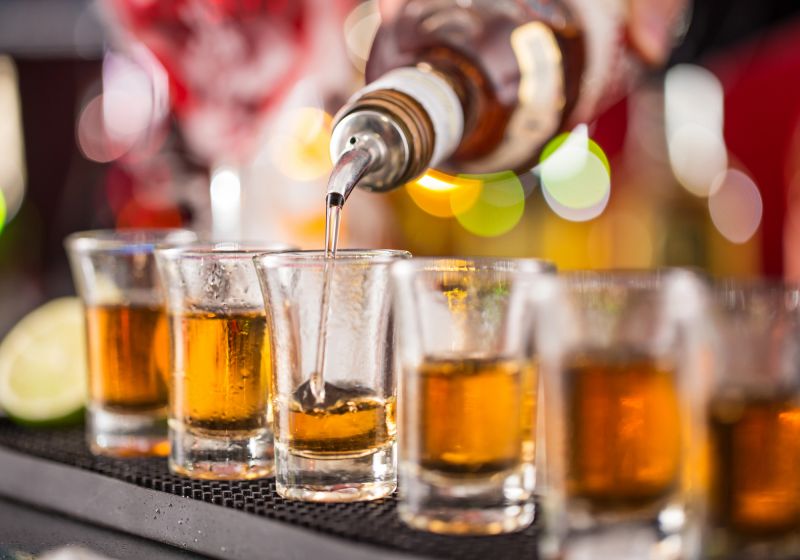
After years of relying on premiumization to lift sales and margins, the spirits industry is increasingly turning to lower-priced products, smaller pack sizes and broader portfolios as consumers pull back on spending.
New data and comments from analysts and executives point to a clear slowdown in the long-running push toward higher-end bottles. In some parts of the market, especially in the United States, that trend is now reversing. The shift matters across the beverage business because changes in demand by price tier can affect how companies set prices, build brand portfolios and allocate investment across spirits, wine, beer and ready-to-drink products.
IWSR said in its preliminary 2025 findings that there were “clear signs that premiumisation is taking a back seat,” as total beverage alcohol value fell for the first time since 2020, with spirits hit particularly hard. Spiros Malandrakis, global insight manager for alcoholic drinks at Euromonitor International, said the industry appears to be facing structural change rather than a short-term cycle.
In the U.S., SipSource depletion data from Wine & Spirits Wholesalers of America showed core spirits sales, excluding ready-to-drink products, fell by 5.7% in value in the 12 months ended March 31, 2026. SipSource linked the decline to depremiumization across price tiers and major categories, including Tequila, where demand has weakened at higher price points.
According to SipSource, spirits priced at US$50 to US$99.99 fell by 8.8% over that 12-month period, while products above US$100 dropped by 9.3%. The figures suggest that consumers are not abandoning spirits altogether, but many are moving toward cheaper options.
Marten Lodewijks, IWSR managing director and president, said large drinks groups are already adjusting. He said recent restructuring moves and leadership changes show a stronger focus on volume, relevance and more balanced portfolios across price tiers instead of relying mainly on margin expansion.
That change is visible at Diageo. In February, shortly after taking over as chief executive, Dave Lewis said the company was “significantly underrepresented” in the mass market in the U.S., citing Nielsen data for the year ended June 28, 2025. He described that gap as both a challenge and an opportunity. Lewis has also pointed to ready-to-drink as a profitable growth area. He said Diageo’s share of that category was about 10%, down from a peak of more than 25%.
Lewis also said economic pressure in the U.S. was pushing consumers toward smaller formats. He noted that 9% of the U.S. spirits market is now made up of those pack sizes, while only 5% of Diageo’s portfolio comes from that segment. That has helped reinforce the company’s interest in more affordable offerings and formats aimed at shoppers managing tighter weekly budgets.
Brown-Forman is taking a different approach. In March, chief executive Lawson Whiting told investors the company would continue to focus on premium-plus brands and its ready-to-drink portfolio while streamlining its workforce. During the company’s full-year results presentation in June, Whiting said he did not believe spirits had become overpriced over the past decade. Instead, he argued that pricing pressure is more severe in bars and restaurants, where operators have raised drink prices to offset rent and labor costs.
Brown-Forman has made clear it does not plan to chase lower-end volume aggressively. Whiting told analysts that super-premium and ultra-premium brands are still performing well among less price-sensitive consumers and said the company was not likely to expand much into cheaper segments simply to gain volume.
Analysts say both views can be true at once. Dale Stratton of SipSource said not all consumers are trading down and there remains a stable group of buyers who have tried premium products, like them and continue to purchase them. But he said Tequila has seen one of the sharpest changes in premiumization in the U.S.
During the pandemic years, Tequila benefited from strong disposable income, reduced spending on travel and dining out, and rising demand for cocktails at home. Stratton said premiumization in Tequila over the past 15 years had been striking. The category also gained share from whisky, rum and Cognac while benefiting from cocktails such as Margaritas and Palomas.
That momentum has weakened. SipSource figures cited by Stratton showed that in the 12 months to March 2025, the US$50 to US$59.99 Tequila segment fell by 8.9% in volume and 9.6% in value. The US$100-plus tier dropped by 16.5% in volume and 14.9% in value. Stratton said many consumers have shifted from the US$30 to US$50 range into the US$20 to US$30 segment because economic conditions remain uncertain.
That pressure has led some Tequila producers to discount inventory at a time when agave costs have also fallen. The result is a category that had been one of the strongest engines of premium growth now becoming one of the clearest examples of trading down.
Vodka has been more stable. Stratton said SipSource is not seeing much depremiumization there and in some cases still sees modest premium gains. That suggests consumer behavior is diverging by category rather than moving uniformly across all spirits.
The debate now is whether this retreat from premium products is temporary or marks a deeper reset for alcohol consumption. Malandrakis and Stratton both lean toward a structural explanation. Stratton said this downturn differs from earlier ones because it is being driven more directly by consumers than by a typical economic shock alone.
He also pointed to demographics in the U.S., saying older generations that accounted for large volumes of alcohol consumption are aging out of the category and younger legal-age consumers are not replacing that volume at the same rate. That view aligns with IWSR’s longer-term forecasts.
IWSR expects global annual per capita consumption of pure alcohol to fall by half a liter by 2035, equal to roughly two bottles of spirits or one case of wine per person each year. By that year, IWSR forecasts global spirits consumption will decline by 2%, while wine will fall by 14% and beer by 1%.
Those projections suggest drinks companies may need to rethink strategies built mainly around pushing consumers upward through price ladders. A greater emphasis on affordable luxury, smaller packs, ready-to-drink products and wider coverage across price points could become more important if current patterns hold.
For producers, distributors and retailers across beverage alcohol, that could mean rebalancing investment away from a narrow focus on high-end labels toward brands that can deliver volume as well as margin in a more cautious consumer environment.
