Heineken UK bets on draft technology to win Britain’s bruising beer market
Boudewijn Haarsma said SmartDispense and disciplined investment can help pubs cut waste, protect margins and improve beer quality
2026-07-21
Boudewijn Haarsma, the managing director of Heineken UK, said the brewer is relying on technology, cost discipline and sustainability efforts to compete in one of the world’s toughest beer markets, while arguing that leadership in the business depends less on a single executive than on creating conditions for teams to perform.
In an interview published Monday by The Morning Advertiser, Haarsma said the British beer market is under pressure from intense competition, changing consumer demand and a difficult economic backdrop. He described the United Kingdom as a market with six global brewers and nearly 2,000 local brewers and cider makers, alongside consolidated grocery and pub customers, a structure that leaves little room for mistakes.
That environment, he said, requires brewers to manage several priorities at once: building brands, launching innovation, maintaining customer relationships, controlling costs, investing with discipline and modernizing operations through technology and sustainability programs. He said the challenge is not only doing all of those things, but doing them in a prioritized way as the pace of change increases.
For drinks companies and pub operators, that message matters beyond corporate strategy. Investments in dispensing systems and back-of-house technology can affect beer quality, labor efficiency and waste levels at the bar. In turn, those changes may help venues protect margins and improve the customer experience at a time when many operators are facing higher costs and cautious spending.
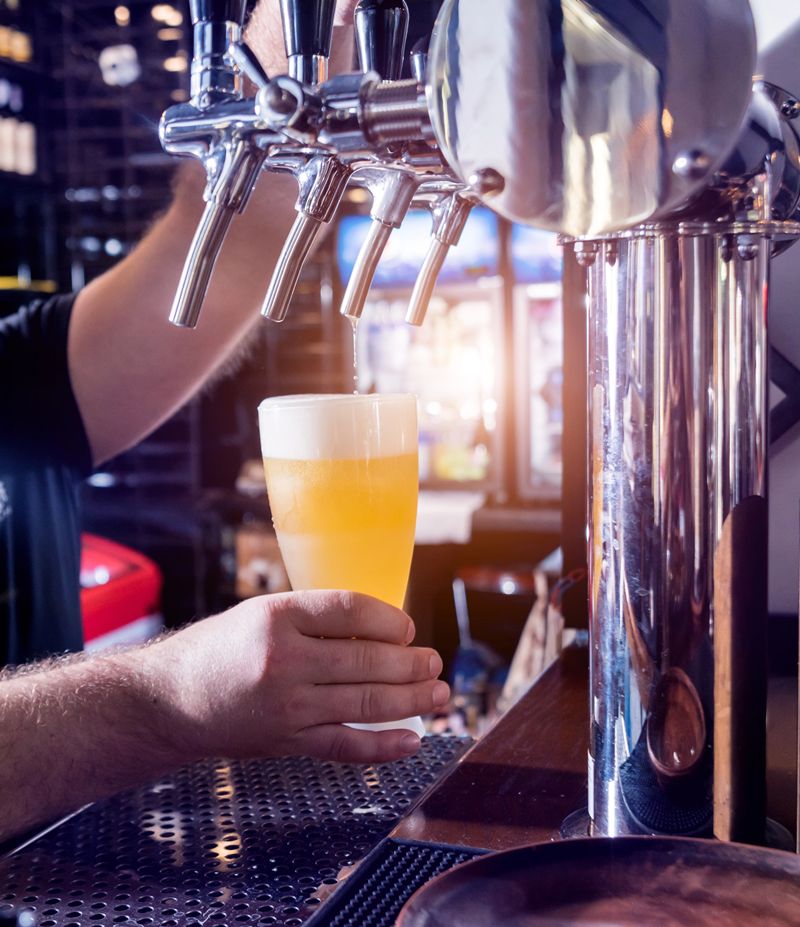
Haarsma pointed in particular to SmartDispense, a Heineken draft system that he said remains one of the parts of the business he feels most strongly about. He said the company’s multiyear investment of tens of millions of euros in innovative beer systems eventually broke even through global implementation. According to Haarsma, SmartDispense helps drive sales and margin for operators while also improving the consumer experience.
That claim is significant in the on-trade, where beer performance often depends on consistency in serve quality as much as on brand strength. Systems that simplify line cleaning or improve product stability can potentially reduce operational friction for pubs and bars, while helping brewers defend volume in a crowded market.
Haarsma’s comments came in a wide-ranging interview focused partly on management style. A Dutch national who has spent more than three decades at Heineken, he said his view of leadership has shifted away from what he called the idea of the heroic chief executive. After more than 20 years in managing director roles, he said business results are shaped mainly by people across the organization rather than by one leader’s direct intervention.
He said effective leadership means creating circumstances in which employees are willing to go the extra mile for their company and customers and feel passionate about their work. He added that large companies remain adaptive when leaders put the company, its stakeholders and employees ahead of personal career ambitions.
Haarsma joined Heineken after university and military service in the Netherlands. He told The Morning Advertiser that he had applied to three global companies because he wanted a career that combined travel with consumer brands, and that Heineken felt like the best cultural fit. Thirty-one years later, he remains with the brewer after assignments across four continents.
His career has included senior roles in Puerto Rico, Suriname, Nigeria, Russia and now Britain. Among the moments he highlighted was leading Heineken’s Russian business and overseeing what he described as the first major brewer’s exit from Russia three months after the war in Ukraine began. He said that decision came at an emotional cost because it meant saying goodbye to 2,000 colleagues with whom he had worked closely for more than three years, but that it was the right move for the company.
He also cited earlier assignments as defining experiences. In Mozambique, he said, Heineken helped break up what had been a monopoly dominated by a competitor. In Nigeria, he recalled taking over leadership of a brewery group with a new management team without having had an opportunity to conduct due diligence beforehand. The task, he said, was to keep operations running in full compliance with the law and with Heineken’s code of conduct. He said those periods were stressful at the time but became some of his biggest learning experiences.
Since moving to Britain in the summer of 2022, Haarsma has taken charge of Heineken’s U.K. business at a time when brewers are trying to balance premiumization, innovation and efficiency against weaker consumer confidence. His remarks suggest that technology-led improvements inside pubs are becoming part of that balancing act rather than a side project.
That is especially relevant for beer suppliers with large exposure to draft sales and pub estates. Heineken is not only a brewer in Britain but also operates Star Pubs, giving it a direct interest in how equipment choices affect venue economics. If dispensing systems can lower waste or improve throughput, they may offer operators practical gains even when volume growth is hard to secure.
Haarsma also framed hospitality as an industry where innovation still has room to grow despite its strong attachment to tradition. He said consumers in this market are open to new ideas and entertainment formats, and argued that smaller pubs or breweries looking to expand should combine creativity with close attention to cash flow.
For people starting out in hospitality or brewing, he described both sectors as strong places to build a career because they are people businesses where employees learn quickly through fast-moving interpersonal work. His advice was to become good at one’s job, take risks when needed and ask for greater responsibility when learning slows down.
The interview offered no new financial targets for Heineken UK. But Haarsma’s emphasis on SmartDispense, disciplined investment and operational modernization gives a clear signal about where one of Britain’s largest brewers sees opportunity: not only in selling more beer brands, but in using technology to help pubs pour them more efficiently and profitably.
