Belarus bans Armenian brandy Yerevan 2800 after tests found tannin levels 53.3% below the minimum
Regulators classified the eight-year-old MAP CJSC product as unsafe and revoked the documents required for sale in Belarus
2026-09-04
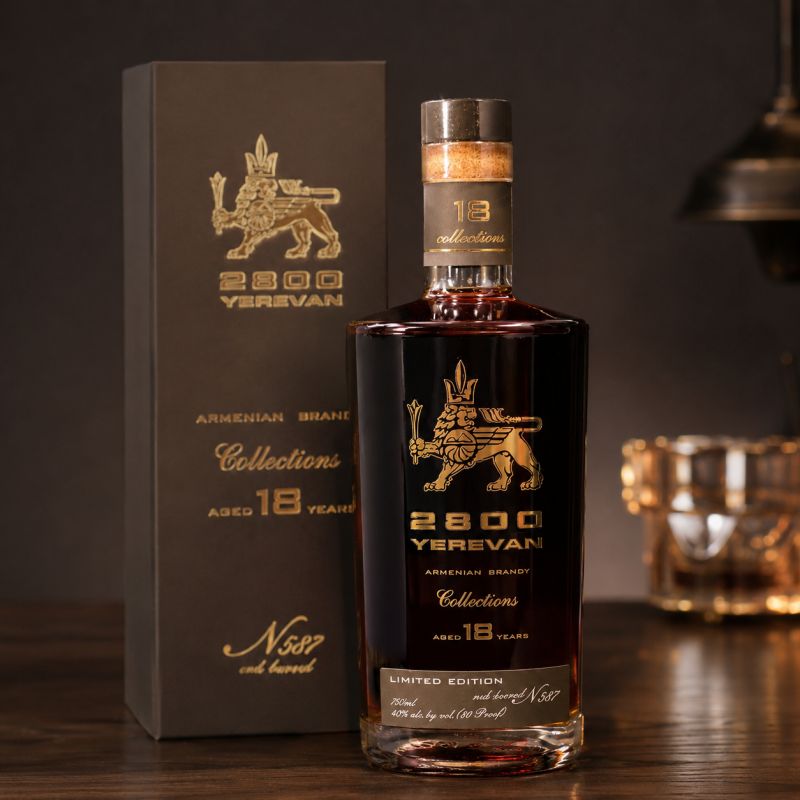
Belarus has banned the import, sale, and circulation of the Armenian brandy “Yerevan 2800” after state testing found the product did not meet a key composition requirement, according to reports on September 3 that cited the public register of Belarus’ State Committee for Standardization.
The affected product is an eight-year-old brandy made by Armenia’s MAP CJSC. Reports by the Russian business news agency Prime and Caliber.Az said Belarusian regulators classified the drink as unsafe and revoked its conformity documents, effectively closing the Belarusian market to that specific product.
According to the reports, the regulator’s order was issued on August 26 and added to the official register on September 3. The measure applies to the import, circulation, and retail sale of “Yerevan 2800” in Belarus.
The basis for the decision was a failed laboratory result tied to tannin content. Testing found a tannin concentration of 0.14 ± 0.01 grams per cubic decimeter, while the minimum required level was 0.30 g/dm³. Using the central test value, the product fell short by 0.16 g/dm³, or about 53.3% below the threshold.
The cited reports said Belarusian authorities concluded that the product did not comply with the technical regulations of the Customs Union for the characteristics stated on its label. The regulator said the test result showed the drink had been given the appearance and some properties of the product it claimed to be, but could not be identified as that product under the applicable rules.
That language matters because the action goes beyond a routine labeling correction. By classifying the brandy as unsafe and canceling its conformity assessment documents, Belarus moved from a regulatory finding to a full market prohibition for that item. No public figures were released on how much of the product had been imported, how much stock was already in stores, or what financial losses the producer or distributors may face.
The case concerns one named product and one producer, not Armenian brandy as a whole. Neither of the cited reports described the measure as a general ban on Armenian alcoholic drinks. Still, the decision adds to compliance pressure on Armenian exporters selling into Belarus, especially in regulated food and beverage categories where laboratory indicators can trigger immediate restrictions.
The reports also pointed to an earlier Belarusian decision involving another Armenian brandy product. Prime said Belarus had previously banned sales of a six-year-old drink labeled “Armenian cognac” produced by the Shakhnazaryan Wine and Brandy House in Yegvard, Armenia. That earlier action suggests Belarusian regulators have recently increased scrutiny of some imported Armenian spirits, even though the current order is limited to “Yerevan 2800.”
Belarus and Armenia are both members of the Eurasian regional trade system, where many products move under shared technical rules. In that framework, conformity documents are central to market access. Once those documents are revoked, importers and retailers can lose the legal basis to bring in or sell the product. That is why the September 3 registry entry is significant even without published trade volume data.
The public information available so far leaves several questions unanswered. The cited reports do not say whether MAP CJSC plans to challenge the finding, submit a new batch for testing, or seek re-certification. They also do not state whether Belarusian authorities ordered products already on shelves to be withdrawn, though the ban on circulation and sale strongly limits further distribution.
What is clear from the published registry details is the timing, the product, and the reason. Belarus issued the restriction on August 26, formally recorded it on September 3, and tied the decision to a tannin reading below the required minimum for the product category. For Armenian producers trading with Belarus, the case highlights the risk that a single failed technical indicator can result not only in a warning, but in a full stop to import and sales access for a specific brand.
