The European Union begins applying new packaging rules to beverage imports on Aug. 12.
Brewers face the clearest early disruption; sellers into the bloc must document materials, recyclability and legal conformity.
2026-08-07
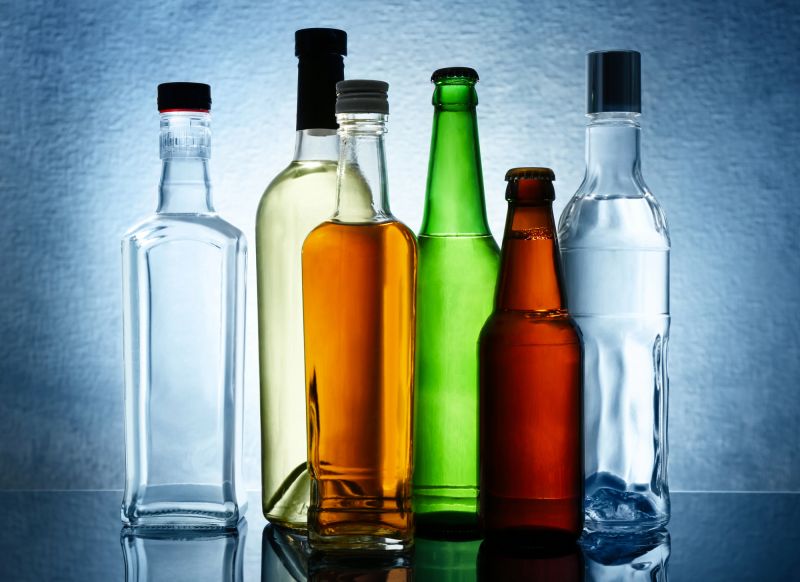
The European Union’s new packaging regulation will begin to apply broadly on Aug. 12, changing how beer, wine and spirits reach the market across the bloc and raising new compliance demands for producers far beyond Europe.
The measure, Regulation (EU) 2025/40, known as the Packaging and Packaging Waste Regulation, or PPWR, entered into force on Feb. 11, 2025. Much of its most burdensome timetable falls between 2028 and 2030, but its general application now starts to affect decisions on bottles, cans, labels, closures, sleeves, adhesives, transport packaging and presentation formats sold in the European Union’s 27 member states. The regulation is designed to replace much of the older framework under Directive 94/62/EC and, unlike a directive, applies directly across the bloc.
For breweries, wineries and distillers, the change is not limited to producers based in Europe. What matters is where a drink is first placed on the market. A Chilean wine, an American craft beer or a Scotch whisky sold for the first time in an EU country will have to arrive with data on materials, weight, substances used, recycled content, recyclability and legal conformity. If the packaging does not comply, the importer cannot lawfully place it on the market. That risk is expected to move quickly into supply contracts through warranties, audits and cost-sharing clauses for testing, redesigns or stock withdrawals.
Beer faces the clearest direct exposure. Under the regulation, final distributors, including stores, restaurants, bars and online sellers, will in principle have to offer at least 10% of covered beverages in reusable packaging within a return system from 2030. The European benchmark for 2040 rises to 40%, though that later figure is indicative rather than an immediate binding quota. The legal duty falls on the seller, but suppliers are expected to feel the pressure because retailers and hospitality operators cannot meet the target without changing their sourcing. A returnable bottle offered to the consumer can count toward the target. A keg sent to a bar does not count on its own, because the consumer does not receive the keg as the sales package.
Beer is also likely to be caught by the regulation’s deposit-return push. Before 2029, EU countries must reach a minimum annual separate collection rate of 90% for plastic bottles and metal beverage containers of up to three liters, normally through deposit systems. Much of the beer sold in cans or PET will fall within that system. For producers, that can mean reference-by-reference registration, identifier codes, financial reconciliation, reverse logistics and IT adjustments. The consumer gets the deposit back, but the producer is left with registration fees, line changes, system participation costs and reporting duties. Glass is not part of the EU’s minimum deposit mandate, but national governments can include it.
Wine, aromatized wine products, many fermented beverages in customs code NC 2206 and spirits under tariff heading NC 2208 are excluded from the European 10% reusable-offer quota. They also benefit from exclusions from the minimum deposit mandate, though the lists are not identical. That does not remove them from the PPWR. Wineries and distilleries will still face rules on minimizing packaging, proving recyclability, labeling, traceability and extended producer responsibility. Member states also remain free to expand their own deposit systems to glass, beverage cartons or product categories that do not appear in the EU minimum.
That makes customs classification unusually important. Cider, hard seltzer, ready-to-drink cocktails and other mixed alcoholic beverages may be treated differently depending on composition, production method and tariff code. Products classified under NC 2208 will often sit outside both the reusable-offer target and the minimum deposit obligation. A beer-based drink or another non-exempt beverage may fall inside. The absence of alcohol is not an automatic exception. Nonalcoholic beer and other drinks sold in PET or metal packaging may still be captured by the new systems.
The regulation also sets national targets to reduce packaging waste per person by 5% in 2030, 10% in 2035 and 15% in 2040, each measured against 2018 levels. For some transport packaging categories, reuse must reach 40% from 2030, with 100% targets in certain movements within the same organization or between linked establishments. That part of the law is likely to affect pallets, crates, shipping formats and warehouse practices as much as consumer-facing bottles or cans.
One of the most visible changes will be the attack on excess weight and volume. From 2030, or on later technical dates where the law allows, manufacturers and importers will have to show that packaging has been reduced to the minimum needed to protect the product, ensure safety and support logistics. The text specifically questions double walls, false bottoms and other features used only to create the impression of greater volume. Heavy bottles, thick glass bases, oversized presentation boxes and decorative elements with no technical function are expected to come under scrutiny.
That could matter sharply in wine and premium spirits. Sparkling wine producers will have to justify glass weight as necessary for internal pressure. For high-end spirits, the review is expected to extend to unusually heavy bottles, deep embossing, ceramic parts, metallic finishes, full-body sleeves, multiple closures and complex outer boxes. There are narrow exceptions for some protected designs, trademarks registered before Feb. 11, 2025, and certain geographical indications, but companies will have to show that reducing material would compromise a recognized right. Brand identity alone will not be enough to defend extra packaging.
Recyclability will become another dividing line. From 2030, or 24 months after the relevant technical acts are adopted if that comes later, packaging will be assessed under grades A, B or C. From 2038, grade C packaging will no longer be allowed. The review will cover the full pack, including bottle color, cap, capsule, label, adhesive, ink, sleeve and decoration. A package that remains legal may still face higher producer fees if it performs worse in recyclability scoring. Many of the detailed criteria still depend on later implementing acts, leaving open questions about some labels, multilayer structures and closure systems.
For single-use plastic beverage bottles, the regulation sets a minimum of 30% post-consumer recycled plastic by 2030, or three years after the relevant implementing act if that date comes later. Recycled material sourced from outside the European Union will have to show equivalent collection and treatment conditions through certification, mass-balance records or audits. Glass does not face a single horizontal recycled-content mandate across all beverage bottles, but lighter bottles, weight-based fees and cullet availability are expected to shape purchasing decisions.
The law also tightens controls on substances of concern, including thresholds for PFAS in food-contact packaging. That will affect more than the bottle or can itself. Internal can linings, gaskets, caps, synthetic closures, inks, adhesives, films, valves and bag-in-box components may all need added documentation. Suppliers are expected to provide composition statements, recyclability compatibility data and change-control commitments. For beverage brands, buying a bottle, can or closure will increasingly mean buying a documentation package that can survive inspection.
Before any packaging is placed on the market, the manufacturer must assess conformity, prepare technical documentation and issue an EU declaration of conformity. Those records must be kept for five years for single-use packaging and 10 years for reusable formats. Each presentation must be identifiable by type, lot, series or a similar element. Importers must check documentation and labeling, while platforms and logistics operators must verify certain registrations. A brand that sells directly to consumers could be blocked from sale over missing registration or missing paperwork even before a formal administrative sanction arrives. National penalties can include fines, corrective measures, sales bans and market withdrawals.
Extended producer responsibility, or EPR, remains one of the biggest practical burdens because it stays fragmented by country. Companies will have to register in each member state where they first make packaging or packaged products available. There will be no single European filing that removes the need for country-by-country management. Authorities, fee structures, filing cycles, languages and legal responsibilities will vary. A company with no local establishment may need an authorized representative. Those contributions are meant to finance waste collection, sorting, treatment, administration and consumer information.
A harmonized European labeling system is due to begin in general on Aug. 12, 2028, or 24 months after the related implementing acts if that is later. Packaging will carry European pictograms showing composition. Reusable packaging will need an identifier and a QR code or similar digital support with information on the return system. Member states may still require national languages, and distance selling will have to display some information before purchase. During the transition, national symbols may coexist, but incompatible ones will not be allowed to remain indefinitely.
Even with one common regulation, enforcement is likely to remain uneven because national deposit systems, taxes, material rules and sanctions differ. A European Commission map published in April 2026 showed active deposit systems in nine countries and others under preparation or debate, though producers are being warned that each market must be checked case by case before launch. Malta includes PET, aluminum, steel and glass in its deposit program. Croatia covers many cans and bottles in glass and PET. Spain applies a tax of €0.45 per kilogram of non-recycled plastic contained in non-reusable packaging. France combines unique identifiers with the Triman and Info-tri signals, although household glass beverage packaging has an exception. For exporters and pan-European brands, those differences can force separate inventories, labels, codes and billing systems.
The PPWR does not create a specific customs tariff. The added cost is expected to come through producer responsibility fees, collection charges, representatives, testing, redesigns, system registration, software changes, reverse logistics and national taxes. Compliance planning models circulating in the sector point to annualized costs of about €0.01 to €0.07 per liter for large groups, €0.02 to €0.16 for mid-sized producers and €0.04 to €0.40 for smaller companies, depending on the number of markets, the number of stock-keeping units and the complexity of the packaging. The highest figures tend to appear when a business sells in many countries, uses highly customized bottles or must build return systems almost from scratch.
By category, those same planning scenarios place beer at roughly €0.06 to €0.28 per liter for small producers, €0.025 to €0.12 for medium-sized producers and €0.012 to €0.07 for large groups. For wine, the ranges run from €0.04 to €0.20, €0.015 to €0.08 and €0.008 to €0.045. For spirits, they rise to €0.08 to €0.40, €0.03 to €0.16 and €0.015 to €0.09. In many premium spirits and luxury wine lines, the cost per liter is higher not because of a broad reuse mandate, but because volumes are lower and the packaging uses proprietary molds, special closures and secondary boxes.
Estimated upfront investment is also substantial. Compliance models place the initial outlay at about €150,000 to €1 million for a small producer, €2 million to €15 million for a medium-sized business and €20 million to €150 million for a large company. Updating data and labels can cost €5,000 to €20,000 per stock-keeping unit. Changing an adhesive or closure can run from €15,000 to €60,000. Developing a new bottle can cost €50,000 to €250,000. Moving into a returnable format can cost €100,000 to €750,000, before adding the expense of a dedicated washing plant, which can run into several million euros or more.
The economics of reuse vary sharply by distance and recovery rates. In closed loops of less than 200 kilometers, with return rates at or above 90% and about 15 uses per pack, some models show outcomes ranging from a saving of €0.03 to an added cost of €0.08 per liter. At distances of 200 to 800 kilometers, with returns of 80% to 90% and eight to 15 rotations, the extra cost tends to move between €0.05 and €0.20 per liter. Beyond 800 kilometers, with return rates below 80% and fewer than eight uses, the increase can reach €0.20 to €0.60 per liter.
For beer, standard bottles, kegs and shared crates give the industry a known industrial base for reuse, even if proprietary bottle shapes and unusual embossing make participation in common pools harder. In wine, the biggest changes are expected around bottle weight, presentation boxes, e-commerce packaging and lighter formats, including bottling closer to the destination market. In spirits, scrutiny is likely to focus on thick glass bases, decorations that disrupt recycling, multi-part closures and outer packs. Closed-loop sales into bars, hotels, airlines and event channels may offer a route for reusable formats even without a sector-wide quota for spirits.
With the first operational date now arriving, companies are mapping products by country, legal category and customs code, along with the weight of every packaging component, whether the pack is single-use or reusable, its recycled content, its expected recyclability grade, the first market of sale, the registration status, any deposit obligations, the required language and the responsible operator. Importers, distributors and online platforms are expected to use that information to screen products before they are sold, turning packaging from a design issue into a problem for procurement, production, logistics, customs, tax, technology, marketing and sales.
