Extreme Heat Pushes the 2026 Grape Harvest Ahead Across the Northern Hemisphere
Growers report healthy early fruit in many vineyards, but shrunken berries leave wine volumes unclear before national forecasts.
2026-08-07
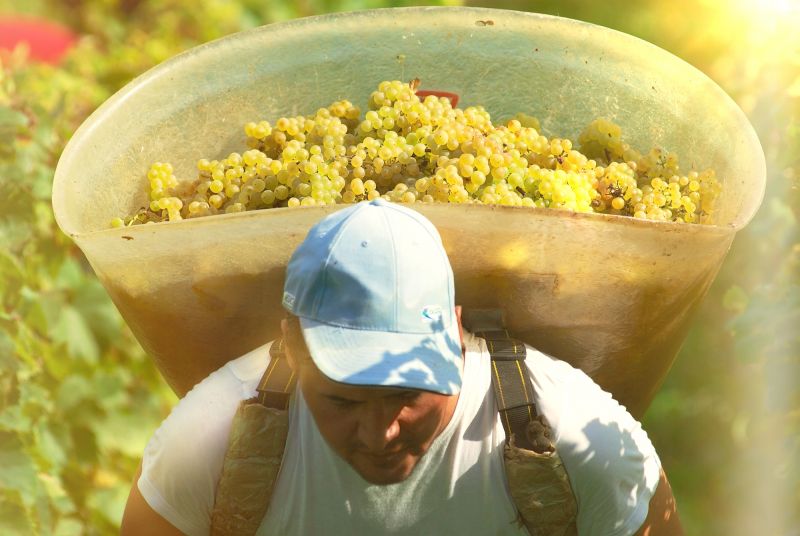
The 2026 grape harvest is starting early across some of the hottest parts of the Northern Hemisphere, but the first fruit arriving at wineries has not yet produced a reliable picture of how much wine will be made.
As of Aug. 7, major producers including Italy, France, Spain, the United States and China still do not have national crop estimates they consider firm enough to publish. For now, the season is being measured less by a final total in hectoliters than by timing, heat, vine health and the size of the berries. The early signs point to a crop that could deliver strong quality in many regions, while volumes remain uncertain and highly uneven.
That caution is deliberate. Italy has decided not to issue its usual early forecast after last year’s pre-harvest estimate by Assoenologi, ISMEA and Unione Italiana Vini, about 47.4 million hectoliters, ended up above the 44.4 million later estimated by the International Organization of Vine and Wine, or OIV. Italian producers now plan to wait for actual harvest and declaration data, expected around mid-November. France has pushed back its first national estimate to Sept. 8. Austria plans to release its first figure on Aug. 31. The U.S. Department of Agriculture’s National Agricultural Statistics Service is expected to publish later. The OIV usually presents its first global production estimate in the fall.
The one clear pattern so far is earliness. Sicily began bringing in Pinot Grigio and other early varieties on July 21. Oltrepò Pavese followed around July 28. Franciacorta began harvesting on July 30, the first documented July harvest in that sparkling wine region. In Spain, Lanzarote wineries started receiving Malvasía Volcánica in early July. Jerez began around July 27. Rioja took in its first grapes on Aug. 6 in Rioja Oriental, the earliest start on record there. In California, some Central Coast vineyards dedicated to sparkling wine started in mid-July, roughly three to four weeks earlier than a normal schedule.
Heat is the main reason. Copernicus, the European climate service, said June 2026 was Europe’s second-warmest June on record, with an average land temperature of 19.14 degrees Celsius, 1.78 degrees above the 1991-2020 average. In Western Europe, the average reached 20.74 degrees, or 3.06 degrees above normal. Large parts of the Iberian Peninsula, France, Italy, Switzerland, western Germany, Central Europe and the Balkans were also drier than usual. That rapid accumulation of heat sped up flowering, véraison and ripening, though not every part of grape maturity moves at the same pace.
Dry weather has lowered pressure from downy mildew, botrytis and other fungal diseases in many vineyards, which is one reason growers are talking about healthy fruit. But the same lack of water can shrink berry size, cause sunburn, slow vine activity and push sugars up faster while acidity falls. In practical terms, that means quality and quantity are not moving together. Concentrated, clean grapes do not necessarily mean a large harvest. Growers still have to see whether technological ripeness, measured through sugar and acidity, stays in step with phenolic ripeness in skins and seeds.
Spain is among the clearest examples of that split. The country had its second-warmest spring on record, and June averaged 23.3 degrees across mainland Spain, 3.2 degrees above normal, with only 12.4 millimeters of rain, or 39% of the usual level. In Jerez, a wet winter with more than 650 liters per square meter, followed by a dry spring, sharply reduced mildew, powdery mildew and grape moth pressure. The first grapes were arriving at around 11.7 degrees Baumé, and by Aug. 6 more than 20 million kilograms had already been picked. The regional industry was working with a production expectation of 55 million to 60 million kilograms, up from 34.5 million in 2025.
That recovery in Jerez does not extend to all of Spain. Rioja has started early, but its first maturity bulletin showed that some alcoholic ripeness indicators were developing more slowly than in 2025. Berry weight in Graciano was running about 15% below comparable references, while Mazuelo was doing better. Acidity, pH and phenolic maturity were still considered favorable. Castilla-La Mancha had not yet issued a closed regional estimate because final yields remain highly sensitive to how much the berries swell in the coming weeks. Ribera del Duero has also cut the maximum authorized yield for red grapes by 10%, to 6,300 kilograms per hectare, a move that will reduce the amount of marketable production even if vineyard conditions improve.
Portugal is the only major European producer that has already published a solid official national forecast. The country’s wine institute, IVV, expects 6.7 million hectoliters in 2026-27, a 12% increase from roughly 5.9 million last year, though still 4% below the average of the past five campaigns. The Douro is projected to rise by 25%. Trás-os-Montes, Setúbal and Alentejo are expected to gain 15%. Algarve and Tejo are seen up 10%, Vinho Verde 6% and Dão 5%. The Azores are forecast to fall about 20% because of humidity and fungal pressure. On the mainland, the dominant picture is healthy grapes, but not without problems: controlled mildew, pockets of powdery mildew, water stress, sunburn, poor fruit set and some hail.
France is moving through one of its most heat-marked seasons in years. The country recorded its warmest spring since measurements began, at 1.7 degrees above average, along with a rainfall deficit of 30%. Three heat waves followed. July averaged 24.9 degrees nationally, the highest monthly figure recorded since 1900. Dry weather has limited disease, but it has also reduced berry size and strained young vines and shallow soils. In Burgundy, full flowering was placed around May 27, and the region’s usual rule of thumb of 95 to 100 days between flowering and harvest points to the first picks before the end of August. Hail has caused local losses, and France’s statistics office, Agreste, has chosen to wait until September before issuing a national number.
Italy is showing the same kind of regional spread. Early grapes from Sicily have come in with good balance and favorable acidity in Chardonnay and Pinot Nero, while Franciacorta moved quickly to preserve freshness in base wines for sparkling production. But much of the country’s important red crop, including Nebbiolo, Sangiovese and Montepulciano, is still ripening. Storms and hail have caused very localized losses. In Marche, some vineyards hit directly reported damage as high as 90%, even though the broader regional estimate was still near the 2025 result. That gap between severe local loss and uncertain national effect is one reason Italian groups are holding back a countrywide forecast.
Germany and Austria are still some distance from the main harvest. In Germany, growers remember what happened in 2025, when a rapid rise in Oechsle levels pushed several varieties toward maturity at nearly the same time, forcing wineries in regions like the Pfalz to run harvesters day and night. Austria plans to wait until Aug. 31 for its first calculation. In Hungary and elsewhere in Central Europe, growers are also watching Scaphoideus titanus, the leafhopper that spreads flavescence dorée, a vine disease that has triggered official containment measures. For now, there is not enough evidence to convert that threat into a national 2026 loss estimate.
The United States enters the season with a different problem as well: lower production is not only about weather. California’s total crush fell in 2025 to 2.76 million tons, down 6% and the lowest level since 1994. Wine grapes declined by about 8% to 2.6 million tons. Red varieties fell 11%, while whites were down about 5%, allowing white grapes to exceed reds for the first time in nearly three decades. The USDA expects another decline in bearing acreage in 2026 as vineyards continue to be pulled out. In the West, smoke remains another risk. A federal crop insurance program covering smoke exposure is in effect from June 1 to Nov. 10 in California, Idaho, Oregon and Washington, though that does not mean smoke taint is already widespread in early August.
China is providing less real-time national information, but the OIV estimated that Chinese wine production fell from 3.2 million hectoliters in 2023 to 2.2 million in 2025, a drop of about 31%. Ningxia still has around 607,000 mu planted to wine grapes. Some vineyards there were hit by spring frost, while heat and dryness pushed the growing cycle about a week ahead in the Ili Valley of Xinjiang. Mexico is already in season, with Baja California accounting for about 70% of national output and harvest festivals in Guanajuato running through Oct. 18. Canada remains later, with Niagara, Prince Edward County and British Columbia focused on late summer and fall.
The latest complete production figures show the scale of the main producers, but not yet the shape of this year’s crop. Italy made about 44.4 million hectoliters in 2025, France 36.1 million, Spain 28.7 million and the United States 20 million. Germany produced 7.6 million, Portugal about 5.9 million, Russia 5.7 million, Romania 3.3 million, Hungary 3 million, Georgia 2.6 million, Austria 2.5 million and China 2.2 million. Those numbers are useful as a baseline, but they do not substitute for a 2026 forecast, and they do not allow regional reports from places like Jerez, Marche or the Azores to stand in for a national total.
The market backdrop is also weaker than it was a few years ago. Global wine trade fell to 94.8 million hectoliters in 2025, down 4.7%, while value dropped 6.7% to 33.8 billion euros. The average export price fell 2.1% to 3.56 euros per liter. U.S. wine imports declined to about 5.5 billion euros, a loss of 12% in value. In that environment, a big harvest no longer guarantees better revenue, especially in regions where inventories remain high or contracts have been cut back. Wineries and cooperatives can limit purchases, reduce accepted yields or focus on categories with stronger sales.
That demand pressure is one reason acreage is shrinking in some major regions. The European Union remains the world’s largest producing bloc, with an average near 157 million hectoliters between 2020 and 2025, but some areas are reducing vineyard surface. FranceAgriMer set new planting authorizations for 2026 at about 7,461 hectares, within the E.U.’s 1% ceiling, while permanent vine removal programs continue. California is moving in a similar direction because of demand and profitability. Portugal closed 2025 with wine exports near 954 million euros, but its larger expected crop does not imply an equal rise in income.
The early harvest is also compressing work in the vineyard and the cellar. When several varieties hit picking windows within a few days, growers need more crews, harvest machines, trailers, presses and refrigerated capacity in a shorter span. Night picking is becoming more important for white and sparkling fruit because daytime heat raises grape temperatures before pressing. There is no harmonized international rate of mechanical harvesting: flat areas in California, Castilla-La Mancha and parts of Italy and Portugal can use machinery widely, while steep terrain like the Douro still depends heavily on hand labor. At the same time, wineries are entering the season with slower sales and must decide what to buy before tanks fill with wine that may be harder to place.
Insurance is taking on a larger role as growers face frost, hail, drought, disease and wildfire. Spain’s Agroseguro opened the 2026 campaign after a year in which compensation to insured grape growers totaled about 74 million euros, with Castilla-La Mancha, Rioja and Castilla y León among the regions with the biggest payouts. Depending on the policy, coverage can include hail, frost, physiological shrivel and other exceptional risks. Portugal is keeping enrollment open for its wine grape crop insurance through the end of August. In the United States, smoke coverage adds protection for a quality loss that does not always leave obvious marks on the fruit.
From now through September, berry weight may become the key variable. If heat and dryness continue, growers may preserve healthy fruit but face higher concentration, more potential alcohol, more sunburn and lower acidity, while yields fall on shallow dry-farmed soils and in young vineyards. A moderate, well-timed rain could restart vine activity, help berries gain weight and support later-ripening varieties. A sudden burst of water after weeks of dryness could also raise the risk of splitting, dilution, botrytis, late mildew and hail damage. In Spain, forecasts for persistent background heat mixed with storm activity leave both outcomes possible.
Climate forecasters are also watching the possible development of a strong El Niño event between August and October, though that signal does not translate into the same pattern for every wine region. For now, the clearest evidence is what growers can already see in the field: extreme heat, widespread dryness, healthy early fruit in many places, localized damage from hail and storms, and one official national recovery forecast from Portugal. The next important data points will come as Castilla-La Mancha, Burgundy, the Douro, Germany, Austria, Oregon, Washington, Ningxia and other later regions begin to show whether 2026’s early start can still produce reasonable yields once the rest of the crop is in.
