People With Higher IQ Scores Know More About Wine
The link persisted after researchers accounted for industry experience and drinking preferences in a sample of 525 adults.
Thursday, August 20, 2026
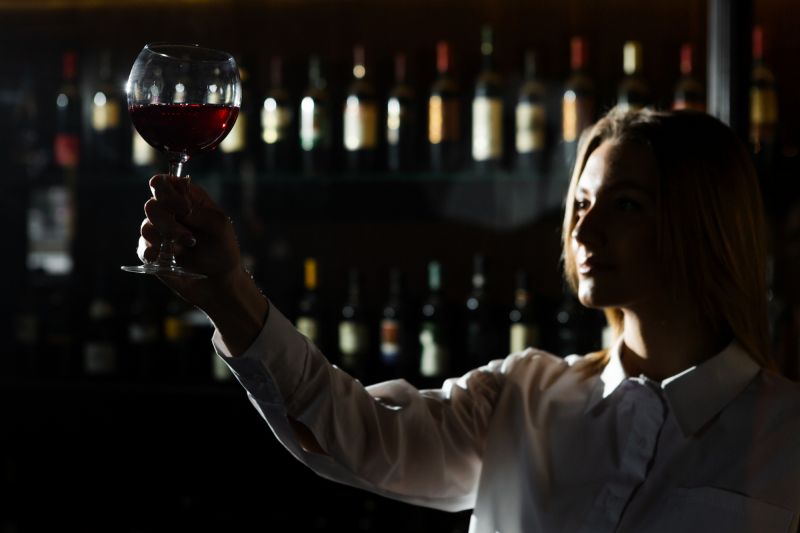
A new study reports that people who score higher on cognitive ability tests also tend to know more about wine, even when researchers account for whether they work in the wine business or simply prefer drinking wine.
The paper, published in the journal Intelligence & Cognitive Abilities, examined whether general intelligence helps explain knowledge in a narrow subject that usually is not taught in school and does not normally bring clear financial rewards. The authors, Maximilian Krolo of Saarland University and Timothy C. Bates of the University of Edinburgh, said they chose wine because it requires learning detailed classifications, regions, grape varieties and production methods, but for most people it remains a personal interest rather than a career requirement.
The researchers recruited 525 adults through the online platform Prolific. Their average age was 43.15 years. The sample included 257 women and 268 men. Most participants, 458, said they had never worked in the wine industry. Smaller groups reported entry-level industry experience, wine service work, or certified retail experience. Participants also identified whether they were teetotal, mostly beer drinkers or mostly wine drinkers.
To measure wine knowledge, the researchers used 68 multiple-choice questions adapted from public study materials for the Wine and Spirit Education Trust Level 2 Award in Wines, an internationally recognized entry-level qualification. The questions covered topics such as grape composition, red winemaking steps, major wine regions, Champagne production and proper storage conditions for cork-sealed bottles.
To measure cognitive ability, the study used three parts of the International Cognitive Ability Resource, a public testing battery that includes verbal reasoning, matrix reasoning and letter-and-number series tasks. The combined score was standardized within the sample to an average of 100.
The main result was a clear statistical link between IQ scores and performance on the wine test. In the first model, IQ was a significant predictor of wine knowledge, with a reported effect size of β = 0.31. That model explained 9.4% of the differences in wine-test scores among participants.
The association remained after the researchers added job-related wine exposure to the analysis. People with professional experience in wine also scored higher on the test, and occupational exposure improved the model’s predictive power. The researchers found that the connection between IQ and wine knowledge was stronger among participants with more industry experience. In other words, higher cognitive ability and wine-related work experience appeared to reinforce each other.
The study also found that drinking habits mattered, but in a different way. Participants who mainly drank wine scored higher on wine knowledge than beer-preferring participants or non-drinkers. But wine consumption did not strengthen the relationship between IQ and wine knowledge. The authors said this suggests that simply drinking wine is not the same as structured learning or professional exposure.
When the researchers combined IQ, occupational exposure and drinking preference in a broader model, all three remained significant predictors of wine knowledge. That full model explained 17.8% of the variation in scores.
The paper places the findings in a long-running debate in psychology over how intelligence affects knowledge. Research has already shown that IQ is linked to school performance, job performance, financial literacy and economic knowledge. The authors said their study extends that pattern into a more specialized and culturally specific area. Their argument is that general intelligence may support the ability to acquire, organize and retain complex information even in topics people pursue without strong outside pressure.
The authors also said wine offered an “interesting midpoint” for testing that idea. It is not part of a standard academic curriculum, and for many people it does not directly improve income or status at work. At the same time, learning about wine involves a structured body of facts, categories and terminology, making it a useful subject for testing how people build specialized knowledge.
Still, the study comes with important limits. The wine test was based on WSET Level 2 materials, but it was not the official exam. The research was conducted online, and the authors did not assess tasting ability, which is a major part of wine expertise and may involve different mental processes than factual knowledge. The study was also cross-sectional, meaning it measured participants at one point in time rather than tracking them over years. That means it cannot show that higher intelligence causes greater wine knowledge, only that the two are associated.
The makeup of the sample also limits how far the results can be generalized. Participants were recruited online rather than through a nationally representative survey, and most identified as White. The groups with industry experience were relatively small, especially at higher levels of certification, which can make estimates less stable.
The researchers acknowledged those concerns and said future work could use official wine exams, more detailed measures of wine-related experience and longitudinal designs that follow people over time. They also suggested that similar methods could be used to study other specialized interests, including birdwatching or classical music, to test whether the same pattern appears in other hobbyist fields.
The study arrives at a time when researchers continue to examine whether intelligence mainly predicts success in formal settings like school and work or whether it also shapes what people learn on their own. In this case, the authors argue that the data support the broader view: people with higher cognitive ability in their sample were more likely to know the difference between Margaux and Meursault, understand the order of red winemaking, and answer a range of detailed questions about grapes, regions and production methods, especially when their jobs also exposed them to the subject.