Trump Threatens 100% Tariff on French Wine Over Drug Price Dispute
He said he warned Emmanuel Macron that France would face punishing duties unless it paid more for some medicines.
2026-09-04
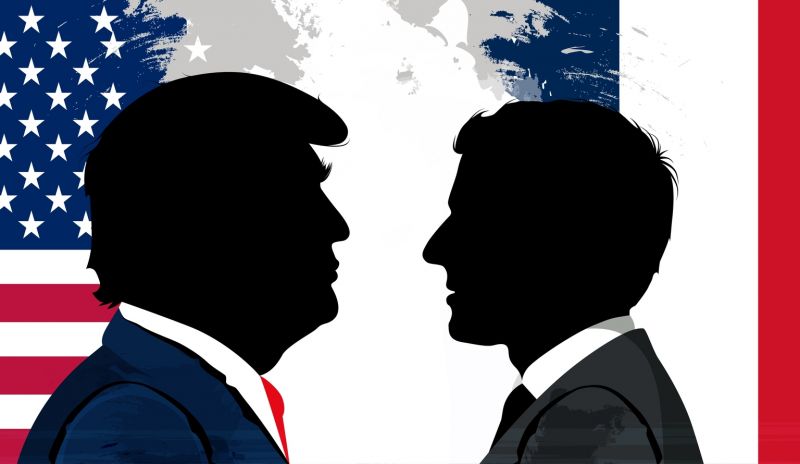
Donald Trump said on Thursday that he had threatened to impose a 100% tariff on French wine and Champagne during an exchange he described with President Emmanuel Macron of France, tying the proposed trade penalty to a dispute over prescription drug prices.
According to Trump’s account, he told Macron that France could not continue buying medicines at far lower prices than Americans pay without facing consequences in another part of the trade relationship. Trump said he warned that unless France sharply increased what it pays for some drugs, he would answer with a 100% duty on French wine and Champagne entering the United States.
Trump framed the episode as a personal appeal from Macron, saying the French president asked him not to follow through. The former president’s telling of the exchange centered on a simple comparison: a pill that costs about $10 in France, he suggested, should not be sold at a much higher price in the United States while foreign governments benefit from lower negotiated rates.
The remarks, as reported on Thursday, did not amount to a formal announcement of a new tariff action, and no implementation date or official trade order was cited. It was also not immediately clear whether the threat reflected an active policy under consideration or was meant mainly as a political example of how Trump says he would pressure allies over pricing differences in the pharmaceutical market.
Even so, the comment matters well beyond the drug debate because the United States is one of the most important export markets for French wine and Champagne. A 100% tariff would likely push retail prices sharply higher for importers, distributors, restaurants and consumers, especially in categories that depend on steady shipments and long-term contracts. For beverage companies, the threat alone could increase uncertainty around pricing, inventory planning and sales agreements at a time when many buyers are already cautious.
French wine has long held a large place in the American market, from entry-level bottles sold in supermarkets to premium Burgundy, Bordeaux and sparkling wines served in restaurants and hotels. Champagne occupies a particularly sensitive segment because it is closely tied to celebrations, corporate hospitality and luxury spending, all areas where price changes can quickly affect demand. If import costs were to double at the border, many businesses would have to decide whether to absorb part of the increase, pass it on to customers or cut back orders.
The prospect of a tariff also raises concerns across the broader beverage supply chain in the United States. Importers often buy months in advance. Distributors set prices based on expected landed costs. Restaurants build wine lists around predictable margins. Retailers use French labels as traffic drivers during the holiday season. Any sudden shift in trade policy can disrupt those plans, particularly for small and midsize businesses that do not have the balance sheet to carry large extra costs.
Trump’s comments revived the possibility that wine could again be used as leverage in a dispute that is not directly about alcohol. That approach is familiar in trade policy, where politically visible consumer products are often targeted because they can send a message quickly. In this case, wine and Champagne would become bargaining chips in a wider argument over how much foreign governments pay for prescription medicines and whether the United States bears too much of the global cost of pharmaceutical innovation.
The remarks are also likely to be watched closely in France, where wine is both a major export industry and a symbol of national identity. A threat directed specifically at French wine and Champagne carries economic weight, but it also has diplomatic significance because it singles out one of the country’s best-known industries in response to a policy area that French officials treat as part of their domestic health system.
For now, there has been no public indication in the reporting of a corresponding statement from the French government laying out its version of the exchange, and the details of the conversation described by Trump could not be independently verified from the information available on Thursday. What is clear is that the comment has reopened a familiar concern in the wine trade: that a bottle’s final price in the United States can be reshaped as much by politics as by harvests, shipping costs or consumer taste.
