Northern Ireland brewers bring protest to Westminster over local licensing rules
Brewers say a 124-year-old system makes pub licenses scarce and costly, shutting small producers out of their home market.
2026-09-03
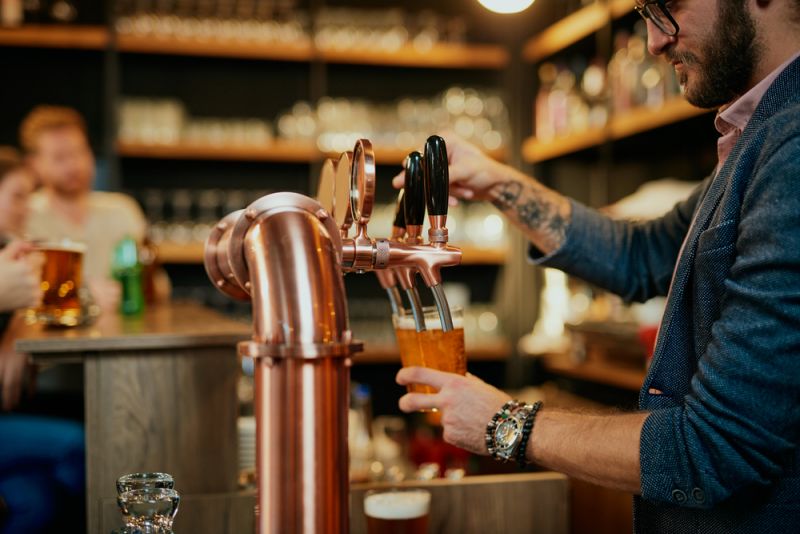
Independent brewers from Northern Ireland took their beers to Westminster on Wednesday to make a point they say has become hard to ignore at home: it is easier for them to serve beer in the U.K. Parliament than in many pubs in Northern Ireland.
The protest, organized by the Society of Independent Brewers and Associates, or SIBA, was aimed at drawing attention to Northern Ireland’s licensing system, which brewers say blocks local producers from opening or operating the kinds of taprooms and sales spaces that have become common in other parts of the United Kingdom. The group said the restrictions have left many small breweries with little access to their own local market and have pushed them to look outside the region for sales.
According to SIBA, 99% of beer sold in Northern Ireland comes from imported global brands, while just 17 small independent breweries remain in the region. The trade group also said Northern Ireland lost a fifth of its breweries in the first six months of 2026, the highest closure rate in the U.K.
At the center of the dispute is the so-called Surrender Principle, a licensing rule dating back 124 years. Under that system, a new license can be granted only if an existing one is given up first. Brewers say that in many parts of Northern Ireland that makes a new license nearly impossible to obtain. When a license does become available, they say, the cost starts at about £120,000 and can rise far higher. SIBA said some recent transactions have exceeded £1 million.
For small breweries, the economics are especially difficult. SIBA said the high cost of a license often leaves operators with one realistic path: signing exclusive supply agreements with large brewing groups in exchange for financial backing. Independent brewers argue that this weakens competition and limits the ability of local businesses to sell their own beer on their own terms.
The group also pointed to what it sees as an imbalance in the rules. Developers who invest £500,000 in an upstairs 10-room apart-hotel can receive a license allowing them to run a pub on the ground floor outside the Surrender Principle, SIBA said. A brewery that puts £1 million into local manufacturing, by contrast, still has to try to secure a license through the surrender system.
That difference has become a central argument in the brewers’ campaign. They say the current framework favors property development over local drinks production and leaves breweries unable to build direct relationships with consumers. For the beer business, that matters beyond one region’s licensing debate. Easier access to licenses can shape who gets shelf and tap space, whether local brands survive, and how much consumer choice exists in the market. If Northern Ireland’s rules were changed, it could alter competition for independent beer makers and expand the presence of locally produced beer in pubs and taprooms.
The contrast with Great Britain is one of the brewers’ main talking points. In England, Scotland and Wales, small breweries can apply directly for a premises license. SIBA said that has helped 46% of independent brewers in Great Britain run taprooms, giving them a direct retail outlet and an additional source of income at a time when margins are under pressure across the hospitality sector.
William Mayne, managing director of Bullhouse Brewery, said the current system has created a situation in which local drinkers may have an easier time finding Northern Irish beer in cities such as London or Manchester than in Belfast or Newtownards. “Consumers are losing out, local pubs can’t stock local products, and small producers are being pushed to the brink,” he said in a statement released by SIBA. He added that while hotel developers can gain access to licenses, “local manufacturers are locked out.”
Mayne said lawmakers in Westminster were able to taste beers from Northern Ireland during the visit, a detail that underscored the brewers’ message. “It’s easier to serve our beer in the Palace of Westminster than to a pub in my local town, Newtownards,” he said.
The brewers used the visit to call on members of Parliament and Northern Ireland’s minister with responsibility for the issue to back what they described as urgent licensing reform. Their case is not only about market access, but also about whether a small brewing sector can continue to exist in a place where producing beer does not guarantee a route to local drinkers. For independent breweries, the fight over licensing is also a fight over whether investment in brewing can translate into local sales, local jobs and a stronger place for regional beer in Northern Ireland’s pubs.
