Suntory targets $1 billion in annual India sales by 2030
The company says the push could make India its third-largest market, driven by mass and mid-premium whisky.
2026-08-18
Suntory Global Spirits wants to raise its annual sales in India from about $150 million to $1 billion by 2030, an ambition that would move the country into the company’s top three markets by revenue behind only Japan and the United States, according to an interview with Chief Executive Greg Hughes published by the Economic Times.
The target is an aspiration, not formal financial guidance, and the company did not disclose how much it plans to invest to pursue it. Even so, the scale of the goal is large. Reaching $1 billion from the current level would require adding about $850 million in annual sales and lifting revenue to roughly 6.7 times its current size. Based on the current timeline, that implies average annual growth of about 61% over four years.
Hughes told the publication that India should become Suntory’s third-largest market by revenue by 2030. He said the company is trying to build India into a major third pillar of its global business at a time when much of its profit and loss remains concentrated in Japan and the U.S.
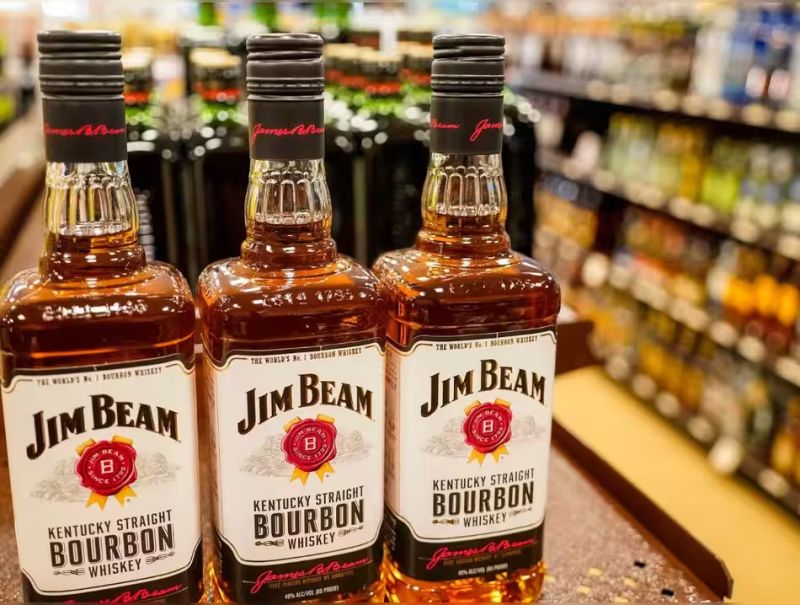
The strategy in India centers on whisky. Suntory plans to expand its locally made Oaksmith brand in the mass and mid-premium segments while using imported Japanese and American labels, including Jim Beam, to reach higher-priced consumers. Hughes said the company is not relying on a sharp shift toward premium products alone to meet its ambitions. Instead, he described scale in India-made foreign liquor, or IMFL, as the main path to growth.
That approach sets Suntory apart from some rivals that have expanded their presence with Indian single malt brands. Hughes said the company has no current plan to launch an Indian single malt of its own, even as that segment gains attention. The focus instead will stay on broader whisky demand, where the customer base is much larger.
India is the world’s largest whisky market by volume. The Economic Times report said the country sold about 260 million cases of whisky in 2025. That scale is a major attraction for international spirits companies, even though the market is highly regulated and fragmented across states, with different tax structures, approvals and distribution rules.
Suntory said it already holds strong positions in some imported categories. The company attributes to its brands about 95% of Japanese whisky sold in India and 44% of the American whiskey category. Those figures were cited by the company, which did not publish the methodology behind them. Suntory also owns Teacher’s, one of the larger scotch labels in the Indian market.
Hughes told the Economic Times that India remains “dynamic and exciting” but also “complicated and highly regulated.” He said the company has responded by building more local regulatory and commercial capabilities and by narrowing its focus to key brands and markets instead of trying to chase every opportunity at once.
Oaksmith is central to that plan. The brand was developed for India with Suntory chief blender Shinji Fukuyo and is intended to give the company broader reach beyond the premium imported segment. Jim Beam and Japanese labels such as Hibiki, Toki and Yamazaki are expected to serve consumers trading up in different price tiers.
Neeraj Kumar, Suntory’s managing director in India, told the publication that the market is premiumizing within segments rather than shifting only toward expensive imported spirits. In practice, that means many consumers are moving to better products inside their usual price band, not necessarily leaping into luxury categories. That trend supports Suntory’s decision to pursue both mainstream and premium whisky rather than concentrating only on high-end imports.
The company also sees a demographic opening. Hughes said India is expected to add about 100 million legal-drinking-age consumers by 2030, a contrast with slower growth or declining new-consumer bases in more mature markets. That long-term demand story helps explain why the company is willing to pursue such an aggressive expansion target despite the complexity of the market.
Suntory has not said how much capital it will commit. Hughes told the publication that spending will be aimed first at strengthening the organization, improving commercial and regulatory capabilities, and expanding supply infrastructure rather than pursuing a large acquisition. He also pointed to bottling capacity as a priority, including possible co-manufacturing arrangements, but declined to provide investment figures.
The company is also keeping some categories on the sidelines for now. Hughes said Suntory has excluded its ready-to-drink portfolio from its India business at this stage. He described RTDs as a possible second-phase opportunity once the whisky business reaches greater scale. For now, the company’s effort in India is centered on becoming a much larger whisky player.
Nearly two years ago, Suntory Holdings created a separate local unit, Suntory India, to explore broader expansion in the country, including soft drinks and wellness products. But in spirits, the immediate task is more focused: grow Oaksmith, push Jim Beam and Japanese whisky deeper into the market, and close part of the gap with larger competitors such as Diageo and Pernod Ricard.
Whether Suntory can meet its $1 billion goal will depend on how quickly it can build distribution, navigate state-by-state regulation, and expand supply without overextending itself. The company has outlined the broad shape of its plan, but key details remain undisclosed, including expected volumes, investment levels and the assumptions behind its market-share claims.
