Global beer output fell 0.7% in 2025 as brewers leaned on higher prices
Flat demand left the industry chasing revenue through premium brands, nonalcoholic beer and broader beverage portfolios
Tuesday, July 28, 2026
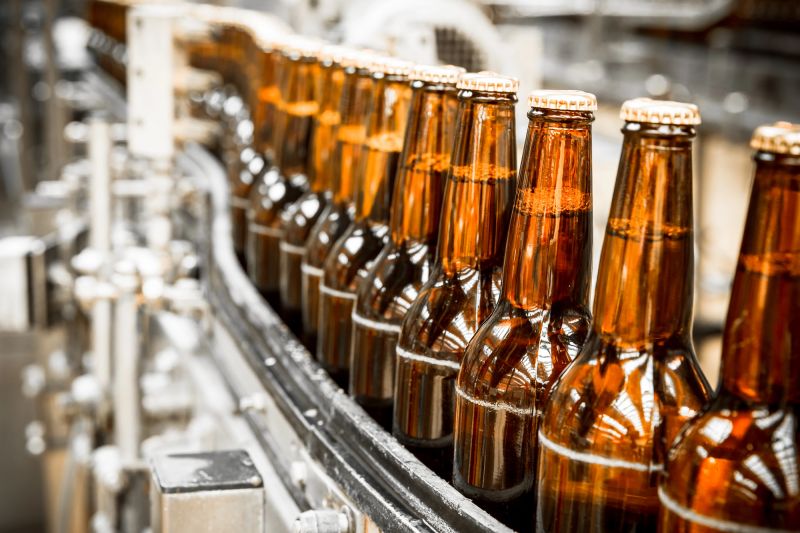
The global beer business has entered 2026 with a clear split between volume and value. Worldwide output is flat to slightly lower, and consumption in many mature markets remains weak. Yet the industry is still holding up on revenue through higher prices, premium brands, growth in nonalcoholic beer and broader beverage portfolios that now include soft drinks, mixers and energy drinks.
That pattern is visible across the latest industry data. BarthHaas said global beer production reached 1.875 billion hectoliters in 2024 and then fell 0.7% in 2025 to just under 1.9 billion hectoliters. Its outlook for 2026 points to a market that is essentially flat, without a strong rebound in output. On the demand side, Kirin estimated global beer consumption at 194.12 million kiloliters in 2024, up 0.5% from a year earlier. But IWSR reported that beer volumes declined in 2025 across major markets, with some of that pressure offset by better product mix and continued gains in alcohol-free beer.
The result is a sector that no longer depends on selling more liters each year. Brewers are relying instead on pricing discipline, premium labels, low- and no-alcohol products and expansion into adjacent categories. That shift has become central to strategy from North America to Europe and Asia, especially as consumers in many countries cut back on alcohol or become more selective about where and what they drink.
The industry also remains highly concentrated. According to the BarthHaas ranking for 2025, AB InBev produced 484.19 million hectoliters, Heineken 235.65 million, China Resources Snow 110.30 million and Carlsberg 99 million. Based on global production for the year, those figures imply estimated volume shares of about 25.5% for AB InBev, 12.4% for Heineken, 5.8% for China Resources Snow and 5.2% for Carlsberg. The top 40 brewing groups together produced 1.586 billion hectoliters in 2025, or about 84% of world output.
That concentration matters because scale is helping large brewers absorb a difficult cost environment while investing in new categories. Energy has become a renewed source of pressure in 2026 after geopolitical tensions in the Middle East pushed costs higher. The World Bank projected a 24% increase in energy prices this year, while the International Energy Agency said wholesale spot electricity prices in the European Union and Japan rose by more than 30% year over year in the second quarter.
Agricultural inputs tell a different story. Global barley production held steady at 142 million metric tons in 2024, according to the Food and Agriculture Organization, and barley stocks remain relatively high heading into the 2026-27 season. Hops are still in structural oversupply. BarthHaas reported a surplus of roughly 1,200 tons of alpha acids in 2025 despite reduced acreage. For brewers, that has eased pressure on two key raw materials even as farmers face weaker returns.
The regional picture shows where growth is still available. Asia remained the largest beer-consuming region in 2024 with 63.33 million kiloliters, equal to 32.6% of global consumption, though it declined 1.4%. Europe rose 1.4% to 49.23 million kiloliters. Central and South America grew 1.6%. Africa posted the strongest gain among major regions at 3.7%, while North America slipped 0.5%. In production terms, Africa also stood out with growth of 6.7% in 2024, ahead of Europe’s 1.1%, while Asia fell 2.3%.
At the country level, China remained the largest beer market by volume at 40.534 million kiloliters in 2024 despite a decline of 3.7%. The United States followed with 22.34 million kiloliters, down 0.5%. Brazil consumed 15.304 million kiloliters, up 1.1%, and Mexico reached 10.787 million kiloliters, up 5.4%. Russia rose 9%, while Germany fell 2.2%. India was one of the strongest growth stories among major markets, with consumption up 14.6%, according to Kirin.
Those numbers underline one of the main themes shaping brewer investment decisions: mature markets are slowing or shrinking, while emerging markets still offer room for expansion. Africa and India have become especially important because they combine population growth with rising urban consumption and lower per capita penetration than traditional beer markets.
Per capita drinking tells another part of the story. The Czech Republic again led the world in 2024 at 148.8 liters per person, followed by Lithuania at 110.6 liters and Austria at 104.6 liters. The United States stood at 65.4 liters per person. For multinational brewers, large countries such as China, the United States and Brazil provide scale, but high-consumption European markets still matter for premium positioning and brand value.
Trade flows also show how globalized the category remains even as local tastes diverge. In 2024 Mexico was by far the largest exporter of malt beer by value at $6.50 billion, followed by the Netherlands at $1.80 billion, Belgium at $1.74 billion and Germany at $1.34 billion. The United States was the largest importer at $7.74 billion, well ahead of France and Italy. Mexico’s position reflects its deep integration with U.S. demand, while Europe continues to dominate premium exports and specialty styles.
Large brewers are responding by broadening their portfolios beyond traditional beer. Carlsberg’s acquisition of Britvic, announced in July 2024 for $4.23 billion and completed in January 2025, strengthened its position in soft drinks and mixers as well as lower-alcohol beverages. Molson Coors expanded its total beverage strategy through its majority stake in ZOA Energy in late 2024. Diageo agreed at the end of 2025 to sell its 65% stake in East African Breweries to Asahi for $2.3 billion, a deal still moving through during 2026 and closely watched because it would deepen Asahi’s exposure to African brewing markets.
Even craft beer is being reshaped by consolidation after years of slower growth and weaker economics for smaller producers. In the United States, the Brewers Association said craft volume fell 4% in both 2024 and 2025, dropping to just over 22 million barrels last year, with most breweries reporting declines. That backdrop helps explain Tilray’s acquisition of BrewDog in March to build a larger international craft platform.
Financial results from major brewers show how uneven operating conditions have become beneath stable headline revenues. AB InBev reported $59.3 billion in revenue for fiscal year 2025 and normalized EBITDA of $21.2 billion, with an EBITDA margin of35.8%, even though total volumes fell 2.3% and beer volumes dropped 2.6%. Heineken posted net revenue of €28.89 billion on a BEIA basis and improved its operating margin to15.2%, while total volume reached 281.6 million hectoliters across its portfolio.
Molson Coors offered a less favorable picture of what happens when pricing cannot fully offset weaker demand and higher costs. Its financial volume fell8.6% in 2025, net sales per hectoliter rose4%, but cost of goods sold per hectoliter increased faster at5%. That gap has become one of the central risks for brewers without strong premium brands or enough scale to spread fixed costs.
Nonalcoholic beer has emerged as one of the few clear growth engines inside an otherwise mature categoryalcoholic analogs grew9% by volume in , according to IWSRbeer itself rose8%. IWSR expects no- and low-alcohol products to keep expanding through the rest of the decade as health concerns, moderation habits and regulatory pressure reshape drinking patterns.
That trend is changing shelf space decisions as well as marketing budgetsmarkets such as Europe increasingly treat alcohol-free lager not as a niche but as a mainstream segment with broad appeal across age groups and occasionsbrewers see it as attractive because it can support premium pricing while reaching consumers who are drinking less overall
Premiumization has slowed from its earlier pace but remains importantbeer priced at premium-and-above levels still grew3% in volume in , helped largely by stronger performance within beer than other alcohol categoriesfor many companies this means value growth now depends less on mass-market lager alone and more on whether they can move consumers toward better-margin products without losing them entirely
Sustainability has also moved from corporate messaging into operating economicswater useenergy sourcingpackaging design and returnable systems now affect margins directlyAB InBev said it used2 hectoliters of water per hectoliter produced in , down22% from , while reducing emissions across scopes ,and per hectoliter by31%. It also said100% of its contracted electricity came from renewable sourcesHeineken reported average water use of2 hectoliters per hectoliter and an88% renewable electricity shareCarlsberg said it cut absolute emissions from production sites by12%
Digital sales remain small compared with store-based retail and barsrestaurantsbut they are becoming more important as tools for data collectiondirect marketing and route-to-market controlFortune Business Insights estimates off-trade will account for56% of the global beer market this yearIWSR said e-commerce represented3% of total beverage alcohol value in , held roughly steady into , and could rise to3% by . AB InBev said its direct-to-consumer TaDa Delivery platform handled4 million orders in fiscal .
Regulation is tightening on two fronts: alcohol taxation and packaging rulesThe World Health Organization has pushed standardized measures on alcohol tax burdensand Britain raised alcohol duties again this year under its inflation-linked systemIn Europe,new packaging rules are adding requirements around recyclabilityreuseand labelingthat will affect bottlescansand return logisticsFor brewers already dealing with higher energy bills,the cost of compliance is becoming another factor separating larger operators from smaller ones
Climate risk is adding further uncertaintyA June heat wave across Europe damaged crops and raised concerns about grain yieldsincluding barleyused for maltingThat comes on top of cyber risk after Asahi faced disruption following a cyberattack last yearshowing that supply chain resilience now includes digital infrastructure as much as farmingtransport or glass supply
Taken together,the data point to an industry that is still largeand still profitable for leading playersbut no longer driven by straightforward volume growthThe strongest positions in are held by companies that combine global scale with exposure to emerging markets,a credible nonalcoholic strategy,strong pricing power,and tighter control over energywaterpackagingand distributionIn beer,the center of gravity has shifted from making more product to extracting more value from each hectoliter sold