German households bought 4.4% less wine in the first half of 2026.
Italian producers increased their share after domestic wines fell 5.7% in volume and 7.2% in value.
Monday, September 7, 2026
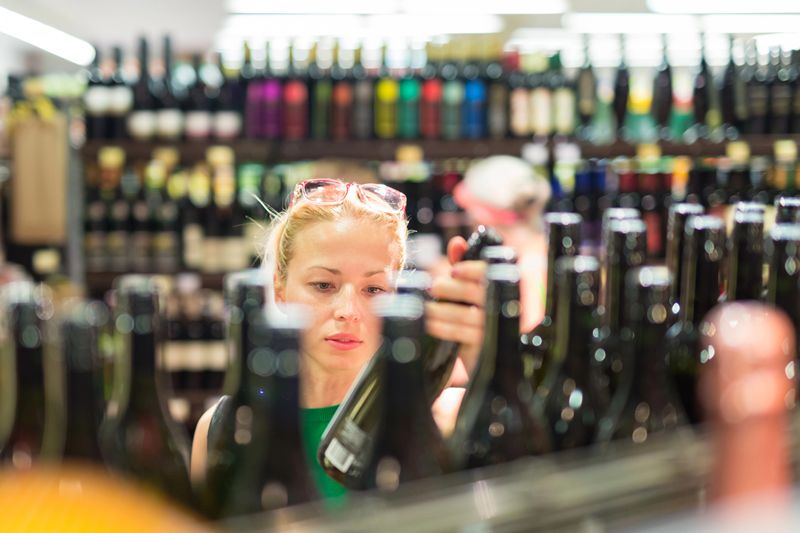
German households bought less wine for at-home consumption in the first half of 2026 than they did a year earlier, while Italian producers increased their share of the market and German wine lost ground faster than imports.
The figures come from the German Wine Institute, or DWI, based on the NielsenIQ HomeScan panel of private household purchases, and were highlighted in an analysis published Sunday by Wine Meridian. The comparison covers January through June of 2026 against the same period of 2025 and refers only to retail purchases for home consumption, not restaurant or other out-of-home drinking.
Overall wine purchases by German households fell 4.4% in volume in the first half, while spending dropped 5.8%. Because value declined more than volume, the data point to an implied drop of about 1.5% in value per unit. That does not necessarily mean a broad cut in shelf prices. It may also reflect heavier promotions, a shift toward cheaper bottles, or changes in the mix of products consumers bought. The panel data do not allow those factors to be separated precisely.
One of the main findings in the DWI report is that the downturn did not come from a collapse in the number of buyers. The share of households that bought wine rose slightly to 43.0% from 42.6% a year earlier. Even with that increase, total purchases still fell, which the DWI said was the result of households buying wine less often and in smaller quantities.
That pattern matters for producers and exporters because it suggests that wine is still reaching a broad group of consumers in Germany, but it is taking up less space in their regular shopping baskets. The market, in other words, is not simply losing buyers. Existing buyers are purchasing less.
German wine was hit harder than imported wine during the period. Purchases of German wine fell 5.7% in volume and 7.2% in value. Imported wine declined 3.4% in volume and 4.5% in value. The sharper fall for domestic wine reduced its market share on both measures.
In volume terms, German wine accounted for 42.5% of all wine bought by households in the first half, down from 43.1% a year earlier. In value terms, its share fell to 46.4% from 47.3%. The larger drop in value than in volume suggests that German wine not only sold less, but also held its revenue less effectively than foreign wine in the retail channel.
Italy was the main beneficiary among major origins. Italian wine raised its share of the German household wine market to 18.8% by volume from 17.1% in the first half of 2025. By value, Italy’s share increased to 21.6% from 20.3%. That was a gain of 1.7 percentage points in volume and 1.3 points in value.
The underlying DWI charts show Germany remained the largest source of wine purchased by households, followed by Italy, Spain and France. In volume, Spain held 13.1% and France 9.5% in the first half, while the category of other countries accounted for 13.7% and New World wines for 2.4%. In value, France ranked behind Italy, while Spain, other countries and New World wines followed.
Wine Meridian said Italy’s gains were especially visible in white wine, a segment that has traditionally been one of Germany’s strongest positions. DWI data show German wine still represented 51.8% of white wine purchases by volume in the first half of 2026, but that was below its level a year earlier. The report also showed German wine at 30.1% of red wine purchases and 40.9% of rosé by volume.
The shift is notable because white wine is one of the categories where domestic producers have long had a strong foothold. A weaker performance there leaves more room for competing origins. The published analysis pointed to Italy as the country that captured part of that demand, rather than simply benefiting from a broad expansion of the market.
The buyer reach figures also show a split between domestic and imported wine. The share of households buying German wine rose to 31.1% in the first half from 30.3% a year earlier. For imported wine, buyer reach fell to 29.9% from 30.6%. Even so, German wine underperformed on purchased volume and value, which indicates that households that did buy domestic wine bought less of it over the period.
That is one reason the report is important for exporters and domestic producers alike. It suggests the pressure in Germany is now less about attracting first-time buyers and more about getting current buyers to purchase more often or in larger amounts. For imported producers, especially Italy, market share can still grow even when the total market is shrinking, provided they lose less ground than competitors or take share from domestic wine.
The DWI newsletter described the pattern as part of a longer-running contraction in wine bought by private households. Quarterly charts in the report show declines have persisted across recent years, although the first-half 2026 numbers were the focus of the latest release. The institute also noted that average prices eased slightly in the first half, helping explain why spending fell faster than volume.
Wine Meridian’s analysis, published on September 6, framed the results as a sign of a more selective German consumer and a more competitive retail market. The publication also stressed a key limitation: the NielsenIQ HomeScan panel measures purchases by private households in stores and does not include hospitality or other out-of-home channels. The figures therefore show retail buying for home consumption, not total wine consumption in Germany.