France Delays Its First 2026 Wine Crop Forecast Until Sept. 8
An unusually early harvest has begun in pockets, with heat and drought leaving France unable to gauge national output.
2026-08-07
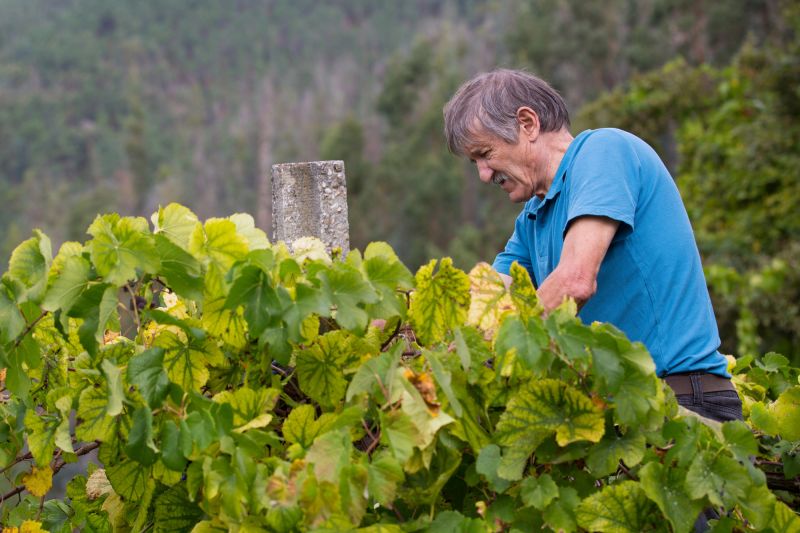
France has started bringing in grapes for the 2026 vintage, but only in pockets, and the country still cannot say how big the crop will be.
As of Aug. 7, the most accurate description is that the harvest is unusually early and the national volume remains impossible to measure with confidence. France’s Agriculture Ministry was expected to publish a first 2026 production estimate on Aug. 7, but it postponed that release to Sept. 8, saying uncertainty was strong or very strong. That leaves private estimates in circulation, but no official national figure.
The early start is real. An isolated picking was recorded in Fitou on July 15. A broader start followed in Languedoc-Roussillon in the last week of July. In Bordeaux, the first grapes for crémant were cut on Aug. 6, nearly 15 days earlier than in 2025. In Champagne, one exceptional Chardonnay parcel in Montgueux also began on Aug. 6 under a special waiver. In much of the rest of the country, growers are still testing ripeness and preparing for harvest windows in mid- to late August.
The delay in the official forecast reflects a lesson from last year. For 2025, the statistics office Agreste began in August with a national range of 40 million to 42.5 million hectoliters, lowered that to 37.4 million in September, then to 36.2 million in November. Provisional declarations published this April put the final 2025 crop at 34.352 million hectoliters, 5% below 2024 and 20% below the 2020-2024 average. That sequence is one reason officials are resisting the urge to turn scattered regional signals into a national total too early.
The broad direction for 2026 is lower, but the size of the drop is still open. Growers across many regions are dealing with drought, small berries, interrupted ripening, hail and local frost. Those factors have cut yield potential. At the same time, moderate rain in the coming weeks could still restore some berry weight and juice in parts of the vineyard. That is why French officials have chosen not to publish a national number yet.
For now, many growers and trade groups say potential quality looks better than potential volume. Dry weather has generally kept disease pressure under control and can favor concentration in the grapes. But the same conditions are also pushing sugar levels up fast, reducing acidity and raising the risk of dehydration, sunburn and uneven ripening. In red grapes, growers are watching for a mismatch between technological ripeness, which means sugar and potential alcohol, and phenolic ripeness, which includes tannins, color and aroma compounds. In sparkling wines and many whites, the pressure point is preserving acidity before it falls too quickly.
The weather behind this season has been severe. According to Météo-France, spring was the warmest on record in the country, with temperatures 1.7 degrees Celsius above normal, rainfall down 30% and sunshine up about 20%. June was even more extreme, the hottest June ever recorded in France, at 3.8 degrees Celsius above the 1991-2020 average, with a heat wave from June 17 to June 30 and rainfall down close to 50%. July did not bring relief. National rainfall was down 67%, making it the third driest July since 1959, with more heat waves early in the month and again from July 28.
In the vines, heat has not had a single effect. It has accelerated sugar accumulation and moved the calendar forward, but severe water stress has also slowed photosynthesis, limited berry growth and in some parcels blocked ripening. That helps explain why the official line is that quantity is under more pressure than health. Dry conditions have reduced mildew and rot in many places, so sanitary conditions are often described as good or promising. But growers are still watching for powdery mildew, flavescence dorée and leafhopper pressure in some areas.
Regional conditions are sharply uneven. Languedoc-Roussillon, which started earliest on a broad basis, is reporting generally sound fruit where vines have held up, but also smaller berries, stress and signs of dehydration. Bordeaux has begun with small early cuts for sparkling wine and growers there have described very good sanitary conditions in those first lots. Elsewhere in the region, small berries, heat and local hail remain concerns. In parts of Provence and the Var, fire is also part of the season’s risk, though wine bodies and analysts say smoke taint cannot be treated as a confirmed defect before grape, must and fermentation tests.
Champagne offers a clear example of how climate and market pressure are meeting in the same season. The regional committee has set the commercial yield for 2026 at 8,800 kilograms per hectare, down from 9,000 in 2025, 10,000 in 2024 and 11,400 in 2023. That figure is not a forecast of what the vines will physically produce. It is the amount that can be marketed under the rules, and it reflects both a heterogeneous crop and an effort to manage inventories. The region has had frost in parts of the Côte des Bar, plus heat and drought. At the same time, Champagne shipments reached 107.1 million bottles through the end of June, up 1.2%, with exports supporting the market while sales in France continued to weaken.
Burgundy and Beaujolais are not harvesting on a broad scale yet, but ripeness checks are active and many growers are working toward openings from mid-August, depending on local conditions. Vineyard health is broadly favorable, but the picture is uneven in dry soils and younger vines. Hail, frost in Chablis and drought stress have trimmed parcel potential in some areas. The Loire Valley is following a similar path, with no general start yet confirmed and first cuts expected from mid- to late August depending on the subregion. Some parcels have healthy bunches and could benefit from well-timed rain, but dry growth conditions have limited berry size and weight.
Alsace has not officially started either, though sparkling wine grapes could begin around Aug. 17. The sector there has circulated a regional estimate of about 804,000 hectoliters, down from 840,000 in 2025, but that is not an Agreste number and does not settle the national picture. Corsica has reached at least mid-véraison across all varieties, with early grapes moving into ripening, and vineyard bulletins there describe mildew as checked and powdery mildew as stable. In the Rhône Valley and Ardèche, the last official vineyard health reports pointed to generally sound fruit, but drought, hail and fast acid loss are weighing on expectations.
The labor question this year is less about a national shortage in the abstract than about timing and logistics. The earlier season is compressing recruitment into August, when several regions may need workers at once. Housing, transportation, high temperatures and oversight of subcontractors matter as much as raw headcount. Burgundy-Franche-Comté says it structurally needs more than 40,000 harvest workers each year. Champagne, where picking is manual, relies on around 120,000. Those are not national 2026 forecasts, but they show the scale of demand in two major regions alone.
Many job postings require a car, and lodging is often not included. France’s gross minimum wage now stands at €12.31 an hour. Collective agreements, bonuses and piece rates can raise pay, but not below the legal floor. The heat has also changed the way estates have to organize work. When weather alerts are in place, employers are required to adapt schedules, provide breaks, shade or ventilation and fresh water. The most sensitive labor risks remain opaque subcontracting chains, poorly recorded hours and degraded housing conditions for seasonal workers.
A smaller harvest, if it comes, will not by itself solve the broader crisis facing French wine. It may help reduce inventories in some parts of the market, but it also raises unit costs for farms that have fewer liters to spread their expenses across. Cash flow can worsen quickly when yields fall, especially in regions already under demand pressure.
That pressure is visible in trade and public policy. France exported 12.6 million hectoliters of wine in 2025 for €11.19 billion, down 2% in volume and 4% in value, according to FranceAgriMer. Shipments to the United States fell 8% in volume and 18% in value. Some bulk white and red wines in Occitanie have shown firmer pricing, but red and rosé wines in several regions, along with Cognac and much of Bordeaux, remain under strain.
The state response has turned increasingly structural. In the 2026 aid program for permanent vine removal, growers filed 5,923 applications covering 27,926 hectares. Of those, 1,392 winegrowers applied to leave the sector entirely, covering 10,342 hectares. The aid is set at €4,000 per hectare. A separate crisis distillation measure has allocated €40 million for red and rosé wine, and by July 1 more than 2,000 operators had applied to distill 770,000 hectoliters, mainly in Aquitaine, Languedoc-Roussillon and Rhône-Provence.
That means the 2026 harvest is being shaped not only by weather in the vineyard, but also by weak demand and inventory management. In Champagne, the lower marketable yield makes that visible. In the south and west, uprooting and distillation show that some volumes are being managed out of the system before they ever reach the bottle.
For the next month, growers and officials will be watching a narrower set of signals than headlines suggest. The most important may be not whether it rains somewhere in France, but whether useful rain reaches dry vineyard soils without hail or flooding. Berry weight and juice yield will show whether volume can recover. Lab work will track sugar, total acidity, pH and malic acid, especially in early whites and sparkling bases. Red growers will be checking whether tannins and flavor ripeness catch up with sugar accumulation. In the Var and any fire-exposed zone, smoke-related compounds will be watched analytically rather than assumed.
Champagne is due to publish harvest calendars by commune and variety on Aug. 12. Alsace is expected to announce official dates around Aug. 17. The first national estimate from Agreste is scheduled for Sept. 8, when France may finally have enough hard data from vineyard samples, press yields and cellar intakes to say how much wine the 2026 season is likely to produce.
