Study finds AI spectroscopy predicts grape ripeness without crushing fruit
The non-destructive method estimated sugars and organic acids in intact berries and highlighted varietal differences that shape accuracy
2026-07-10
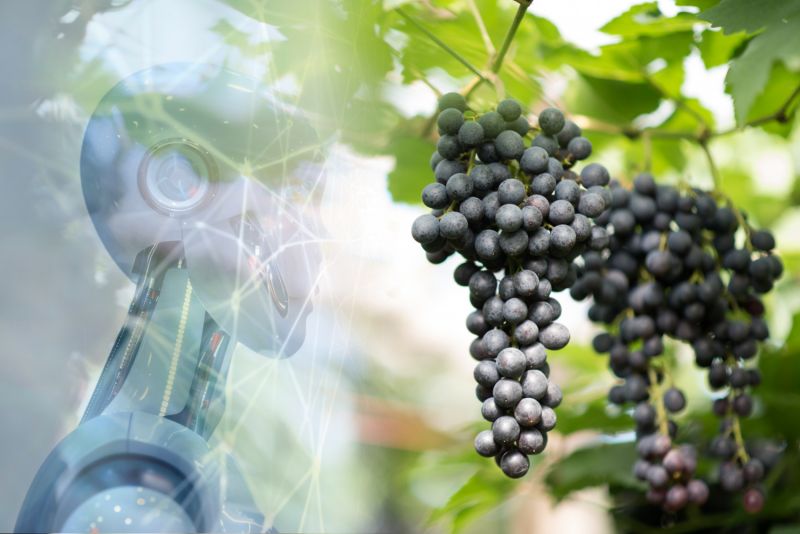
A study published on July 1 in Food Research International reports that near-infrared spectroscopy, combined with explainable artificial intelligence, can help predict sugar and organic acid levels in grapes without cutting or crushing the fruit, a step that could improve how growers and winemakers monitor ripeness in the vineyard.
The research focused on a basic problem in grape production: quality checks are essential for both fresh consumption and wine production, but traditional testing often requires destructive sampling and lab work. The authors examined whether non-destructive near-infrared, or NIR, measurements could be used to estimate key compounds linked to grape maturity and balance, especially sugars and organic acids.
According to the study, the main challenge is that grape varieties do not behave the same way. Different cultivars show distinct spectral signatures, which means a model trained on one variety may not perform as well on another if varietal differences are ignored. The researchers found that this varietal specificity is not a minor detail but a central factor in building reliable prediction systems.
To address that issue, the study used feature selection methods to identify the wavelengths most closely tied to the grapes’ chemical composition. By narrowing the data to the most relevant signals, the models improved their predictive performance. The paper also applied explainable AI tools so that users could see which parts of the spectrum were driving each prediction, rather than relying on a black-box result.
That transparency matters because adoption of AI tools in agriculture often depends on whether growers and technical teams can understand how a system reaches its conclusions. In this case, the explainable approach was presented as a way to make NIR-based monitoring more practical for viticulturists who need confidence in field decisions tied to harvest timing and fruit management.
The study’s results showed accurate prediction of both sugar content and organic acid levels. Those measures are closely watched in vineyards because they shape ripeness, freshness and eventual wine style. Sugar levels influence potential alcohol, while acids affect balance and stability. A faster way to estimate both traits in intact berries could give producers more frequent readings across blocks or parcels without sending as many samples to a lab.
For the beverage sector, the implications could be significant if the method proves robust at commercial scale. In wine production, more precise and less invasive monitoring may support precision viticulture and help wineries decide when to harvest with better information from the field. It could also reduce delays between sampling and action, especially during narrow harvest windows when weather and fruit chemistry can change quickly.
The study describes the method as rapid and non-destructive, two features that could make it useful beyond research settings. Because feature selection highlights key wavelengths, calibration and deployment may also become more efficient than with broader models that use large amounts of spectral data without clear justification. That could lower some barriers for practical use in grape operations that want faster quality control tools.
The authors said their findings support improved grape quality monitoring and management across the industry. While the paper centers on grapes, its broader message is that combining spectroscopy with explainable AI may offer food and beverage producers a clearer path toward using machine learning in routine quality assessment, particularly when biological variation between varieties or cultivars affects performance.
