Chambord Will Open Its Largest Exhibition Since 2019 on Court Dining This Fall
The show traces meals from Francis I to Princess Diana through reconstructed banquets, archaeology and virtual reality at the Loire château.
2026-07-09
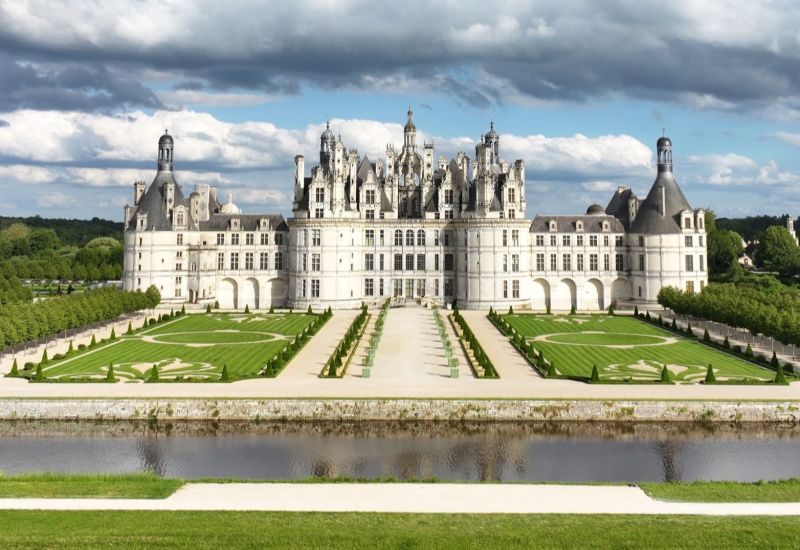
The Domaine national de Chambord will open a major exhibition on food, dining and court life this fall, tracing how meals at the Loire Valley château evolved from the Renaissance to the late 20th century.
“The Feasts of Chambord” will run from Sept. 26 through Jan. 24, 2027, at the French estate, which said the show is its largest exhibition since 2019. Organized with the European Institute for the History and Cultures of Food, the exhibition will focus on Chambord’s gastronomic history from the 16th century to today through reconstructed banquet tables, archival documents, archaeological finds and immersive installations.
The exhibition is set inside the château’s keep, where visitors will move through four centuries of dining practices under the sculpted vaults of the second floor. At the center of the show are four tables that recreate or reinterpret meals tied to key moments in Chambord’s history.
The first revisits a supper from 1539 during the visit of King Francis I and Emperor Charles V. Because much of the original furniture and tableware from that period has been lost and survives mainly in drawings, organizers turned to 3D reconstruction to recreate dishes, serving pieces and ceremonial objects. The display includes cuts of meat, along with music and scent, to suggest how such a royal meal may have looked and felt.
A second table reconstructs a luncheon for 30 guests held in September 1685 during Louis XIV’s final stay at Chambord. That installation draws on drawings of dishes used at Versailles and on an annotated table plan by the Prince of Condé preserved at the National Library of France. Organizers said it illustrates a meatless day meal built around starters and soups and arranged according to service à la française, the formal French style in which multiple dishes were presented at once in a carefully ordered display.
The third setting shifts to the private world of Marshal Maurice de Saxe, who stayed at Chambord between 1745 and 1750. Rather than a state banquet, this section reconstructs his “coffee room,” using post-mortem inventories to show how dining habits changed in the 18th century with imported products, specialized rooms for eating and new materials used in tableware.
The final table recreates a gala dinner held on Nov. 9, 1988, in honor of the Prince and Princess of Wales. According to Chambord, the official table for 16 guests has been rebuilt with tableware and decorations from the silver collection of the Élysée Palace and holdings from the Mobilier National. The meal highlighted regional products and local craftsmanship. Among the objects included in connection with that event is a white lace coat-dress worn by Princess Diana.
Beyond those four scenes, the exhibition expands into a broader look at dining culture at Chambord through manuscripts, printed menus, historic objects and sensory displays. One thread follows dishes associated with the estate’s identity, including Carpe à la Chambord, a carp preparation first published in 1735 by Vincent de La Chapelle in “Le Cuisinier moderne.” The recipe later faded from view but has recently been revisited by Christophe Hay, the two-Michelin-starred chef of Fleur de Loire in Blois, whose contemporary version is featured in the exhibition.
Another part of the route presents products inspired by Chambord or made from estate resources, including herbal teas, rum babas, jams, honey, cured meats, vegetable soups, birch water and Chambord liqueur. Organizers describe that section as resembling a fine grocery store and intended to connect courtly dining history with present-day regional production.
The exhibition also draws on archaeology. Since the 2000s, excavations in cesspits at the château have uncovered food waste, fragments of tableware, bottles and everyday objects discarded by residents over time. Those remains are being used to document eating habits and domestic life across centuries. A multimedia installation will allow visitors to explore former food preparation spaces such as kitchens, ovens, sink stones and hot-holding potagers, as well as preserved décor and graffiti in a 17th-century cupbearer’s room.
Menus from notable official meals held at Chambord in the 20th century will also be shown. They include presidential hunting dinners from 1965 to 1980, a luncheon honoring Queen Elizabeth II in 1979 and a lunch served during a meeting of European agriculture ministers in 2016.
A major part of the project rests on digital reconstruction. Chambord said 183 pieces of goldsmith work were specially created for the exhibition through research and development: 33 pieces for the Renaissance table and 160 for the 17th-century table. The work was carried out with ARISTEAS, a company specializing in heritage and architectural 3D modeling. Using period drawings, museum-held originals and iconographic analysis reviewed by a scientific committee, the team recreated serving ware and ceremonial pieces that no longer exist or were never produced beyond sketches.
The estate has also partnered with GEDEON Experiences on a 20-minute virtual reality program called “The Royal Feast. Chambord, 1539,” which invites visitors wearing headsets to join the banquet of Francis I and Charles V.
For Chambord, the exhibition is also meant to challenge an old image of the château as an empty monument detached from daily life. By focusing on kitchens, service rooms, menus, ingredients and ceremonial display, organizers say they want to show that Chambord was not simply an architectural symbol but also a lived-in place shaped by labor, hospitality and political ritual around food.
That argument fits with Chambord’s broader role in French cultural tourism. The château has been state-owned since 1930 and is managed as a public institution under ministries responsible for culture, agriculture and environment. Listed among France’s earliest historic monuments in 1840 and designated a UNESCO World Heritage Site in 1981, it receives more than one million visitors each year and remains one of France’s most visited castles.
The exhibition opens to the public on Sept. 26 after a press preview scheduled for Sept. 24. Full admission is listed at €31, with reduced rates at €28.50; lower prices apply for residents or nationals of the European Economic Area with valid documentation. Admission is free for visitors under 18 and for European Union citizens under 26. Chambord is accessible from Paris by road via the A10 or by train from Gare d’Austerlitz.
