Château de la Treyne will celebrate its chef’s 25-year Michelin run with a three-generation dinner
The Sept. 24 event reunites Stéphane Andrieux with his former mentor and a onetime apprentice who won his first Michelin star this year.
2026-06-30
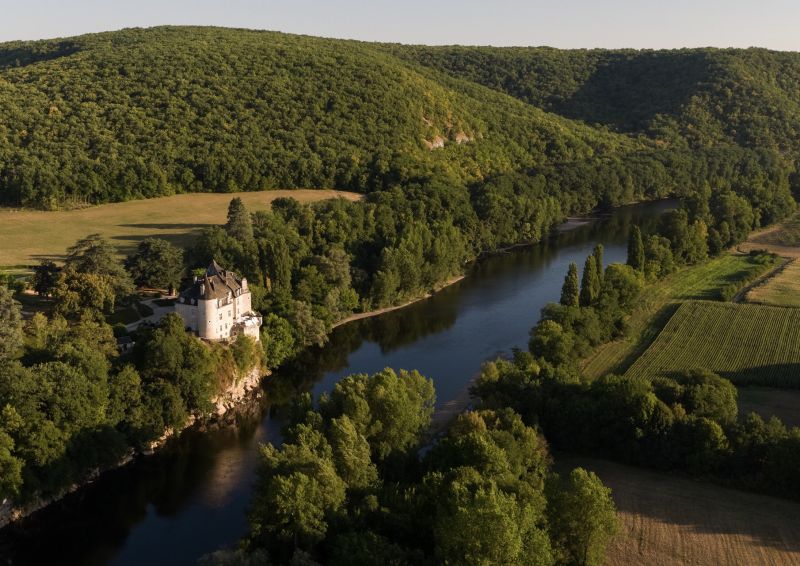
Château de la Treyne, a Relais & Châteaux property in Lacave in southwestern France, will mark 25 consecutive years of holding a Michelin star under executive chef Stéphane Andrieux with a six-hands dinner on Sept. 24 that brings together three generations of French chefs.
The event will pair Andrieux with his former mentor, Didier Clément, a chef who previously held two Michelin stars, and Baptiste Moura, a 30-year-old former apprentice at the château who earned his first Michelin star this year. The dinner is priced at €196 per person and is being presented by the property as both a celebration of Andrieux’s long run of Michelin recognition and a tribute to the transmission of culinary knowledge across generations.
The milestone places Andrieux among a small group of chefs in France who have maintained Michelin-star status over such a long period without interruption. At Château de la Treyne, that consistency has become central to the identity of the hotel and restaurant, which sit above the Dordogne River in a landscape of cliffs, woods and formal gardens.
The property says its cooking is closely tied to the surrounding region and to ingredients produced on site or sourced nearby. Produce comes from the château’s organic kitchen garden as well as markets in Périgord, while other products are drawn from the area’s truffle grounds, rivers and farms. Fresh eggs, honey, herbs and seasonal vegetables are among the ingredients used in the kitchen.
That local approach has helped define Andrieux’s style over the years. Rather than treating fine dining as separate from its setting, Château de la Treyne has built its culinary reputation around the idea that cuisine should reflect the rhythm of the seasons and the character of the land around it. In winter, truffles shape much of the menu. In summer, meals are served with views over the river from terraces and historic dining rooms inside the château.
The Sept. 24 dinner is designed to highlight that continuity while also showing how French haute cuisine evolves. Clément represents an older generation of Michelin-trained chefs whose influence shaped many younger cooks in France. Andrieux stands at the center of the château’s modern history, having preserved its Michelin distinction for a quarter century. Moura represents a newer generation now entering prominence after moving from apprentice to Michelin-starred chef.
In practical terms, the evening will be a collaborative service in which all three chefs share responsibility for the menu. Château de la Treyne has described it as more than a commemorative meal, framing it instead as a conversation between memory, inheritance and renewal through food.
The setting is likely to play an important role in that message. Château de la Treyne is known not only for its restaurant but also for its broader hospitality offer, which combines medieval architecture, French formal gardens designed by Édouard André and 120 hectares of private woodland. The hotel has long marketed itself around an art de vivre rooted in heritage, nature and gastronomy, and this anniversary dinner fits squarely within that positioning.
For travelers interested in destination dining, the event also reflects a broader pattern in French luxury hospitality, where hotels increasingly use milestone dinners and chef collaborations to draw attention beyond their resident guest base. Such events can serve both as celebrations of culinary achievement and as tourism drivers for rural regions that rely on high-end food experiences to attract international visitors.
In this case, Château de la Treyne is using the anniversary to underline both prestige and continuity. The presence of Clément links Andrieux’s work to an earlier chapter of French fine dining, while Moura’s participation points to how elite kitchens continue to train new talent even as they preserve established standards.
The château’s announcement places strong emphasis on place as well as people. It describes gastronomy there as an extension of the landscape rather than an isolated performance, with dishes shaped by what grows or is harvested nearby and by the changing conditions of each season. That idea has become increasingly important in European fine dining, where provenance and environmental awareness now carry almost as much weight as technical execution.
For Château de la Treyne, the anniversary offers a chance to reinforce that identity at a time when Michelin-starred restaurants face pressure to remain relevant to diners seeking both excellence and authenticity. By centering the celebration on mentorship, apprenticeship and regional sourcing, the property is presenting its success not simply as an award retained over time but as a living tradition sustained through teaching and local ties.
The dinner on Sept. 24 will take place at one of France’s best-known countryside château hotels, overlooking a stretch of the Dordogne that has long attracted visitors for its scenery, historic villages and food culture. For one night, that setting will become the stage for a rare collaboration built around one chef’s 25-year Michelin run and around the relationships that helped make it possible.
