Misting cooled Barbera grapes but weakened the compounds that give red wine color
An Italian vineyard study found automated cluster cooling improved vine performance during heat stress but reduced anthocyanins and phenolics at harvest
2026-07-22
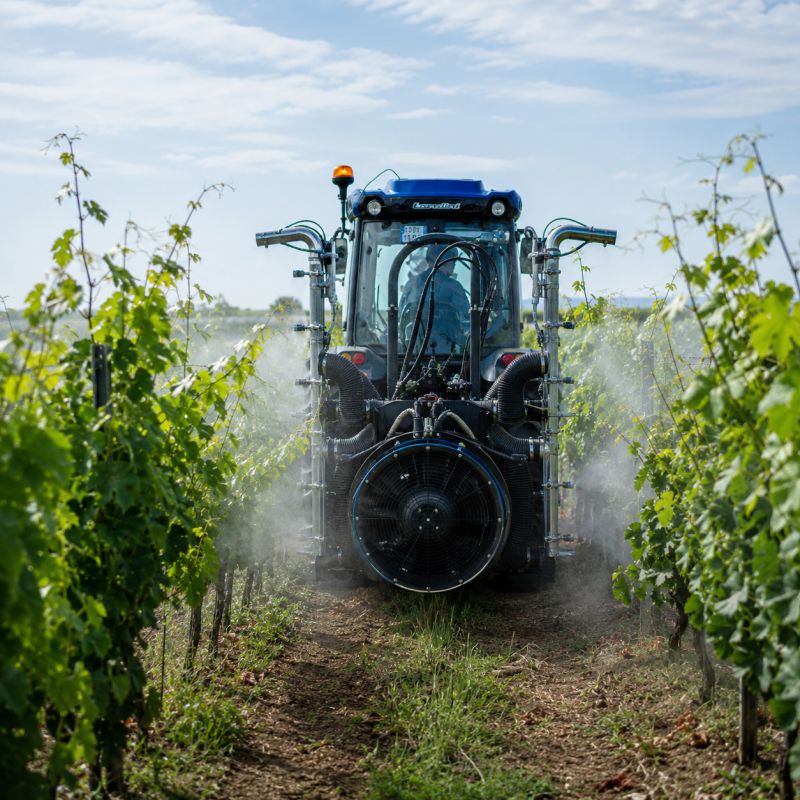
Researchers in Italy have reported that an automated misting system designed to cool Barbera grape clusters during heat stress improved vine physiology but also lowered key compounds tied to color and structure in the fruit, a result that could complicate how growers respond to hotter summers.
The study, published Tuesday in Scientific Reports, examined two vineyard practices over two growing seasons: localized cluster cooling through nebulization and late basal leaf removal, a common canopy management technique that removes leaves around the fruit zone. The work focused on Barbera, a red grape variety widely used for deeply colored wines, and tested how the two practices worked alone and together.
The researchers used a full factorial design, comparing cooled and uncooled vines, each with and without late basal leaf removal. The cooling system relied on foggers that delivered water at 11.2 liters per hour and switched on automatically when air temperature rose above 33 degrees Celsius and relative humidity fell below 55%.
Across both seasons, cooling had a clear effect on vine function. According to the paper, leaf gas exchange improved in cooled vines in both years, suggesting better physiological performance under hot conditions. In 2025, the researchers also found a direct link between cooling and pre-dawn water potential levels that indicated the vines were not under limiting water stress.
That finding matters because the system did more than cool the fruit. Under the weather, soil and row-management conditions of the trial, some of the nebulized water reached the soil and appeared to improve soil moisture as well. The authors said the irrigation setup therefore served a dual role: lowering cluster temperature while also supporting vine water status.
The temperature effects were substantial. On average, simply keeping basal leaves around the clusters lowered cluster temperature by 3-4°C. Nebulization produced much stronger cooling, reducing cluster temperature by as much as 12°C.
But the cooler fruit did not translate into better grape composition across the board. The researchers found that late basal defoliation had little effect on must composition at harvest. Cooling also did not change yield per vine. Yet cooled vines had higher malic acid at harvest and significantly lower concentrations and total content of anthocyanins and phenolics than uncooled vines.
Those compounds are central to red winemaking. Anthocyanins drive berry pigmentation and wine color, while phenolics contribute to mouthfeel, tannin balance and aging potential. For growers and wineries facing more frequent heat spikes, the study suggests that tools used to prevent heat damage may also shift the style and structure of the finished wine.
The paper points to an important distinction in how cooling is achieved. The authors said final grape composition may vary depending on whether clusters are protected mainly through shading or through direct berry wetting. In this trial, berry wetting through misting was associated with reduced pigmentation-related compounds, even as it helped protect vine function during hot periods.
The results also sharpen the debate around leaf removal in warm climates. In uncooled vines, the researchers said maintaining leaves around the cluster was important for controlling sunburn. That supports a more cautious approach to late-season defoliation when temperatures are high and direct solar exposure can damage berries.
The work was carried out by Paolo Bonini, Federico Terzi, Harsh Tiwari and Stefano Poni of Università Cattolica del Sacro Cuore in Piacenza, Italy. The vineyard rows used in the trial were provided by Colle del Podio Estate. Funding came from the Emilia-Romagna Region through the SOS-VIGNE project.
The study adds new evidence to a growing challenge for wine producers as climate change pushes vineyards toward more frequent extreme heat events. Cooling systems may help preserve canopy activity and reduce thermal stress in grapes, but they may also come with trade-offs in fruit chemistry that are especially important for red wines sold on color intensity and phenolic profile.
For the beverage sector, that creates a practical question rather than a simple solution. Vineyard managers may need to decide whether protecting grapes from heat should take priority over maximizing anthocyanins and phenolics, or whether different activation thresholds, canopy strategies or cooling methods could better balance both goals. In regions where Barbera and other red varieties are exposed to repeated summer heat, those choices could affect not only vineyard resilience but also wine style from one vintage to the next.
