Review Says Massal Selection Could Help Vineyards Withstand Climate Stress
Researchers argue that restoring more genetic diversity within grape varieties may improve resilience to heat, drought and disease
Thursday, July 16, 2026
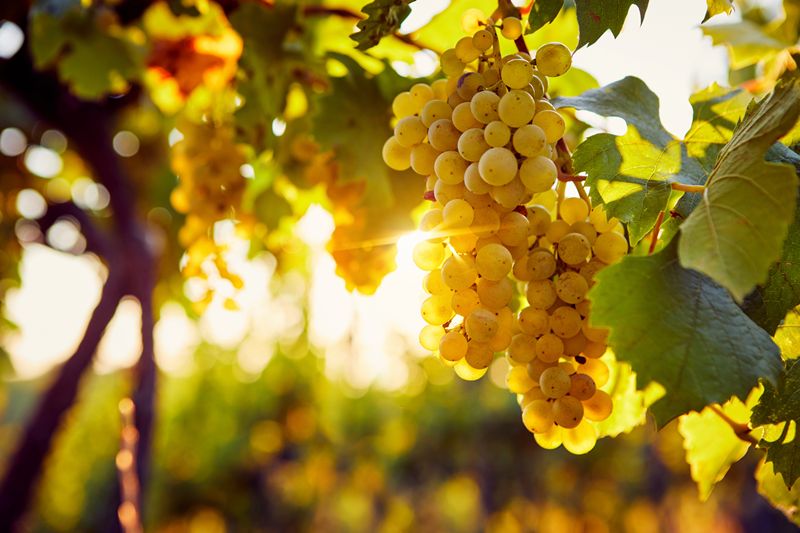
A review published Wednesday in the journal OENO One argues that reviving massal selection in vineyards could help wine regions adapt to hotter, drier and more unstable growing conditions linked to climate change.
The paper, written by researchers including Sebastian Gomez Talquenca, Cornelis van Leeuwen and Silvina Van Houten, examines how grape growing moved over centuries from diverse vineyard populations toward a narrower reliance on certified clones. The authors say that shift improved sanitary quality and uniformity, especially by limiting the spread of major virus diseases, but it also reduced the genetic diversity within many varieties. In their view, that loss now leaves vineyards more exposed to heat waves, drought, pests and emerging diseases.
Massal selection is an older practice in which growers identify several vines within a vineyard that show desirable traits and propagate them vegetatively, instead of multiplying just one or a very small number of selected clones. The review says that repeated use of this method helped build the early populations behind many wine grapes and preserved a wider range of traits inside a single named variety.
The authors do not present massal selection as a replacement for clonal selection. Instead, they argue for the two systems to coexist. Their central point is that vineyards planted with more diverse material may be better able to spread risk across different genotypes, epigenetic profiles and viromes while still keeping varietal identity. They write that this approach could support more stable yields, better stress tolerance and continued expression of terroir under changing conditions.
That matters beyond academic viticulture because grape supply sits at the base of the wine business, and any strategy that improves resilience in the field could affect production risk, grape quality and long-term planning for wineries. For the broader beverage sector, especially premium wine producers tied to specific regions and varieties, the idea offers a possible adaptation tool at a time when climate volatility is already reshaping harvest dates, water management and site suitability.
The review traces the issue back to the long history of grape domestication. According to the paper, cultivated grapevines emerged from wild populations through selection for traits such as hermaphroditic flowers, larger berries and higher sugar content. It also points to newer genomic evidence that challenges the old idea of a single origin for domesticated grapes in the Transcaucasian region. Citing recent research, the authors say grape domestication likely involved at least two distinct events in Western Asia and in the Caucasus-Central Asia area.
They also describe how viticulture spread westward through the Mediterranean and mixed with local wild grape populations, especially in Italy and the Iberian Peninsula. That process, they say, helped create modern European varieties as combinations of eastern ancestry and local adaptation. In practical terms, the review presents today’s grape varieties not as fixed and uniform entities but as long-lived populations shaped by migration, mutation and repeated human selection.
The paper gives special weight to evidence from archaeology and paleogenomics. It cites studies showing that vegetative propagation was already widespread by the Iron Age and became central during the Roman period. Ancient Roman writers described vines by name and by agronomic behavior, suggesting growers were already selecting and multiplying groups of elite plants rather than relying only on seedlings.
More recent genetic work cited in the review suggests some clonal lineages have persisted for centuries. The authors point to findings linking medieval grape seeds with modern varieties such as Savagnin and Chenin blanc. They also cite research indicating direct continuity between ancient samples and modern Pinot noir. For the authors, this long timeline helps explain why older varieties often contain substantial internal diversity built up through somatic mutations over time.
The review says that diversity was narrowed sharply in the 20th century. After phylloxera, World War II and the expansion of commercial nurseries, growers needed healthy planting material on a large scale. Clonal selection answered that need by screening vines for sanitary status and agronomic performance before multiplying them widely. The system reduced major viral problems and made vineyard establishment more predictable.
But according to the authors, heavy dependence on a small number of certified clones created genetic bottlenecks in many regions. In some premium wine areas, they note, large surfaces are planted with only a handful of clones from the same variety. That can make vineyards respond more uniformly to stress. If all vines share similar weaknesses, an extreme weather event or disease pressure can affect them at once.
The review says direct field comparisons between monoclonal vineyards and massal populations under specific stress conditions are still limited, and it acknowledges that this remains an important research gap. Still, it argues that population genetics theory and evidence from other crops support the idea that greater genetic uniformity can increase vulnerability to biotic stress. It also points to viticulture-specific evidence showing differences among clones in resistance-related traits such as stilbene production linked to downy mildew response.
Another part of the paper focuses on where variation inside a variety comes from. The authors cite somatic mutations as one source of clonal differences and say epigenetic modifications may also shape how vines respond to their environment. They add that virome composition can vary among plants as well. Together, these factors mean that even certified clonal collections may still contain useful diversity for growers and breeders.
The review argues that this remaining variation should be measured more systematically with modern tools. It highlights high-throughput genotyping, metagenomics and precision viticulture technologies as ways to identify useful combinations of traits inside existing vineyard material. Rather than treating diversity as noise, the authors suggest growers could use it strategically by matching mixed populations to specific sites.
In that sense, the paper frames massal selection as part of precision viticulture rather than as a return to an outdated system. The idea is not simply to preserve old vines for historical reasons but to maintain dynamic populations that can keep evolving under local conditions while meeting production goals. The authors say this could help preserve rare alleles and structural variants that might otherwise disappear in highly standardized clonal systems.
They also point to examples showing how named varieties can contain distinct internal lineages shaped by geography. In Tempranillo, for instance, genome resequencing has identified three clonal lineages structured along Spain’s Ebro and Duero river basins. The review uses cases like this to argue that what growers call one variety may actually be a set of divergent sub-populations formed through centuries of local selection.
For wine regions facing climate pressure, that distinction could become more important. If one sub-population performs better under drought or heat while another is better suited to cooler or wetter sites, preserving internal diversity may give growers more options without forcing them to abandon established varieties or appellation rules.
The article was received by OENO One on April 16, accepted on June 6 and published on July 15 in Volume 60, Issue 3 of the journal. As a review article, it does not claim to settle every practical question about vineyard performance under climate stress. But it brings together historical records, genomic studies and recent viticultural research to make a case that resilience may depend not only on new technology or new sites, but also on recovering diversity already present within traditional wine grapes.