The European Union updates Alsace wine rules to allow limited climate-adaptation grapes
The amendment also sets irrigation crop-load limits, revises geographic references and tightens compliance conditions for producers and exporters.
2026-07-17
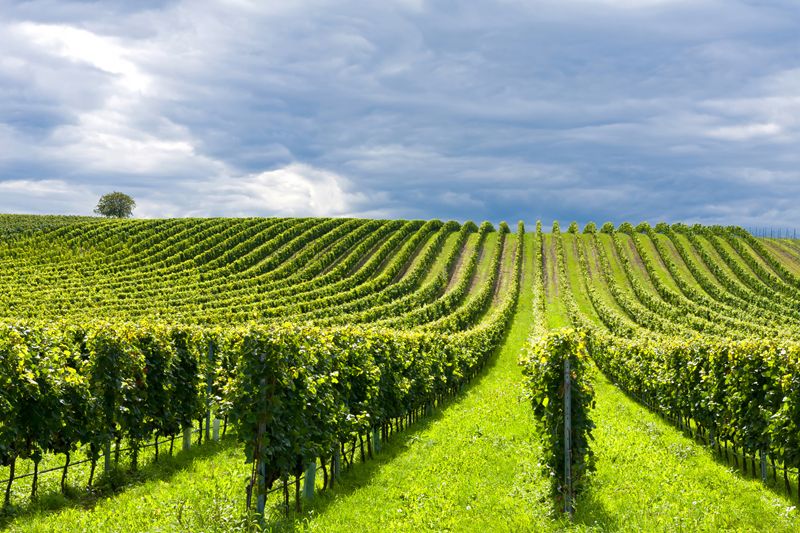
The European Union has published an approved amendment to the product specification for the protected designation of origin Alsace, also marketed as Vin d’Alsace, updating rules that affect vineyard practices, grape varieties and labeling for one of France’s best-known wine appellations.
The notice appeared in the Official Journal of the European Union on July 16 through EUR-Lex. It says the French authorities submitted what is classified as a standard amendment under EU rules, rather than a broader Union amendment, because it does not change the name of the designation, the product category or impose further marketing restrictions.
The communication was sent by France’s Ministry of Agriculture, Agri-food and Food Sovereignty through its Directorate-General for the Economic and Environmental Performance of Enterprises. According to the published text, the changes concern several parts of the PDO specification for Alsace and Vin d’Alsace.
Some of the revisions are administrative. The specification now updates references to the 2025 Official Geographic Code and adjusts municipality names accordingly. In Haut-Rhin, Herrlisheim becomes Herrlisheim-près-Colmar and Soultz becomes Soultz-Haut-Rhin. In Bas-Rhin, Gimbrett-Berstett is replaced by Gimbrett, described as an associated municipality attached to Berstett, and Oberhoffen les Wissembourg becomes Oberhoffen-lès-Wissembourg. The EU notice says these changes do not alter the geographical area itself.
The same applies to the area in immediate proximity used in the specification. There, Mittelhausen is removed as a standalone municipality in Bas-Rhin and replaced with wording that includes only the territory of the delegated municipality of Mittelhausen within Wingersheim les Quatre Bans. Again, the published text says the area has not changed and that the list was updated to reflect the 2025 geographic code.
The amendment also adds dates showing when recent changes to demarcated parcel areas were approved. For one section of the specification, those dates are November 30, 2022 and June 25, 2024. For another section covering supplementary geographical designations listed in Section IV(1)(b), except Klevener de Heiligenstein, June 25, 2024 is added as the latest approval date.
More significant for producers, the revised specification introduces new provisions on grape varieties described as being of interest for adaptation purposes. The text adds a heading on rules for grape varieties and lists white grapes that may be used for Alsace or Vin d’Alsace PDO white wines under specific conditions: Voltis B, Opalor, Selenor, Souvignier Gris B, Johanniter B, Chenin B and Vermentino B, also identified as Rolle. For red or rosé wines, the listed varieties are Coliris, Nebbiolo N and Syrah N, also identified as Shiraz.
Their use is not automatic. The EU publication says these varieties may be used only if an agreement is signed by the National Institute of Origin and Quality, the protection and management body and the authorized operators concerned, in line with a framework agreement approved by the relevant national committee of that institute.
The amendment also sets a ceiling on how much of a holding may be planted with these adaptation varieties. The proportion must not exceed 5% of the holding’s grape varieties. That limit appears repeatedly in the published text and signals a controlled opening for experimentation or climate adaptation without changing the core identity of Alsace wines.
Another important change concerns irrigation. The revised specification adds provisions stating that where irrigation is permitted under Article D. 645-5 of France’s Rural and Maritime Fisheries Code, maximum average crop loads apply to irrigated parcels. The notice ties those limits to Alsace or Vin d’Alsace PDO wines except for supplementary geographical designations, place names and wines labeled Vendanges Tardives or Sélection de Grains Nobles. The publication indicates that crop-load thresholds are now expressly linked to irrigated parcels in the specification.
The text also introduces a rule on soil covering. After evaluation, growers may cover soil with sheeting if strict conditions are met. The material must be porous, allow gas and water transfer and contain no polymers derived from petrochemicals. Any such evaluation must also be governed by an agreement involving the National Institute of Origin and Quality, the protection and management body and the authorized operator concerned, under a framework approved by the relevant national committee on June 29 and 30, 2023. The area under evaluation cannot exceed 5% of the total holding area covered by the PDO.
The monitor summary accompanying the EU publication said the amendment also reinforces labeling requirements, including sugar-related information. The legal notice published through EUR-Lex focuses mainly on vineyard rules, geographic references and production conditions in the sections made available in this communication. Even so, any tightening or clarification of labeling obligations could matter for wineries selling across borders because PDO specifications are closely tied to compliance checks, packaging decisions and export documentation.
For the beverage sector more broadly, these changes matter because they adjust how a major European wine appellation can respond to climate pressure while staying within protected-origin rules. New irrigation-related crop-load provisions and limited access to adaptation grape varieties could affect vineyard management choices in Alsace. At the same time, any updated labeling requirements may create additional compliance work for producers, bottlers and importers handling Alsace wines in domestic and foreign markets.
Alsace is one of France’s most recognized white wine regions and its PDO rules shape what growers can plant, how fruit can be produced and how wines can be presented to consumers. By publishing this approved standard amendment, the EU has formally put into effect a set of technical changes that producers will now need to follow under the appellation’s updated specification.
