U.S.-E.U. Trade Pact Takes Effect With 15% Tariff on European Wine and Spirits
The agreement averts a broader tariff clash but leaves European drinks exporters paying duties in their biggest foreign market.
2026-07-01
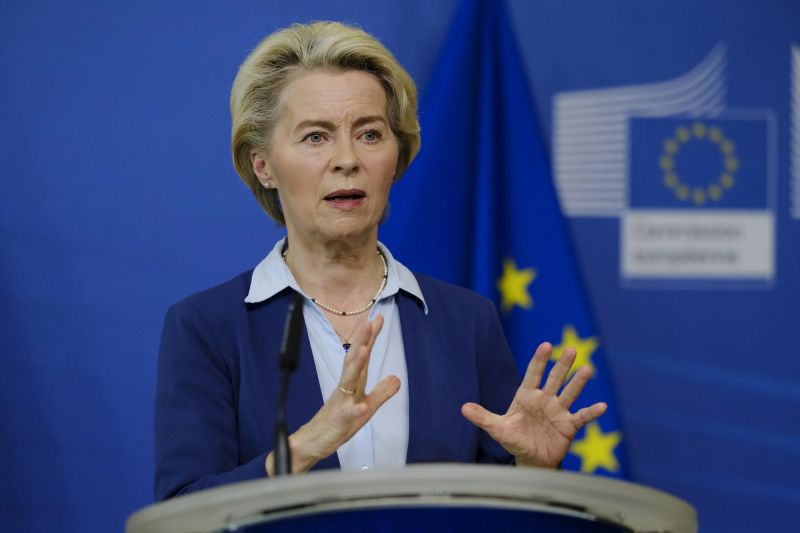
A new trade agreement between the European Union and the United States took effect on Wednesday, setting a new framework for transatlantic commerce that brings relief from the threat of a broader tariff fight but leaves European wine and spirits facing a 15% U.S. duty that producers had hoped to avoid.
The pact allows U.S. industrial goods to enter the European market free of tariffs, while Washington applies a 15% levy to most European products. The agreement was reached nearly a year ago by Ursula von der Leyen, president of the European Commission, and President Donald Trump as a way to avert the 25% tariff he had threatened at the start of his trade confrontation with Europe.
Its entry into force came only days before a July 4 deadline set by Trump for the European Union to avoid new tariffs. The timing also coincides with celebrations around the 250th anniversary of the Declaration of Independence in the United States.
The agreement had been delayed twice by the European Parliament. The first freeze came in January after Trump threatened tariffs against European countries that had sent a small number of troops to Greenland during a territorial dispute over the island. The second came in February after the U.S. Supreme Court ruled illegal the global tariffs Trump had imposed unilaterally on more than 100 countries. Lawmakers in Strasbourg later approved the deal after negotiating safeguards with the 27 member states that would allow Brussels to suspend it if Washington fails to comply.
Olof Gill, the European Commission’s trade spokesman, said on Tuesday that Brussels would now work with Washington to ensure that all commitments made last August are carried out “faithfully and in full.” The agreement was published in the Official Journal of the European Union one day before taking effect.
Under the safeguards, the European Union can suspend the pact if the United States breaches its terms, if tariff preferences granted to American goods lead to an increase in imports that threatens to cause serious harm to European industry, or if Washington does not reduce tariffs on steel and aluminum to 15%. The agreement is set to expire on Dec. 31, 2029, though the Commission may propose an extension.
For Europe’s wine and spirits industries, the deal is being viewed less as a victory than as damage control. It removes the immediate risk of a sharper escalation, but it also locks in a tariff level that exporters had pressed Brussels to eliminate.
That distinction matters because the United States remains the most important foreign market for European wine. The Comité Européen des Entreprises Vins, or CEEV, said the European Union exported €4.88 billion worth of wine to the United States in 2024. The group has warned that a 15% tariff will cut revenue, reduce investment and lower export volumes.
In practical terms, the duty raises the cost of European bottles at a time when producers are already dealing with weak consumption in several markets, higher financing costs and pressure on margins. Importers may absorb part of that cost, but some of it is likely to move through distributors, retailers, restaurants and ultimately consumers. Premium labels with strong brand recognition may have more room to pass along higher prices. Midpriced wines, high-volume sparkling wines, private-label products and more competitive spirits categories are likely to be more exposed.
The agreement also confirms that wine and spirits did not receive a sector-specific exemption. That point had already become clear in August 2025, when it was established that European wine and distilled beverages would remain subject to the 15% U.S. tariff. The Commission acknowledged at the time that it would continue trying to negotiate reductions later. Wednesday’s development does not lower those duties. It formalizes them within a broader trade settlement.
For distilled spirits, the setback is especially sensitive because producers had long argued for a return to the “zero-for-zero” system that had largely removed tariffs on spirits traded between the United States and Europe since 1997. The Distilled Spirits Council of the United States has estimated that a 15% tariff on European spirits could lead to more than $1 billion in lost retail sales and affect more than 12,000 jobs in the United States. That estimate reflects how deeply integrated the business is across importers, wholesalers, bars, restaurants and stores on both sides of the Atlantic.
The burden will not fall evenly across categories. Well-known Champagne houses, top Burgundy estates or established Scotch brands may be better positioned to defend pricing than producers selling lower-margin wines or spirits into crowded segments. For many exporters, especially smaller wineries and midmarket brands, the tariff becomes another fixed cost in an already difficult market.
The picture is somewhat different for American producers. The 15% duty applies to European goods entering the United States, not to American wine shipped into Europe. In return for tariff-free access for many U.S. industrial products, Brussels has also granted preferential treatment for selected American agricultural goods including nuts, dairy products, fruits and vegetables, processed foods, seeds, soybean oil, pork, bison and fishery products. Wine and spirits are not explicitly listed among those sectors receiving new direct benefits.
That means American wine producers do not appear to gain a major new tariff advantage from this agreement itself. Their benefit is more indirect: they avoid being caught in a wider cycle of retaliation with Europe. California, Oregon and Washington wineries still face a difficult market in Europe, where local producers dominate shelves and restaurant lists and where demand has been soft in several countries.
American spirits producers come out in a stronger position than their European counterparts because their main concern had been the possible return of retaliatory EU tariffs. Brussels had already suspended countermeasures against U.S. products, including wine and spirits, through Aug. 6, 2026. The new agreement lowers the immediate political risk that those measures will come back.
That creates an uneven result across the Atlantic drinks trade. European spirits entering the United States now face a stable but costly 15% tariff regime. American bourbon and whiskey do not face an equivalent new penalty entering Europe under this deal. For U.S. distillers, especially bourbon makers who have repeatedly found themselves targeted during earlier trade disputes, avoiding renewed retaliation is an important defensive gain even without securing a permanent zero-tariff arrangement.
Industry groups in both regions had pushed for fuller liberalization than what was ultimately agreed. But from Brussels’ perspective, officials have framed this pact as a way to restore predictability after months of threats and legal uncertainty around Trump’s tariff policy. For exporters of food and drink products with long supply chains and seasonal sales cycles, predictability can matter almost as much as headline tariff rates.
Still, stability does not erase competitive pressure. A French winery shipping containers to New York or Miami must now plan around a duty that makes every case more expensive before it reaches an importer’s warehouse. A Spanish cava producer competing with domestic sparkling wine or lower-cost alternatives from other countries faces tighter pricing decisions. An Italian aperitif brand trying to expand distribution in U.S. restaurants must account for higher landed costs just as many hospitality operators remain cautious about spending.
For American importers and retailers that depend on European labels, those costs may narrow assortment or slow expansion plans in some categories. Restaurants with deep Old World wine lists may also feel pressure if distributors raise prices or trim inventories on slower-moving items.
The broader political message from Wednesday’s entry into force is that both sides chose containment over confrontation. But within wine and spirits, containment favors one side more than the other. American producers gain commercial calm and avoid fresh retaliation from Europe. European producers keep access to their largest export market but must continue paying a 15% price for it.
