PATUÁ Releases Its First Rosé in a 2,000-Bottle Debut
The small Algarve estate is entering the premium wine market with limited production and sales focused on restaurants and online buyers.
2026-06-30
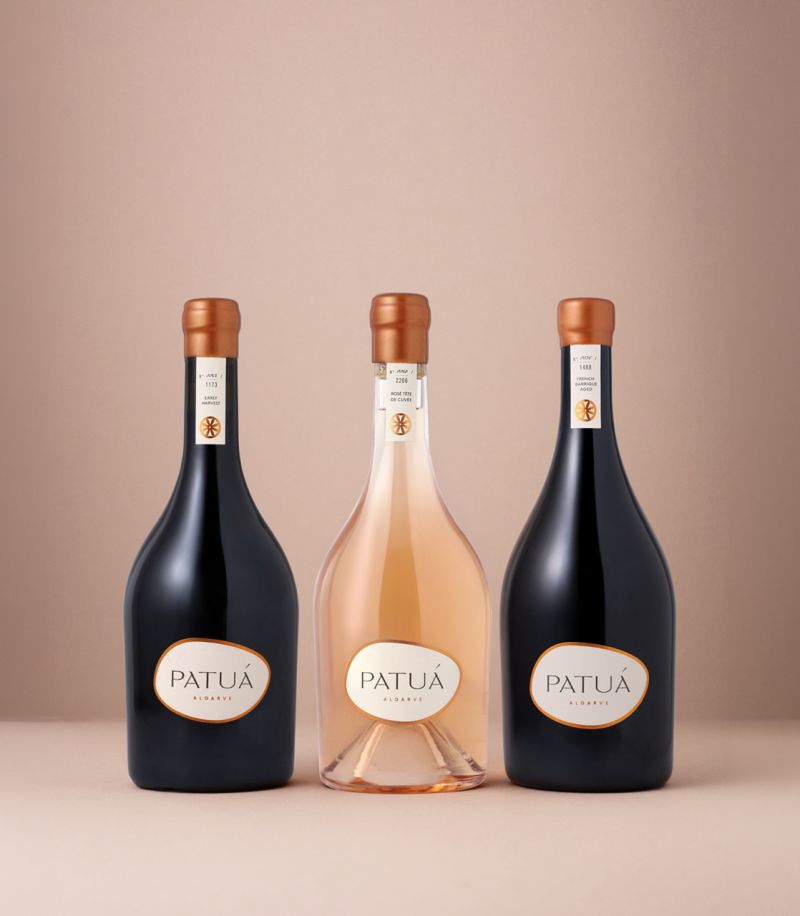
PATUÁ, a small wine estate in São Bartolomeu de Messines in Portugal’s Algarve region, has released its first rosé wine in a limited run of about 2,000 bottles, marking the debut of a label that is positioning itself at the high end of the market with small-scale production and direct sales.
The new wine, PATUÁ Tête de Cuvée Rosé 2025, comes from a one-hectare vineyard and was officially introduced in June. According to the estate, the rosé was made using the tête de cuvée method, which relies on juice from the first gentle pressing of the grapes. The fruit was harvested by hand at dawn, then fermented in French oak barrels and aged on fine lees for six months.
The producer describes the wine as pale in color, with notes of citrus and pomegranate, along with fresh and saline character linked to its southern coastal setting. The bottle’s label was designed in the shape of a beach pebble, a reference to the Algarve coast.
Joana Guerreiro, the owner of PATUÁ, said the rosé was created as a summer wine meant for informal but extended drinking occasions, from seaside settings to long dinners. She said the broader goal for the estate is to make high-quality wines on a very small scale from its boutique vineyard.
The launch also includes two red wines in even smaller quantities. PATUÁ said it is releasing about 1,000 bottles each of a 2022 red and a 2025 early harvest red. The current portfolio now consists of Red French Barrique Aged 2022, Rosé Tête de Cuvée 2025 and Red Early Harvest 2025.
Distribution will remain narrow at first. The wines will be sold online and through a limited number of selected restaurants in Lisbon and the Algarve. The estate said interest has been building because of the project’s limited production and distinct positioning.
PATUÁ traces its recent history to 2022, when Guerreiro inherited the family property from her father. Although the estate has been in the same family for five generations, she has presented the current wine project as a new chapter tied to the Algarve’s rising profile as a quality wine region.
That regional context matters. Long known internationally for beach tourism rather than fine wine, the Algarve has spent recent years trying to strengthen its reputation for premium bottlings. Small producers have increasingly emphasized site expression, restrained production and hospitality offerings that connect wine with rural tourism. PATUÁ appears to be following that model closely.
Later this year, the estate plans to open guest accommodations under the name PATUÁ Wine Farmhouse. The project will include 14 rooms in restored old houses on the property, including two converted windmills. The company said visitors will also be able to book wine visits at the estate.
The combination of limited-release wines and lodging points to a business strategy built around exclusivity and wine tourism rather than volume. In practical terms, that means PATUÁ is entering the market not only as a winery but also as a hospitality destination aimed at travelers seeking smaller and more personal experiences in southern Portugal.
São Bartolomeu de Messines lies inland from Faro, in an area where vineyards are exposed to strong southern light but can still benefit from maritime influence. PATUÁ says that setting is central to the style of its rosé, especially its freshness and saline edge.
For now, however, scarcity is likely to define the launch more than scale. With only about 2,000 bottles of rosé and two red wines limited to roughly 1,000 bottles each, PATUÁ is starting with production levels closer to a boutique collector project than a conventional commercial rollout.
