A Low Dose of Alcohol Lifted Social Rank in Midlevel Male Mice
Researchers traced the brief dominance boost to a prefrontal-accumbens brain circuit and found no effect in females or other ranks.
Friday, July 17, 2026
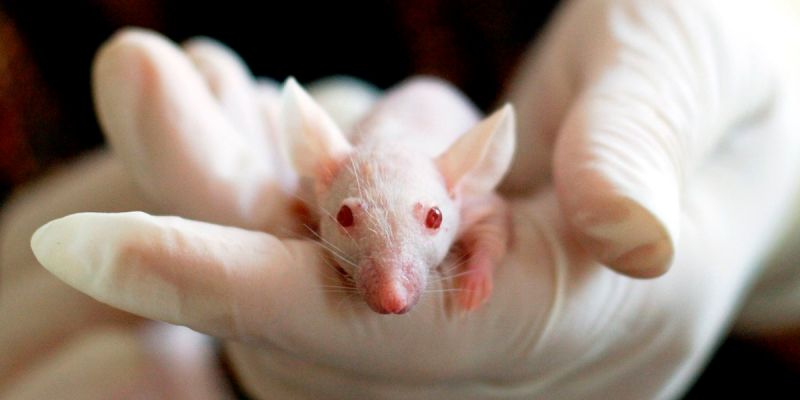
A study published Thursday in Neuropsychopharmacology reports that a low dose of alcohol caused a fast and temporary rise in social rank in male mice, but only in animals that were already in the middle of the group hierarchy.
The research, led by scientists at Xuzhou Medical University in China, adds a detailed brain mechanism to a long-running question in alcohol science: why the same substance can produce very different social effects depending on the individual and the setting. In this case, the effect was narrow. Alcohol did not increase dominance in the highest-ranking mice or in the lowest-ranking ones. It also did not appear in female mice.
According to the paper, the alcohol effect was seen only in mid-ranking male mice, which became more likely to defeat the animal immediately above them and move up in status. The authors described that shift as rapid, selective and transient, but stable enough for those mice to outcompete their direct superior after exposure.
The team focused on acute alcohol exposure, meaning a single low dose rather than repeated drinking over time. Researchers said alcohol is already known to change social behavior, but the neural basis for rank-dependent changes in competition has remained unclear. Their experiments point to a specific circuit linking the prelimbic prefrontal cortex, an area involved in decision-making and social behavior, with the nucleus accumbens, a brain region tied to reward and motivation.
Using cFos mapping, which tracks neuronal activation, and chemogenetic tools that allow scientists to switch targeted cells on or off, the researchers identified CaMKIIα-expressing glutamatergic neurons in the prelimbic prefrontal cortex as central to the effect. When those neurons were manipulated, the alcohol-linked rise in dominance could be produced or blocked. The study also found that alcohol selectively recruited the pathway from the prelimbic cortex to the nucleus accumbens. When that projection was inhibited, the social ascent effect disappeared.
The findings suggest that alcohol’s action was not broad or uniform across all animals. Instead, it depended on social context and preexisting rank. The authors said this helps explain how a drug with widespread effects on the brain can still produce precise changes in behavior under specific conditions.
The work was carried out in male mice using established tests of social hierarchy. In those models, animals are ranked through repeated competitive interactions. The paper cites earlier research showing that social rank can shape stress responses, reward processing and drug-seeking behavior in rodents. This new study places acute alcohol within that framework and suggests that hierarchy itself may gate how intoxication changes behavior.
The absence of the effect in females is also notable, though the paper does not claim to explain that difference fully. Sex-specific responses to alcohol have been documented before in animal studies, and the authors present their result as evidence that this particular circuit-based mechanism may be male-specific under the conditions tested.
The study does not show that alcohol improves social performance in any broad sense, nor does it directly translate to human drinking behavior. Mouse hierarchies are useful for studying neural circuits, but they are not equivalent to human social life, where culture, expectation, personality and environment play major roles. Even so, researchers in addiction and behavioral neuroscience often use such models to isolate mechanisms that would be difficult to test directly in people.
That matters beyond basic neuroscience because alcohol is widely marketed and consumed in social settings. Evidence that even a low dose can alter competitive behavior through a defined brain pathway may inform future debates about public health messaging and regulation around beer, wine and spirits, especially when claims about relaxation, confidence or sociability are discussed. The new findings do not establish effects in people, but they may shape how scientists and policymakers think about alcohol’s potential influence on status-driven interactions.
The paper also fits into a broader body of research showing that alcohol can affect aggression, bonding, emotional contagion and decision-making in ways that vary by dose and circumstance. Some earlier studies cited by the authors found that acute alcohol exposure can reduce social avoidance in some settings while suppressing social investigation or heightening aggression in others. The new report narrows that picture by showing that rank within a group may be one of the factors determining which behavioral outcome appears.
The authors said all data are available on reasonable request. The study was supported by several Chinese national and provincial funding programs, including grants tied to brain science and basic research. The paper was received on Jan. 29, revised on July 1, accepted on July 2 and published online on July 16.
For researchers studying addiction biology, one of the main contributions of the paper is methodological as well as conceptual. By tying a short-lived behavioral change to a defined prefrontal-accumbens circuit, it offers a clearer map for testing how alcohol interacts with social structure at the neural level. That could lead to follow-up work on whether similar pathways are involved in other substances or whether repeated exposure changes the same circuit over time.
For now, the main result is specific: in male mice, a low dose of alcohol did not raise all animals equally. It selectively boosted dominance behavior among those already positioned in the middle of the hierarchy, through activity in a prefrontal-to-accumbens pathway that researchers say was necessary for that brief climb in rank.