Constellation Brands Faces a Crucial Test on Premium Beer Pricing
Investors await Tuesday results for signs that Modelo and Corona can sustain margins as U.S. demand cools
2026-07-02
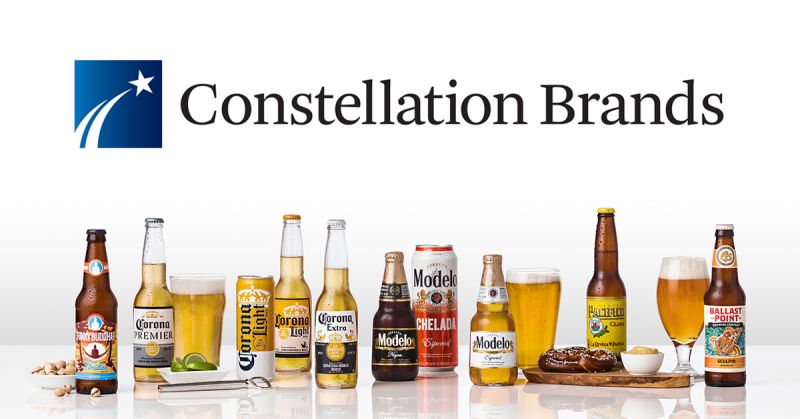
Constellation Brands is set to report fiscal first-quarter results after the market closes Tuesday, with investors focused on a basic question for the beer business: whether the company can keep charging premium prices for Modelo and Corona as demand shows signs of cooling.
According to Barchart Research, Wall Street expects Constellation to post earnings of $3.22 a share on revenue of about $2.41 billion. That would imply a revenue decline of roughly 4.4% from the same quarter a year earlier, while earnings would be flat year over year. The company’s shares were trading at $139.66 ahead of the report, below the average analyst price target of $176.65 cited by Barchart.
The earnings release matters beyond one company because Constellation is one of the clearest readouts on the U.S. premium beer market. If pricing and volumes weaken at leading imported brands, that could affect margins, distributor restocking and commercial strategy across the broader beverage industry, especially in beer and in adjacent categories competing for consumer spending.
Constellation’s beer division remains the center of attention. The company’s portfolio is anchored by Mexican import brands including Modelo Especial and Corona, and beer generates most of its profit. Modelo Especial has continued to hold the top spot among U.S. beer brands, helping support Constellation’s premium positioning even as analysts and investors question how much more pricing power consumers will accept.
That concern has grown after management lowered its full-year fiscal 2027 outlook for beer growth to a range of -1% to +1%. Barchart said that revised forecast was below the company’s earlier guidance and signaled a more cautious view of consumer demand. Operating margins for the beer business are expected to be in a 37% to 38% range, putting added focus on whether Constellation can protect profitability if volume growth slows.
The company is also dealing with weakness outside beer. Its wine and spirits division, which includes labels such as Robert Mondavi and The Prisoner, has been under pressure from softer demand and broader macroeconomic strain. Analysts are expected to listen closely for any sign that this part of the business is stabilizing, as well as for any update on portfolio changes or other strategic moves.
Marketing spending is another issue in this quarter. Barchart noted that Constellation has been increasing brand investment to about 9.5% of sales while also managing cost pressure. That balance is important because the company is trying to defend premium brand equity at a time when consumers are becoming more selective, while still preserving margins and returning cash to shareholders. In fiscal 2026, Constellation returned more than $900 million to shareholders, according to the report.
Recent earnings history suggests the company has generally executed well against expectations, even if investor reaction has been uneven. Barchart said Constellation beat analyst estimates in three of its last four reported quarters. In February 2026, it reported $1.90 a share versus expectations of $1.74, a surprise of 9.20%. In November 2025, it posted $3.06 against an estimate of $2.65, a 15.47% beat. In August 2025, it earned $3.63 compared with $3.37 expected, up 7.72%. The exception came in May 2025, when it reported $3.22 versus an estimate of $3.34, missing by 3.59%.
Even with that record, investors have shown they care more about guidance than about backward-looking beats. Barchart pointed to recent trading patterns showing that Constellation shares can move sharply around earnings depending on management’s outlook. Across the last eight earnings events reviewed by the firm, the stock’s average absolute move on the day results were released was 5.21%. The average move on the following trading day was 3.39%.
Some of those swings were much larger. In January 2025, the stock fell 17.09% on the day around earnings before recovering 2.26% the next session. In April 2026, it dropped 2.32% on day zero and then rose 8.53% the next day. In July 2025, it gained 2.30% initially and then added another 4.48% in the following session.
Options traders appear to be bracing for another notable move, though not an extreme one by historical standards. Barchart said options expiring July 2 imply an expected move of about $6.65, or 4.76%, placing the shares in an anticipated range of roughly $132.99 to $146.29 after results.
Analyst sentiment remains positive overall but far from unanimous. Barchart said 24 analysts cover the stock, with 11 rating it Strong Buy, three Moderate Buy, eight Hold, one Moderate Sell and one Strong Sell. That mix produces a consensus rating of 3.92 out of 5.0, which Barchart classifies as Moderate Buy.
The spread in price targets shows how divided analysts remain over Constellation’s path forward. Targets range from $117 to $223 a share, a wide gap that reflects different views on whether beer momentum can offset weakness in wine and spirits and whether margins can hold if consumers push back against premium pricing.
For retailers, wholesalers and competing drinks companies, Tuesday’s report may offer one of the clearest signals yet on how U.S. consumers are behaving in higher-end alcohol purchases this summer. If Constellation shows that shoppers are still willing to pay up for imported beer despite slower category growth, that could support pricing strategies across beverage alcohol. If not, producers may face more pressure to lean on promotions, adjust inventory plans or rethink how aggressively they position premium brands in a softer demand environment.
