Chinese Brewers’ First-Half Profit Fell 2.6%
Combined revenue at seven listed companies slipped 0.11%, signaling tighter margins in China’s increasingly competitive premium beer market.
Thursday, September 3, 2026
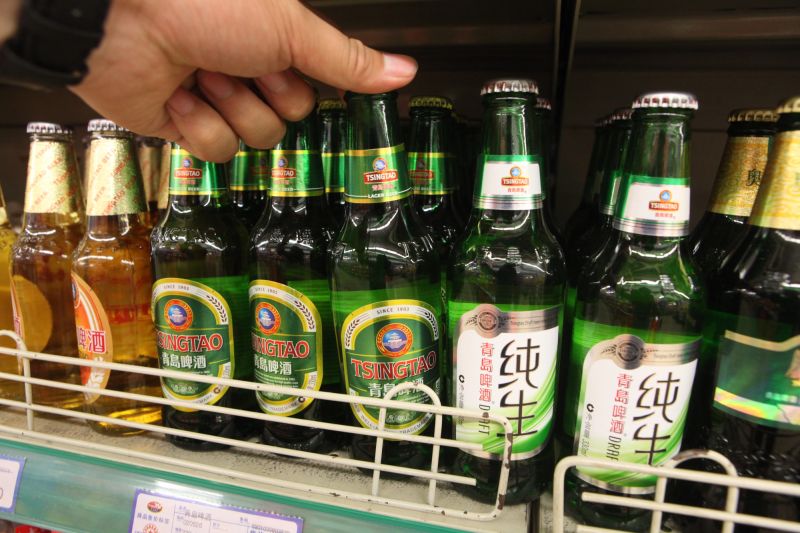
China’s listed brewers reported weaker earnings in the first half of 2026 as sales were nearly flat and profit fell faster, according to an analysis published Wednesday by Beijing Business Today based on company interim reports and Euromonitor data.
The newspaper said seven Chinese beer companies listed on domestic markets, excluding Budweiser APAC because it reports in U.S. dollars, posted combined revenue of 65.406 billion yuan for January through June, down 0.11% from a year earlier. Their combined attributable net profit fell 2.6% to 11.981 billion yuan. Based on the rounded growth rates, that points to an annual revenue decline of about 72 million yuan and a profit drop of roughly 320 million yuan.
The gap between sales and earnings suggests margins came under pressure even though top-line performance was broadly stable. The combined ratio of attributable profit to revenue slipped to about 18.3% from roughly 18.8% a year earlier.
The figures do not represent the entire Chinese beer market. They are a journalistic aggregation of corporate results from major brewers, but they give a snapshot of an industry that remains in a mature phase, with limited volume growth and a growing fight over premium products and distribution channels.
Performance varied sharply by company. Beijing Business Today said Lanzhou Huanghe was the only one of the seven companies to report a loss in the first half. Yanjing Beer, Zhujiang Brewery and Huiquan Beer each recorded increases in both revenue and profit. Other large players remained profitable but faced slower growth or declines, underscoring a split market in which some brands are still gaining from product upgrades while others are being held back by channel weakness and tougher competition.
Budweiser APAC’s results added to that picture. The company’s total beer volume fell 2.2% in the first half to 4.262 billion liters, a decline of about 96 million liters. China was the main drag. In the Chinese market, Budweiser APAC’s volume fell 6% and revenue dropped 6.4% in the first six months of the year. The slowdown became more pronounced in the second quarter, when volume in China fell 9.7% and revenue declined 8.6%.
That deterioration matters because Budweiser has long been closely associated with China’s premium beer business, especially in nightlife, chain restaurant and other higher-margin drinking occasions in large cities. But the latest half-year results suggest that premium demand is no longer benefiting foreign brands in the same way as it did in the past.
According to Euromonitor data cited by Beijing Business Today, Budweiser’s share of China’s premium beer market fell from 49.1% in 2015 to around 40% in 2025. At the same time, domestic brewers have been moving further upmarket. China Resources Beer said sales volume of its upper-midrange and above products rose by more than 10% in the first half, and those products now account for more than 26% of its total sales volume. The company also reported strong growth for brands including Heineken, Laoxue and Hongjue.
Other Chinese brewers are also pushing deeper into higher-priced segments. Tsingtao Brewery reported continued growth in its mid- to high-end portfolio. Zhujiang Brewery said high-end beer sales volume rose 8.16% in the first half. Huiquan Beer said revenue from mid- to high-end products increased 6.89%. Yanjing Beer reported 6.5% growth in revenue from mid- to high-end products, helped by continued expansion of its U8 brand.
Analysts quoted by the newspaper said the shift reflects a broader change in China’s beer industry. For years, premiumization largely meant foreign labels charging more in on-premise channels such as bars, restaurants and clubs. Now local brewers have improved product quality, widened their offerings in the 8 yuan to 10 yuan range, and responded more quickly through local distribution networks. In a market with little room for total volume expansion, growth is increasingly coming from taking share from rivals rather than from bringing in many new drinkers.
The channel mix is another major factor behind the diverging results. China’s beer market has been shifting away from immediate consumption in restaurants and entertainment venues toward off-premise and near-home buying, including instant retail, membership stores and community-based channels. Budweiser APAC itself attributed the decline in its China business to continued weakness in on-premise demand. Chief Financial Officer Ignacio Lares said off-premise channels account for about 50% of Budweiser’s business in China, below an industry level of about 60%.
That leaves the company more exposed than some rivals to slower traffic in bars and restaurants, a problem that appears to have intensified in the second quarter. Domestic brewers, by contrast, have been expanding faster in channels tied to supermarkets, large-format retail and rapid delivery platforms. Beijing Business Today said China Resources has already introduced a 450-milliliter product tailored for instant retail.
The first-half numbers also arrive as the industry heads into the less active part of the year. Summer usually supports beer demand in the third quarter, but colder weather and fewer outdoor drinking occasions tend to make the fourth quarter more difficult. Broker research cited by the newspaper said the sector’s medium-term pattern remains one of stable volume and rising prices, with premium products and expansion in off-premise channels likely to determine which companies can keep growing.
For now, the half-year data point to a market in which revenue is holding steady but earnings are under more pressure, Budweiser APAC is losing ground faster in China, and domestic brewers are taking a larger share of the country’s premium business.