Yanghe’s baijiu sales fell 31.36% in the first half
Baijiu revenue fell 28.85%, suggesting the company preserved some value despite a steeper drop in tonnage
Friday, August 28, 2026
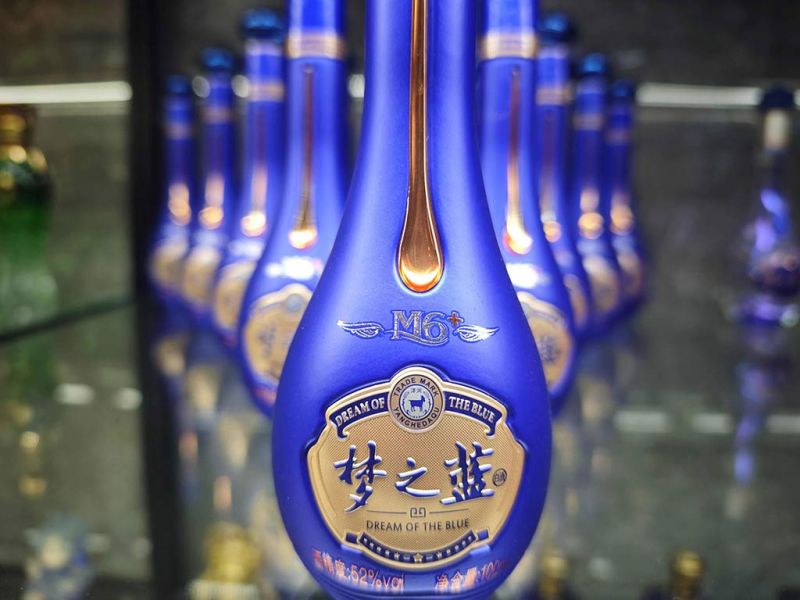
Chinese baijiu producer Yanghe reported a sharp drop in sales, production and inventories in the first half of 2026, showing a steep physical pullback in its core business even as revenue fell less than volume.
In its semiannual report released on August 27, the company said it sold 53,670.57 tons of baijiu from January through June, down from 78,192.32 tons a year earlier. That was a decline of 24,521.75 tons, or 31.36%.
Production fell even faster. Yanghe said baijiu output dropped to 32,598.47 tons from 48,891.12 tons in the same period last year, a reduction of 16,292.65 tons, or 33.32%.
Finished goods inventory also declined sharply. The company ended the period with 10,050.46 tons of finished baijiu in stock, compared with 16,293.52 tons a year earlier. That was 6,243.06 tons less, a 38.32% decrease.
The figures came from Yanghe’s first-half report for the China market and cover production, sales, inventory, revenue and profit in the baijiu business. The company described the filing as an interim results report, and the numbers were unaudited.
Revenue from baijiu alone fell 28.85% to 10.325 billion yuan. Because that decline was smaller than the drop in sales volume, revenue calculated per ton rose modestly. Based on the company’s disclosed figures, baijiu revenue per ton increased by about 3.7% to roughly 192,400 yuan.
That calculation does not represent an average transaction price. It reflects a mix of pricing, promotions, product mix, product references and accounting recognition. Still, it indicates that the decline in value was less severe than the decline in physical volume.
Yanghe’s breakdown by product segment showed weakness across both premium and lower-priced categories. Revenue from mid-range and high-end baijiu fell 28.36% to 9.078 billion yuan. Revenue from ordinary baijiu dropped 32.24% to 1.247 billion yuan.
Profitability in the ordinary baijiu segment weakened notably. Yanghe said the gross margin for that category fell by 9.31 percentage points to 36.86%.
At the group level, the downturn was also visible in the company’s broader financial results. Total revenue for the first half fell to 10.540 billion yuan from 14.796 billion yuan a year earlier, a decline of 4.255 billion yuan, or 28.76%.
Net profit attributable to shareholders dropped even more sharply. Yanghe reported attributable profit of 2.602 billion yuan, down from 4.344 billion yuan in the first half of last year. That was a decrease of 1.742 billion yuan, or 40.10%.
The gap between the drop in volumes and the smaller decline in baijiu revenue suggests that the company preserved some value through product mix or other commercial factors, even as fewer tons moved through the market. But the magnitude of the declines in production and inventories points to a broad retrenchment in physical activity during the period.
The inventory figure is especially notable because finished goods stocks fell faster than sales. That means Yanghe not only sold less baijiu than a year earlier, but also carried substantially fewer finished products at the end of the period. Combined with lower production, the data show that the company reduced supply into the market while also drawing down stock.
The first-half numbers also show that the pressure was not limited to one end of Yanghe’s portfolio. Mid-range and high-end baijiu, which remains the largest part of the business by revenue, posted a large decline. The ordinary segment fell more sharply in revenue terms and suffered a clear deterioration in margin, indicating heavier strain in lower-priced products.
Yanghe did not present the revenue-per-ton figure as an official operating metric in the filing. It can only be inferred by dividing disclosed baijiu revenue by disclosed baijiu sales volume. Even with that limitation, the measure helps explain why a 31.36% decline in baijiu tonnage translated into a smaller 28.85% decline in baijiu revenue.
For investors and industry observers, the report offers a detailed view of how weak demand or tighter channel management can show up differently in financial and physical indicators. In Yanghe’s case, the first half of 2026 brought lower output, lower sell-through, lower stocks, lower revenue and a steeper drop in profit, according to the company’s unaudited interim filing.