A Beijing Bar Attracts AI Workers With Free DeepSeek Tokens Over Wi-Fi
The venue near Tsinghua and Peking has become a hub for students, engineers and founders despite heavy losses on free drinks
Tuesday, August 18, 2026
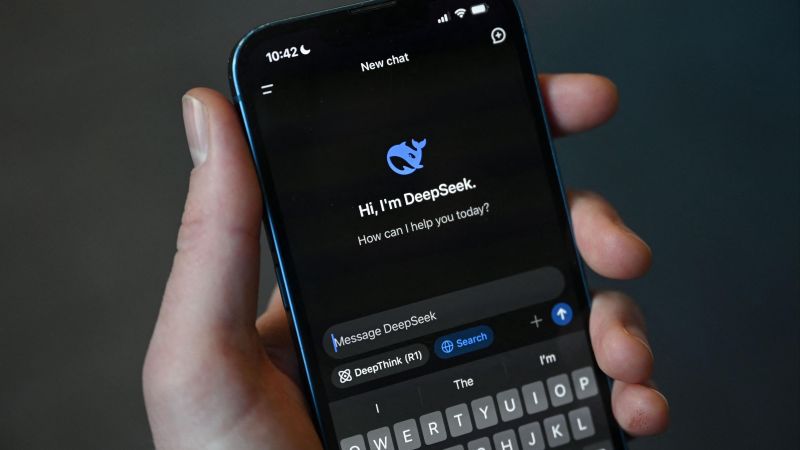
In Beijing’s Zhongguancun district, an artificial intelligence-themed bar is drawing students, engineers and startup workers with an unusual offer: customers can get drinks by connecting to an AI agent that provides unlimited DeepSeek tokens for coding and other projects.
The venue, called AGI Bar, was opened last year by independent AI developer Song De in the capital’s main technology corridor. The bar sits on Inno Way, close to offices used by major tech companies including Microsoft and DeepSeek, and near two of China’s top universities, Tsinghua and Peking. The location has helped turn the business into a social and professional gathering place for people working in artificial intelligence and related fields.
Song told Reuters that he chose the area because of its concentration of research institutions, internet companies and venture capital activity. He described Haidian district, where Zhongguancun is located, as the center of scientific research in China, with a dense network of startups, investors and academic talent that supports the AI sector.
The bar’s name refers to artificial general intelligence, a term used to describe a more advanced form of AI capable of broad human-like reasoning. Its registered Chinese name translates as “Knowledge Distillation,” a play on words that links distilled alcohol with AI model distillation, a process in which a smaller system learns from a larger one.
Inside, the business combines the atmosphere of a neighborhood bar with the look of a technology workspace. Logos of Chinese AI companies line the walls. Events include developer seminars, meetups for researchers, gatherings for workers from Chinese AI labs and social parties for people in the industry. Song said the goal is to create a place where people from different labs, universities and competing companies can sit together and discuss trends in the field.
The bar’s most visible product is a signature beer also named AGI, sold for 9.90 yuan. But the feature that has attracted the most attention is the payment and access model tied to AI services. Instead of relying only on standard digital payment platforms, customers can connect to the bar’s AI agent over Wi-Fi and receive DeepSeek tokens that can be used for coding work. The setup runs on two Nvidia DGX Spark computers, according to Reuters, and the venue also has two Nvidia supercomputers capable of running the DeepSeek V4 Flash AI agent.
That mix of social space and computing access has made the bar popular with people who want to work, study or network in a setting built around AI. Students use the space to collaborate. Employees from nearby companies stop in after work. Researchers and developers use it as a neutral meeting point away from offices and campuses. In one room, people may be talking over beer. In another, they may be testing software or discussing model design.
Even with that demand, Song said the business is not profitable. He told Reuters that the bar is “completely losing money,” adding that the number of drinks given away is 10 times higher than the number sold. The free or subsidized access tied to AI tokens appears to be a major reason for the imbalance, though it is also part of what has made the place stand out in a crowded market.
The financial strain highlights a tension common in the current AI economy. Many entrepreneurs are trying to build communities, products and brands around fast-growing technology, but not all of those experiments are producing stable revenue. In the case of AGI Bar, the attraction of turning AI access into a kind of social currency has helped generate traffic and attention, but it has also made it harder to operate like a conventional bar.
Song’s approach goes beyond drink sales. Much of the venue’s operations, including utilities management and reservations, is handled by an AI agent, though the business still employs staff. He told Reuters that the store’s lighting, software and hardware have been connected to application programming interfaces, or APIs, so they can be managed through AI processing. His stated aim is to reduce the need for people to spend time on repetitive operating tasks.
He also said he wants to expand that automation further. One idea under consideration is using humanoid robots to serve drinks, a step that would make the bar even more closely aligned with the industry it caters to. While that plan remains aspirational, it reflects a broader push in China’s technology sector to place AI and robotics not only in industrial settings, but also in everyday consumer spaces.
The bar’s concept arrives at a time when Chinese interest in domestic AI models has grown quickly, and when companies, universities and investors are competing to shape how the technology is used. DeepSeek, one of the firms located near the bar, has become one of the most closely watched names in that environment. By tying beer sales and bar access to DeepSeek tokens, AGI Bar places itself directly inside that culture rather than simply decorating around it.
Song described AI to Reuters as a public utility of the future, comparing it to water, electricity and the internet. He said AI should be as accessible as Wi-Fi, a view that appears to guide the way the bar operates. Rather than treating AI as a premium service reserved for corporate clients, the business presents it as something to be used casually, socially and often, even if that means absorbing heavy costs in the short term.
For now, AGI Bar appears to function as both a business and a live experiment in how AI can shape daily urban life. In one of China’s busiest technology districts, it offers a place where the country’s AI boom is discussed, tested and consumed at the same table.