French Barrel Makers Report an 11.7% Revenue Drop for a Second Straight Year
Exports fell 13.9%, with the Americas down 20.6%, after wineries and distillers reduced orders and drew down inventories.
2026-08-19
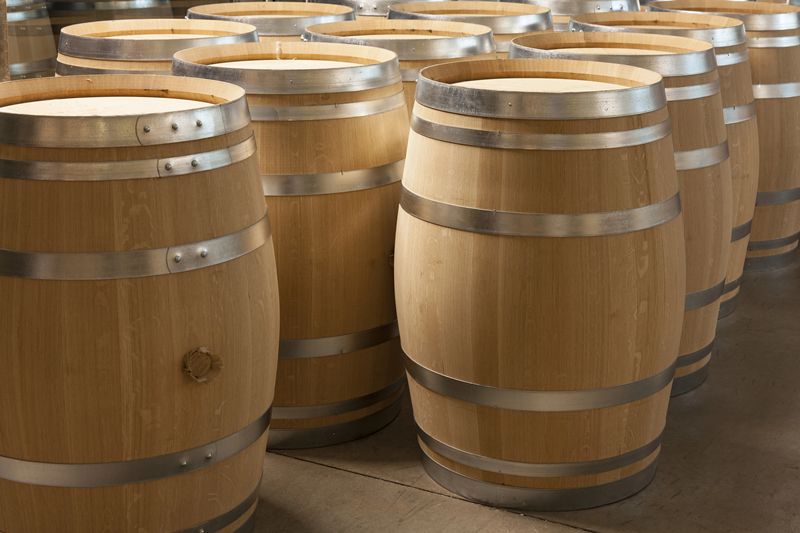
French barrel makers are facing a second straight year of decline as weaker wine and spirits markets cut demand at home and abroad, according to new figures from the Fédération des Tonneliers de France, the trade group representing 67 cooperage companies.
The federation said total revenue fell 11.7% in the 2025-26 fiscal year, after a 9.5% decline in the previous year. In the 12 months from April 1, 2025, to March 31, 2026, combined sales reached 471 million euros. The drop was sharper in export markets than in France, with revenue down 13.9% overseas and 6.9% in the domestic market.
Sales volumes also declined. The group said its members sold 485,871 barrels during the year, down 14% from the previous period. Here too, foreign markets weakened more than France. Barrel volumes fell 16.1% abroad and 9.5% at home.
The data point to strain across a supply chain that depends heavily on higher-end wine and spirits producers. Barrel makers have benefited for years from strong demand from premium producers, especially in export markets, but the federation said the market is now adjusting after an earlier surge in orders that followed the pandemic period.
France and the United States remained the two main markets for French cooperage by a wide margin. France accounted for 32.4% of sales by value and 35.8% by volume. The United States represented 29.5% by value and 25.8% by volume. Spain ranked next with 7.5% of sales by value and 8.7% by volume, followed by Italy at 6.8% by value and 6.6% by volume, and Australia at 5.2% by value and 4.5% by volume. Overall, exports still made up most of the business, representing 67.6% of revenue and 64.2% of volume.
Every region posted declines in 2025-26 compared with the prior year, the federation said. The steepest contraction came in the Americas, where sales fell 20.6% by value and 23.6% by volume. Europe held up better but still declined, with value down 6% and volume down 8.5%.
The downturn extended beyond standard barrels. The market for large oak containers, defined as vessels starting at 700 liters, also weakened sharply. Revenue in that segment fell 21.5% to 27 million euros, while unit sales dropped 15.7% to 1,228 containers. The federation said the large containers sold in 2025-26 were smaller on average than those sold a year earlier.
Magdeleine Allaume, president of the Fédération des Tonneliers de France, said the industry has now recorded a 29% decline in volume over two years and is being directly affected by uncertainty in global wine and spirits markets. She pointed to trade and policy pressures as part of the explanation for the recent downturn, including measures taken by the Trump administration that hurt barrel sales in the United States and Chinese duties on European spirits, including cognac.
The federation also said the industry is going through a correction phase after exceptionally strong post-pandemic demand. It said merchants and producers built up excess inventories during that earlier period and are now working through those stocks. That process has mechanically reduced new barrel orders, even if it does not necessarily signal a lasting collapse in underlying demand.
The trade group argued that these pressures are mainly cyclical, but it also acknowledged broader structural changes that could reshape the market over time. Global production of wine and spirits has declined, consumer habits are changing, and climate pressures are affecting producers across major wine regions. At the same time, many wineries are making lighter styles and in some cases using less oak than in the past, a shift that can reduce barrel demand.
Allaume said the market is also changing by color and category. Premium wines continue to perform better than lower-priced segments, she said, but consumption is shifting more toward white wines and away from reds. Buyers are also becoming more moderate and more selective. That mix matters to barrel makers because red wines have traditionally relied more heavily on oak aging than many white wines, though top-end white wines can also support strong demand for cooperage.
Even so, the federation said barrel aging remains a clear value tool in quality-focused production. As wineries and spirits producers put more emphasis on premium positioning, French coopers are trying to present oak maturation as a way to differentiate finished products rather than simply a standard production input.
The figures show how closely the cooperage sector is tied to broader conditions in wine and spirits. When producers slow purchases, reduce inventories, or change style preferences, the effects quickly reach barrel workshops. For France’s barrel makers, that pressure is now visible across nearly every major market, with the heaviest blow coming from export destinations that have long driven growth.
