Denmark Hill Station Prepares to Bottle Britain’s First Wine Grown on Railway Land
The Camberwell project expects its first Bacchus harvest in 2026, yielding a few dozen bottles of Château Denmark Hill
Friday, August 14, 2026
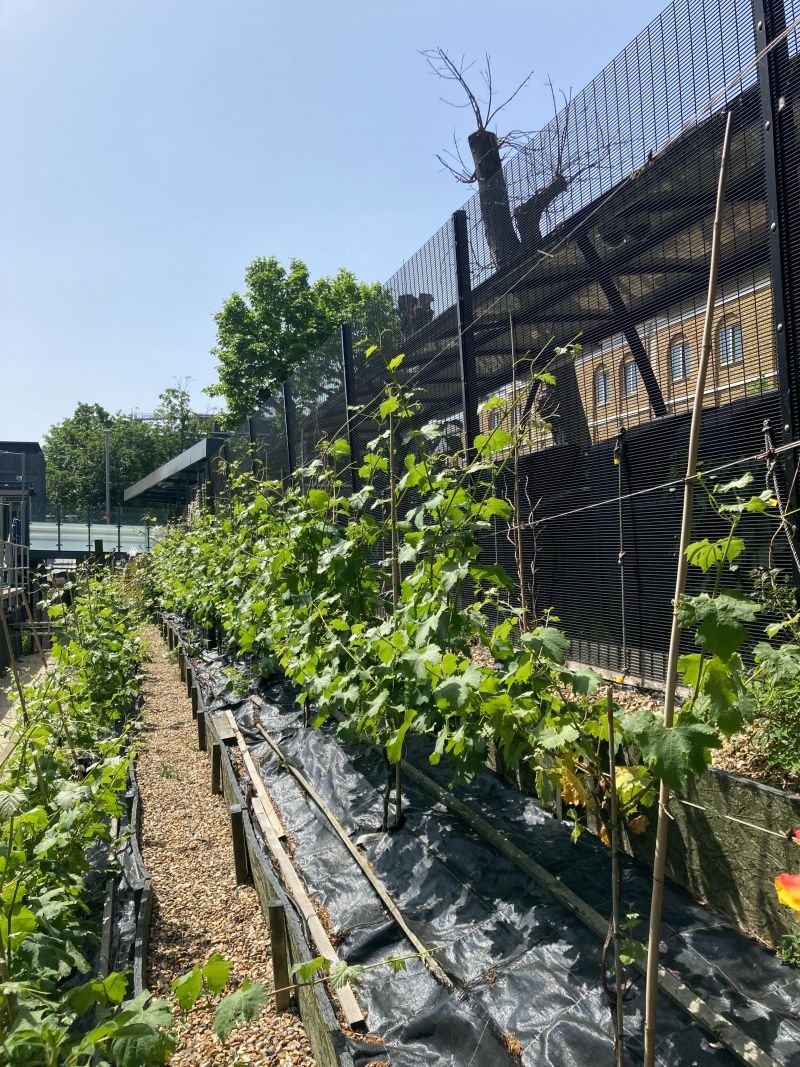
A railway station in south London is preparing to produce what organizers say will be the first wine made from grapes grown within the grounds of a British station.
At Denmark Hill station in Camberwell, a small vineyard planted a few yards from the tracks has yielded enough Bacchus grapes for its first harvest in 2026. The wine will be sold under the name Château Denmark Hill, and the first bottles are expected to reach glasses next year.
The project is being led by the Camberwell Society, a local civic group that promotes community participation, local heritage and environmental work in the neighborhood. What began as a station improvement effort has turned into an unusual urban wine project in one of the busiest cities in Europe.
According to the society, the vineyard is small and the first vintage is expected to produce only a few dozen bottles. Even so, the group sees the harvest as a milestone for a broader plan to reshape the station and the public spaces around it.
The vines are planted inside the station’s wider perimeter, in land that is not used by passengers. The setting is unusual for wine production. Vineyards are more commonly associated with hillsides or rural landscapes, and England’s expanding wine sector has largely developed in the countryside of southern counties such as Kent, Sussex and Hampshire. Denmark Hill offers a very different backdrop: rail lines, platforms, station buildings and dense city streets.
The Camberwell Society said the wine project grew out of a community license granted by Network Rail in November 2020. That agreement allowed the group to care for and develop non-passenger areas at the station. Since then, the society said, it has worked to improve the site with new planting, public art and upgrades to parts of the historic Victorian structure.
In a statement explaining the project, the group said the work has focused on making the station more accessible, more sustainable and more attractive for travelers and local residents. It also said volunteers cleared waste from neglected areas and looked for ways to turn the station into a place people might visit for reasons beyond travel alone.
That idea helps explain why the vineyard matters to the organizers beyond the novelty of a station wine. For the Camberwell Society, the vines are part of a larger attempt to connect transport infrastructure with local identity, environmental improvement and small-scale cultural activity. In practical terms, the production volume will be limited, but symbolically it gives the station a product tied directly to its own land.
The grape chosen for the site is Bacchus, a white variety that has become a familiar name in English wine. Growers in Britain have often favored it because it can perform well in cooler conditions and is used to make aromatic white wines. At Denmark Hill, the vines have now produced enough fruit to support a first commercial-style release, though on a very small scale.
The use of the name Château Denmark Hill adds a note of humor and ambition to the project, but the effort itself has been built in a careful, local way. The vineyard is not being presented as a large new producer. Instead, it sits within a civic improvement program that mixes horticulture, heritage and neighborhood engagement. The group has used events, debates and environmental initiatives to involve residents in the station’s transformation, and the wine gives that work a visible result.
Urban vineyards are not new in Europe, and wineries have appeared in places once seen as unlikely, from steep mountain sites to coastal strips and heavily built-up districts. Still, planting vines at a railway station and taking them through to a bottled wine remains highly unusual. That is especially true in Britain, where stations have hosted shops, food outlets and art projects, but not a recognized wine made from grapes grown on site.
For London, the project arrives at a time when small-scale food and drink production has become part of the appeal of many neighborhoods. Local beers, distilleries, rooftop gardens and community farms have found audiences among residents and visitors looking for products with a direct tie to place. Denmark Hill’s wine fits into that trend, while pushing it into a setting more often defined by commuting than by agriculture.
There is also a tourism angle. The Camberwell Society has said one of its aims is to make the station a destination in its own right, drawing visitors into the area and improving the experience of those already passing through. The station sits in a part of south London better known for hospitals, housing, colleges and daily rail traffic than for wine. A tiny harvest will not change the local economy, but it may give the neighborhood an unusual story and a new way to present itself.
The first vintage is expected to come from the 2026 harvest, with bottling and tasting likely to follow in the coming year. For now, the scale remains modest and the emphasis stays on the local experiment rather than commercial output. What matters most to the organizers is that grapes grown beside the rails in Camberwell have made it far enough to become wine, turning an overlooked piece of station land into one of the capital’s most unusual agricultural sites.