Campari Agrees to Sell Bisquit & Dubouché Cognac and Cabo Wabo Tequila to Cobblestone
The deal extends Campari’s push toward fewer priority labels and gives the Dublin buyer its biggest acquisition to date.
Monday, August 10, 2026
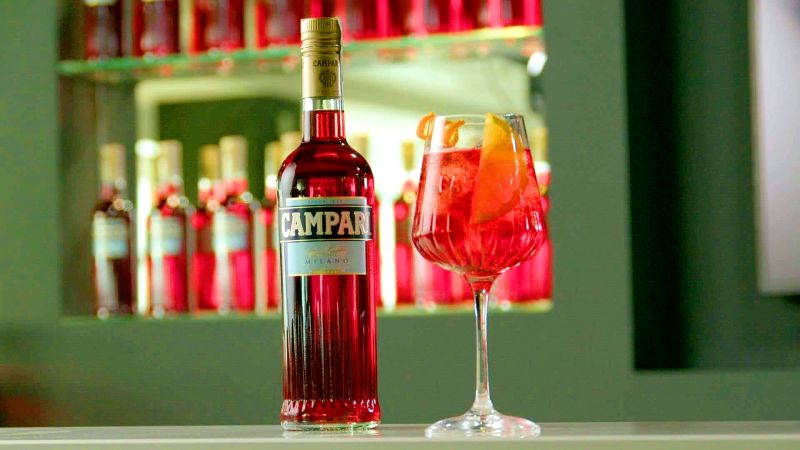
Campari Group said it has agreed to sell Bisquit & Dubouché Cognac and Cabo Wabo Tequila to Cobblestone Brands, an Irish spirits company, in a deal that extends the Italian group’s effort to narrow its portfolio and put more money behind a smaller number of priority labels.
The buyer, Cobblestone Brands, is based in Dublin and focuses on premium spirits. Campari said the transaction covers the brands and related commercial rights. The companies expect the deal to close before October 31, 2026, subject to the usual conditions. Financial terms were not disclosed.
The sale gives Cobblestone two established names with very different market footprints. Bisquit & Dubouché, a cognac house founded in 1819, has a meaningful presence in South Africa and in Asia-Pacific markets. Cabo Wabo, a tequila brand with roots in the United States, is distributed in more than 20 states, giving the buyer an immediate position in a category that remains important to American wholesalers, retailers and bar programs.
For Campari, the move is another step in a strategy that executives have described as a search for “fewer bigger bets.” In its first-half 2026 results, Chief Executive Simon Hunt said the company was reviewing non-priority assets so it could concentrate resources on its core business pillars. The sale of a cognac and a tequila brand, two businesses that sit outside the company’s best-known global engines, fits that plan.
The company has spent recent years trying to simplify a portfolio built over time through acquisitions and brand development. In the drinks business, that kind of reshaping is often less about walking away from categories than about deciding where marketing budgets, distribution teams and management attention can have the strongest return. Selling smaller or less strategic assets can free up funds and internal capacity for brands that have greater global scale or stronger growth prospects.
That matters in a market where spirits groups are under pressure to balance premium positioning with uneven demand across regions. Large producers have been reassessing where to spend, which brands deserve international expansion and which labels might perform better under owners willing to give them more focused attention. Campari’s decision suggests that Bisquit & Dubouché and Cabo Wabo were no longer central to its next phase, even if both still hold value in specific markets.
Cobblestone, by contrast, is using acquisitions to build out its platform. The company said the Campari deal is the most significant transaction in its history. It follows Cobblestone’s 2025 purchase of Knappogue Castle and Clontarf Irish Whiskey, which signaled a plan to assemble a portfolio of established premium brands. Adding a French cognac and a U.S.-focused tequila gives the company broader exposure across categories and regions at a time when many independent drinks groups are trying to become more relevant partners for distributors.
The appeal of Bisquit & Dubouché lies in both heritage and geography. Cognac remains one of the most tradition-bound segments in spirits, and age, history and house identity continue to matter in export markets. A brand founded in the early 19th century carries a story that can still resonate with consumers, especially in markets where French luxury and legacy are part of the sales pitch. The strength of Bisquit & Dubouché in South Africa and Asia-Pacific gives Cobblestone a base that is already international rather than purely European.
Cabo Wabo offers a different kind of opportunity. Tequila remains one of the most closely watched spirits categories in the United States, where consumer demand has pushed both premium and prestige expressions into broader distribution over the past decade. A brand present in more than 20 states is not nationwide at the scale of the largest tequila houses, but it provides meaningful shelf access and on-premise visibility. For a company like Cobblestone, that kind of existing route to market can be more valuable than starting from scratch with a new label.
The deal also shows how brand ownership in spirits can shift even when products stay on the market. For retailers, importers, bartenders and consumers, the bottle may look the same in the short term, but the strategic direction can change once a new owner takes control. A larger group may treat a label as secondary if it no longer fits its investment priorities. A smaller owner may see the same brand as a centerpiece and devote more sales attention, new packaging work or market-by-market expansion to it.
So far, Campari and Cobblestone have shared only limited detail about what exactly is included in the transaction beyond the brands and commercial rights. The companies did not publish a purchase price, revenue figures, sales volumes, profitability data or information on inventories covered by the agreement. Without those numbers, it is not possible to judge the financial size of the transaction for either side or to measure how much earnings or case volumes may shift after closing.
That lack of detail leaves several open questions for the market. Investors and industry analysts will want to know whether Campari is simply trimming smaller labels or making room for a more aggressive redeployment of capital into its leading brands. They will also be watching to see how Cobblestone handles the integration of businesses that operate in different categories, with different supply chains and consumer audiences.
The timing is notable. Spirits companies are making portfolio decisions in a period when growth is no longer uniform across categories or countries. Premiumization has not disappeared, but it has become more selective, and some markets have shown slower momentum after years of strong expansion. In that environment, ownership changes often reflect sharper choices about where management teams believe they can win.
For Campari, the message is that scale alone is not the goal. The company is signaling that focus matters more than a long list of labels. For Cobblestone, the message is almost the reverse: growth will come through assembling brands that may need more dedicated commercial support than a global group is prepared to give them. Once the sale closes, expected before the end of October, those two approaches will meet in the marketplace through a cognac with deep export history and a tequila brand that already has a foothold across the United States.