Three Companies Are Selling a Federally Approved Filter for Smoke-Tainted Wine
The USDA-developed process targets wildfire-linked compounds in wines from California, Oregon and Washington.
Tuesday, October 13, 2026
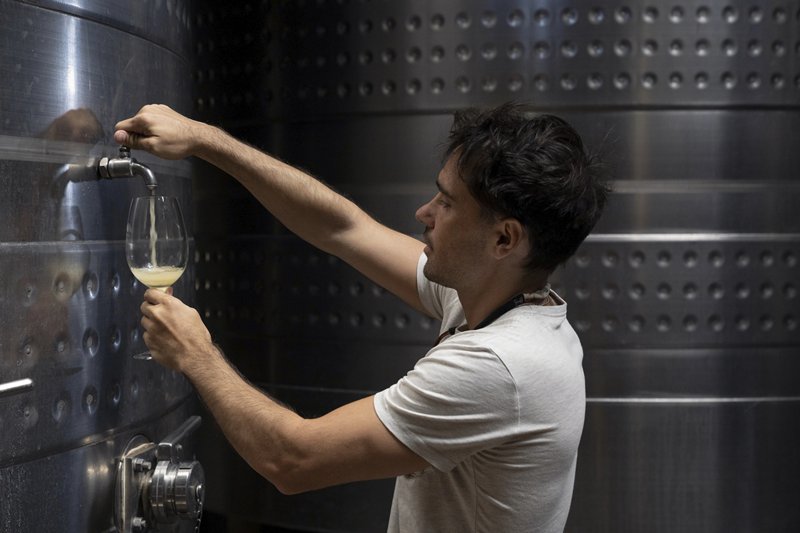
A filtration technology approved by the federal Alcohol and Tobacco Tax and Trade Bureau is now being offered commercially by three companies to remove wildfire smoke compounds from affected wines, according to Kane’s Beverage News Daily and comments from a U.S. Department of Agriculture researcher involved in the work.
The technology, developed by USDA researchers in Davis, California, is designed to target compounds linked to smoke taint, a problem that has grown for wine producers in fire-prone regions of the West. The three firms now offering the process at commercial scale are VA Filtration of Napa, California, Cellar Dweller of Wenatchee, Washington, and Winesecrets of Sonoma, California.
The system uses molecularly imprinted polymers, known as MIPs. Researchers say the material is built around a target smoke-related molecule. That target is then removed, leaving behind binding sites shaped to capture the same compound when smoke-affected wine passes through the filter. The goal is to remove the compounds that can give wine unwanted smoky, ashy or medicinal characteristics after grapes have been exposed to wildfire smoke.
Torey Arvik, a research food technologist with the USDA’s Crops Pathology and Genetics Research Unit in Davis, said in an email to Kane’s Beverage News Daily that the wildfire smoke removal application using MIPs was first shown to work through a collaboration between a U.S. wine producer and Amaea Ltd., a company that developed a new filter format for the technology.
Arvik said the USDA effort came after industry requests. “USDA stakeholders requested ARS researchers open applied research in this specific area as part of our national research program,” he said, referring to the Agricultural Research Service.
Wildfire smoke has become a major economic issue for wineries and grape growers. According to the report, smoke events can cost the U.S. wine industry hundreds of millions of dollars each time they hit producing regions. The damage begins in the vineyard, where volatile phenols carried in smoke can be absorbed by grapes. Those compounds may remain hidden until fermentation and then be released during winemaking, affecting aroma and taste.
That timing has made smoke taint especially difficult for producers. Grapes may appear usable at harvest, but sensory problems can emerge later, after money has already been spent on picking, crushing, fermenting, aging and storage. A treatment that can be applied after the smoke impact is identified could give wineries another option besides discounting, blending or discarding damaged lots.
The new commercial availability is important for the broader beverage sector because it could help wineries recover part of the value of smoke-affected production in regions that face repeated wildfire exposure. If the technology performs as expected at scale, it may reduce losses for producers and preserve supply from areas where fires have become a recurring risk.
The filtration material is also reusable. According to the report, the MIPs can be recharged with an ethanol rinse and then used again thousands of times. That feature could affect operating costs for wineries and service providers, especially if smoke exposure continues to affect multiple vintages.
The TTB approval matters because wine treatment methods in the United States must comply with federal rules before they can be used in commercial production. With that approval in place, the technology moves from research and pilot work into a regulated commercial setting, where wineries can hire outside providers or work with specialists offering the process.
Arvik said USDA researchers are still testing the approach against other products already on the market. He told the publication that ARS scientists are actively comparing MIP treatment with other approved commercial tools used to remediate wildfire smoke damage in wine.
That means the technology is entering the market while evaluation work continues. For wineries, the immediate question is likely to be how well the process removes smoke-linked compounds without stripping desirable flavor, aroma or texture from the wine. The report did not include side-by-side performance data, pricing or treatment capacity for the three firms now offering the service.
Even so, the move to commercial scale marks a notable step for an industry that has been searching for practical responses to smoke exposure. California, Oregon and Washington producers have all faced repeated fire seasons in recent years, and smoke risk has become part of production planning, crop valuation and insurance discussions.
The USDA work in Davis reflects a broader shift in wine research toward post-harvest mitigation, not just vineyard prevention. Once smoke compounds enter the grapes, choices become limited. Traditional cellar practices do not always solve the problem, and some treatments can change the wine in unwanted ways. A more selective filtration method is intended to remove the problem compounds more precisely.
The three companies now marketing the TTB-approved process are based in major wine regions or service hubs, placing the technology close to producers most likely to need it. Napa and Sonoma sit at the center of premium U.S. wine production, while Wenatchee serves Washington’s large and growing wine industry.
The report did not say how many wineries have already used the commercial service or how much treated wine has been returned to saleable condition. It also did not say whether the method is best suited to certain grape varieties, smoke exposure levels or wine styles. Those details are likely to matter as wineries decide whether the treatment fits their production and quality goals.