Rio Grande do Sul opens tax relief program for beer companies with discounts up to 95% on ICMS surcharges.
Brewers and wholesalers can renegotiate overdue state tax debts online through Nov. 30, including liabilities already in court.
Wednesday, October 14, 2026
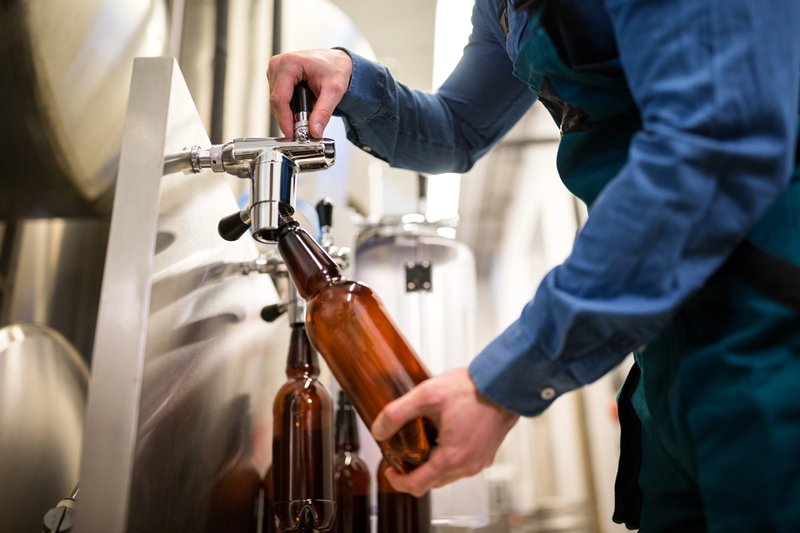
Beer manufacturers and wholesalers in Rio Grande do Sul can begin renegotiating overdue state tax debts under a new tax regularization program that opened Tuesday and runs through Nov. 30, offering discounts of up to 95% on interest and penalties tied to ICMS liabilities.
The program, called Refaz Cervejarias, covers ICMS debts that came due by Dec. 31, 2025. ICMS is the Brazilian state tax levied on the circulation of goods and certain services. The measure also includes debts already being collected in court, according to the state rules cited by Guia da Cerveja.
The relief does not reduce the original tax owed. Instead, it cuts the added charges that have accumulated on top of that balance. Companies that pay in a single installment can receive a 95% reduction in interest and fines. Those that choose to pay in up to 60 installments can obtain a 90% reduction. Debts split into 61 to 120 installments qualify for an 80% reduction, and companies under judicial reorganization, as well as cooperatives in liquidation, can also receive an 80% reduction on plans stretching from 121 to 180 installments.
The first payment, whether in full or as the first installment of a payment plan, is due by Nov. 30. Some companies face an earlier deadline of Nov. 13 if they want to include debts that have not yet been formally charged by tax authorities. In those cases, the business must first voluntarily declare the liability through Brazil’s “spontaneous disclosure” procedure before joining the program.
The application process is online through the state tax authority’s e-CAC portal. The state is also allowing companies whose state taxpayer registration has already been closed to apply. Existing installment agreements may be migrated into the new program.
Businesses that enroll must accept a significant legal condition. By joining, the company irrevocably acknowledges the debt and gives up the right to challenge it in administrative proceedings or in court. The benefit can also be lost after enrollment. If a company fails to make the full installment payment for three consecutive months, the payment plan is canceled and the remaining balance is charged again without the negotiated discounts.
The measure follows months of discussions between the Rio Grande do Sul state tax authority and the Associação Gaúcha de Microcervejarias, or AGM, which represents microbreweries in the state. In a statement cited by the publication, AGM President Matheus Andrade said the association had turned “a concrete demand from breweries into a measure that can contribute to the regularization of companies.”
The state needed federal authorization before launching the program. Under Brazil’s Complementary Law 24 of 1975, a state cannot on its own forgive ICMS interest and fines. Any such measure requires unanimous approval from the National Council for Fiscal Policy, known as Confaz, which brings together the country’s state finance secretaries. That authorization came in July through ICMS Agreement 84/26, and the Rio Grande do Sul government later issued Decree No. 58,988/2026 at the end of September to put the program into effect.
The decree also applies to some other retail sectors in Rio Grande do Sul, including optics and jewelry, but the beer-specific provisions are drawing particular attention because of the size of the state’s brewing industry.
Rio Grande do Sul is the second-largest state in Brazil by number of breweries, with 325 registered establishments, behind only São Paulo, according to the 2026 Beer Yearbook from Brazil’s Ministry of Agriculture and Livestock. The state also has the country’s second-highest brewery density, with one brewery for every 34,554 residents, trailing only Santa Catarina.
AGM says the state is home to more than 500 contract or “gypsy” breweries, brands that produce beer using third-party facilities rather than their own plants. According to the association, the sector in Rio Grande do Sul supports more than 75,000 direct and indirect jobs.
That scale helps explain why the program matters beyond tax administration. If companies use the plan in meaningful numbers, it could ease financial pressure on brewers and wholesalers in one of Brazil’s main beer-producing states, giving part of the beverage sector more room to manage old liabilities while continuing operations, distribution, and investment. The benefit may be especially relevant for smaller producers and distributors that have faced tighter margins and heavy tax burdens under Brazil’s state-level indirect tax system.
Eligibility is limited to companies whose main business activity is the manufacture of beer and draft beer, or the wholesale sale of beer, draft beer, and soft drinks. The state’s action is notable because, for now, Rio Grande do Sul appears to be the only state with this specific authorization for the beer segment under the Confaz measure cited in the report.
The publication described the program as a response to industry complaints about the burden carried by breweries in the state, including tax-related pressures that had built up over time. For companies considering enrollment, the state rules make clear that the larger discounts are tied to faster payment, while longer repayment periods bring smaller reductions.