Half of French wine businesses face serious cash-flow problems
Growers say recurring weather extremes have spread the crisis to nearly every wine region, deepening a long decline in demand.
Thursday, October 8, 2026
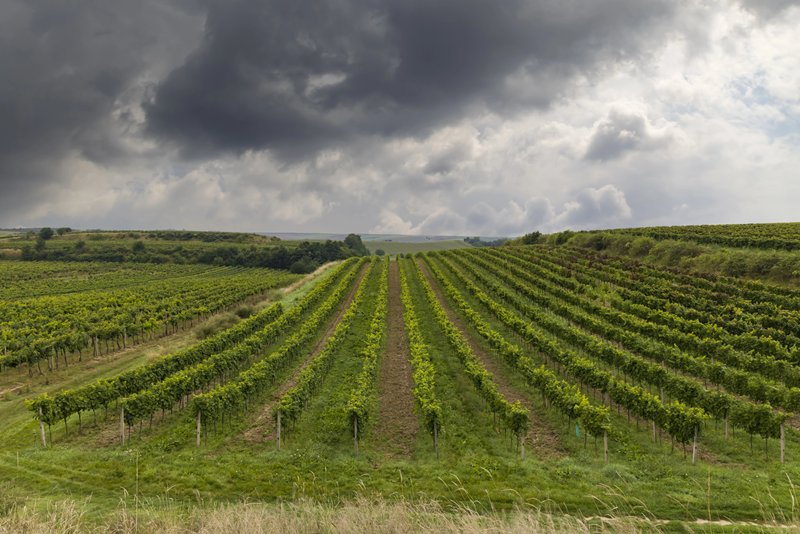
France’s wine industry is under growing pressure from lower consumption, tighter cash flow and repeated climate shocks, as producers warn that a crisis that has been building for years is now hitting nearly every wine region in the country.
After a summer marked by heat waves and drought, the 2026 harvest has been reduced, according to industry officials cited by Terre de Vins and AFP. Wine growers say the problem is no longer a string of isolated bad years but a new pattern of recurring weather extremes that makes production harder to sustain from one season to the next.
“Every year we are shaken by the climate,” Jérôme Despey, head of the wine council at the public farm agency FranceAgriMer and a wine grower in the Hérault region, said in comments reported by AFP. He said producers in Occitanie have faced one damaging event after another for five years. In recent days, he said, the region moved from drought to a heavy Mediterranean rain episode that brought more than 200 millimeters of water in 12 hours.
Those swings follow earlier losses. In 2025, heat and drought in August had already cut harvests from Charentes to Bordeaux and across Languedoc-Roussillon. In 2024, other regions were hit by excess rainfall, late frost and in some cases drought. At the same time, warming temperatures are also changing the conditions for winemaking itself.
The industry is facing that climate pressure while demand weakens at home. France remains the largest wine-consuming country in the European Union and the main market for its own wines, but domestic consumption has been falling for decades. According to the International Organisation of Vine and Wine, French wine consumption fell another 3.2% in 2025 from a year earlier.
The decline reflects a mix of lower household purchasing power, changing drinking habits and weaker demand for red wine, along with broader generational shifts. Despey said wine is suffering from consumer trade-offs, possibly more than some other products. He also argued that producers need to adapt their offer with wines that better match current demand, including lighter, fresher and dealcoholized products.
He said the central challenge is not whether to change, but how quickly the sector can do it. He added that he is not predicting a recovery in consumption, but said producers at least need to try to slow the decline by adjusting to consumer preferences.
Exports have not been able to offset the domestic slowdown. French wine shipments abroad fell another 3% in 2025, despite a solid performance from sparkling wines, whose exports rose 3%, according to the report. Producers say overseas sales have been held back by economic weakness in major destination markets and by higher tariffs in the United States, which remains the leading export market for French wine.
The strain is showing in the structure of the industry. France financed several vine-pull programs to reduce oversupply, and the latest plan this year covered 27,000 hectares. That brought the country’s vineyard area down to 740,000 hectares, from nearly 800,000 five years ago. The reductions mainly affected Bordeaux, the Southwest and Occitanie, while some other areas have been less affected and a few are still expanding.
Not all vine removal means a business closure. About two-thirds of the land involved is expected to be redirected to other activity, according to the report, while also helping reduce excess production. In Bordeaux, for example, white wines have gained ground. Their share of vineyard area, excluding sweet wines, rose to 13% in 2025 from 9.3% in 2016, with crémant among the segments increasing.
The number of farms has also continued to fall. France had 59,000 wine-growing operations in 2020, but that number dropped to 53,000 in 2023, according to the Agriculture Ministry. Even so, the wine sector says it still supports close to 500,000 jobs across the country.
Financial pressure is now a major concern. According to the observatory of the Vignerons Indépendants, one in two businesses says it is currently facing serious cash-flow problems. That level of stress raises questions not only for vineyard owners but also for bottlers, logistics providers, distributors and other companies tied to the broader drinks trade. If the pressure persists, it could accelerate restructuring across the wine business and affect suppliers throughout the beverage sector.
Jean-Marie Fabre, head of the Vignerons Indépendants union, said climate risk is the most destabilizing factor because this year it is affecting all regions. He is calling for at least one national protection program for vineyards, covering measures such as anti-hail nets, anti-frost wires or towers, and water storage systems.
Fabre said that would require a budget of 4 billion euros over five years, with half financed by the European Union’s Common Agricultural Policy and the rest by national and regional public funds. He argued that the sector has been dealing with a buildup of crises for five years and is now at a tipping point. In his view, public policy should stop focusing mainly on spending after disasters and invest more in prevention.
The union is also asking for lighter taxation when family vineyards are transferred to the next generation, a demand that reflects concern over succession in a sector where margins are under pressure and the number of operators is shrinking. Producers say that without easier transmission, some family estates could disappear rather than remain active under new ownership.
The current reshaping of French wine is uneven across categories and regions. Sparkling wines have shown more resilience in exports, while some producers are shifting acreage toward whites and other styles that they see as better aligned with the market. But growers and trade groups say adaptation requires capital at a time when many businesses already lack liquidity and face repeated harvest risks.
That combination of weaker demand, recurring weather losses and financial fragility is turning a long-running adjustment into a broader industry test. For a country where wine remains a major farm product and a large employer, the outcome will affect not only vineyards but much of the business around beverages, from production planning and retail supply to long-term investment in what kinds of wines France can continue to make and sell.