California wine grape harvest falls to its smallest level since 1999
Acreage in production dropped to 510,000 acres in 2025 after weak sales and rising costs pushed growers to pull vines.
Saturday, October 10, 2026
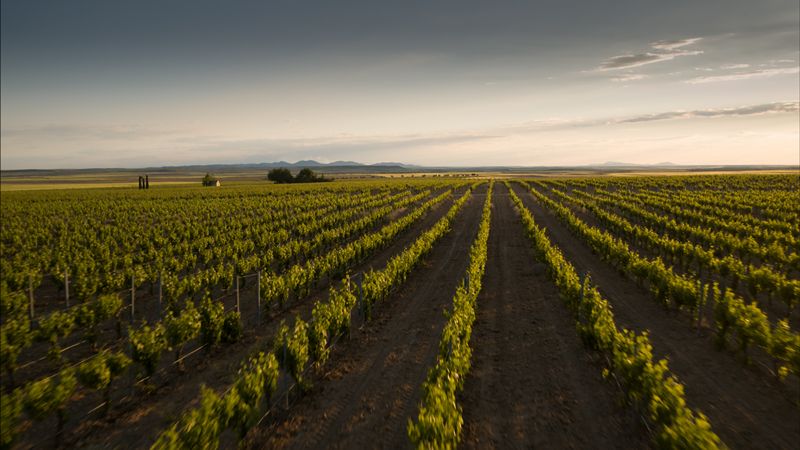
California’s wine industry is cutting vineyard acreage, absorbing layoffs, and facing rising financial stress as weaker demand meets higher production costs, according to industry executives and published reports reviewed by The Food Institute.
The pressure is especially important because California produces more than 80% of U.S.-made wine. A contraction in the state’s main wine region can ripple beyond vineyards and wineries, affecting grape supply, farmland values, packaging orders, distributor plans, and investment decisions across the broader beverage business, including companies that also sell beer, spirits, and emerging drink categories.
Industry figures cited by The Food Institute show how sharply conditions have changed. The U.S. Department of Agriculture put California’s wine grape acreage in production in 2025 at 510,000 acres, down from 590,000 acres. Jeff Bitter, president of Allied Grape Growers, said the pullback in acreage has accelerated since the end of the pandemic. The 2025 crush totaled 2.6 million tons, the smallest harvest since 1999.
The decline is happening as wine sales have fallen by more than 20% over the last five years, according to The Associated Press. Some growers say the market has become so weak that they cannot sell all of their grapes and are removing vines instead of keeping unprofitable land in production.
Bill Berryhill, a third-generation grower at Berryhill Family Vineyards near Lodi in the San Joaquin Valley, told the AP he plans to remove vines from 10% of his acreage after losing money for the last three years. He said part of this year’s crop, though strong in quality, had to be dropped on the ground because there was no market for it.
Financial strain is also reaching established producers. The Los Angeles Times reported that Gundlach Bundschu, a family-owned Sonoma County winery founded in 1858, filed for Chapter 11 bankruptcy protection after failing to reach a restructuring agreement with lenders. According to that report, the company’s problems began after it purchased an additional 60 acres in February 2020. Larger producers have also taken cost-cutting steps. Gallo and Constellation Brands announced layoffs earlier this year.
Executives and advisers told The Food Institute that the downturn is not tied to a single cause. Filiberto Amati, a partner at Amati & Associates, said demand is soft across alcoholic beverages and described the problem as both structural and cyclical. In his view, that combination is particularly difficult for wine because it has long been marketed around specific occasions and lacks an obvious new growth path.
Daniel Berman, owner and director of Rincon Wine Group, described the current period as a correction after decades of expansion. He said he sees it as a “long overdue correction” following roughly half a century of growth. While painful for growers and wineries, he said, such a reset is not unusual in a mature industry.
Demand has also been reshaped by changing consumer habits. Berman said wine now faces more competition from THC- and CBD-infused drinks, so-called functional beverages, and non-alcoholic alternatives. He also pointed to generational pressure. Younger adults, he said, generally have less disposable income, and wine often sits in a premium price range, with many bottles selling for $25 or more. He said consumption among younger consumers has improved over the past year as more people move further into their careers and social lives, but he added that higher living costs are still pushing many to drink less because they simply cannot afford as much.
On the cost side, climate and geopolitics are adding another layer of strain. Amati said climate change is reducing grape yields, damaging fruit, and changing harvest timing by extending or shifting the picking season. Those changes raise labor and production costs at the winery. He also said geopolitical shocks are increasing transport costs through higher oil prices and lifting packaging expenses, including for glass bottles that were traditionally sourced in part from China and Mexico.
The same climate pressure is being felt outside the United States. Bloomberg reported that France’s wine output is likely to fall to a near 70-year low after summer heat waves, with production expected to reach about 35 million hectoliters in 2026, or 14% below the five-year average. While California and France face different market conditions, both cases show how weather volatility is becoming a central business risk for wine producers.
That matters for the beverage sector because the wine slump is not only a farm issue. It can change how wholesalers allocate resources, how retailers manage shelf space, and how suppliers of bottles, labels, closures, and freight services plan their business. It can also shift investment toward faster-growing beverage categories if wine continues to offer weaker returns. In export markets, lower output and higher costs may further complicate pricing and competitiveness for U.S. producers already dealing with softer demand at home.
Even with the current downturn, some in the industry do not see a long-term collapse. Berman said wine remains a durable product category with deep consumer roots and a long history. But for now, growers and vintners in California are managing a difficult mix of lower sales, shrinking acreage, rising costs, and fewer clear signs of near-term relief.