Rémy Martin cuts bottling changeovers to 15 minutes with a digital transport system
The servo-driven upgrade lets the cognac maker run 11 bottle formats through programmable recipes, reducing downtime on smaller batches.
Wednesday, October 7, 2026
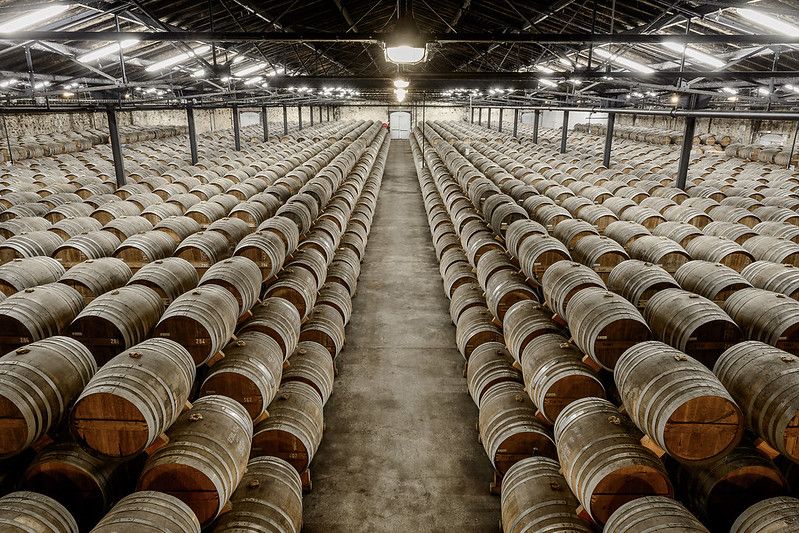
Rémy Martin, the French cognac producer, has upgraded part of its bottling operation with a digitally controlled transport system that the company says gives it more flexibility for small production runs and sharply reduces the time needed to switch between bottle formats.
The change was announced Sept. 24 in a statement from Perrier Bottling Company, one of Rémy Martin’s equipment suppliers, which said it had modernized the infeed and outfeed transport systems around the rinsing, filling, and capping stages of the line. The project uses Rockwell Automation’s iTRAK intelligent track system, a servo-driven transport platform designed to move bottles with more precise control than conventional mechanical handling systems.
The upgrade addresses a growing issue in packaged goods production. Bottling lines have long depended on machinery built for stable, high-volume output with limited variation. That approach remains effective for many operations, but it is less suited to a market that increasingly asks manufacturers to handle more bottle types, smaller lots, and faster product changeovers without long shutdowns.
According to the companies, that was the main concern for Mickael Guiard, Rémy Martin’s automation technical manager, who asked Perrier Bottling Company to study the use of servo-driven transport systems at the entrance and exit of the rinsing, filling, and capping lines. The goal was to bring more of the plant’s material handling into a digital control environment instead of relying on fixed mechanical systems.
Yannic Arenas, regional sales director for Perrier Bottling Machines in France, said Rémy Martin already knew the capabilities of the iTRAK system and wanted a machine that could use that flexibility. In the statement, he said the core design of rotary rinsing and bottling machines has been refined over many years, but the systems that move bottles before and after those steps are still often mechanical, especially friction-based screw conveyors.
Those traditional conveyors can create several limits. Because they move bottles at a fixed pace, the speed and spacing of the whole sequence can be dictated by the slowest part of the operation. They can also cause rubbing or marking on bottles and labels, a problem that matters more for premium products where appearance at retail is part of the brand presentation.
Perrier Bottling Company said the new setup digitizes those transfer stages by adding the iTRAK system to both the entry and exit zones of the line. Instead of relying on fixed-step mechanical movement, the system allows bottle handling to be programmed through what the company described as different packaging and logistics “recipes.” Those recipes can be changed through the control system with much less physical reconfiguration than older equipment requires.
The companies said the result is a more flexible line that can switch between batches in about 15 minutes. Arenas said some format changes had previously required as much as half a day in certain cases. For a producer running multiple bottle shapes and sizes, that difference can free up production time and reduce periods when the line is not making saleable product.
The machine was initially designed to handle nine bottle formats ranging from 37 centiliters to 3 liters, according to Perrier Bottling Company. Arenas said two additional sizes requested by Rémy Martin’s marketing team were added during the commissioning phase, bringing the total to 11 formats. He also said the line had to accommodate different bottle styles and shapes, each of which creates distinct transport requirements.
Guiard said Rémy Martin had seen results from the iTRAK system in other applications before moving ahead with the project. In the statement, he said faster batch changes would help the company respond more quickly to market demand while reducing unproductive time. He also said removing friction-based transfer systems would help preserve the finish and visual quality of the company’s bottles.
The announcement did not disclose the cost of the installation or the production capacity of the upgraded line. It also did not say when the project began, though Perrier Bottling Company said Rockwell Automation supported the work from the early design phase, including sizing studies and virtual simulations before the order was finalized.
After the order was placed, the companies said Rockwell provided further technical support through more detailed simulations, help from two engineers during system integration, and on-site assistance during installation and startup. Perrier Bottling Company said that support continued through the initial ramp-up at Rémy Martin’s facility.
The project reflects a broader shift in manufacturing, especially in food and beverage packaging, where producers are trying to combine the economies of larger runs with the agility usually associated with smaller batches. Machine builders have increasingly been asked to deliver equipment that can be adapted quickly instead of systems built around a single, fixed task.
While similar changes have already spread across parts of primary, secondary, and tertiary packaging, the bottling sector has moved more gradually because many existing mechanical systems remain reliable and efficient. The Rémy Martin installation shows how some beverage producers are now applying digital transport and motion control technologies to stages of the line that were previously treated as largely mechanical.
Rockwell Automation, which is based in Milwaukee, describes itself as a global industrial automation and digital transformation company. Perrier Bottling Company said it is seeing interest from other industries facing similar operating pressures, particularly the need to handle more product variation while keeping lines efficient and reducing changeover time.