France Forecasts a 34 Million Hectoliter Wine Harvest for 2026
The first official estimate puts output 6% below last year and 17% under the recent average after heat, drought and vineyard losses.
Monday, September 7, 2026
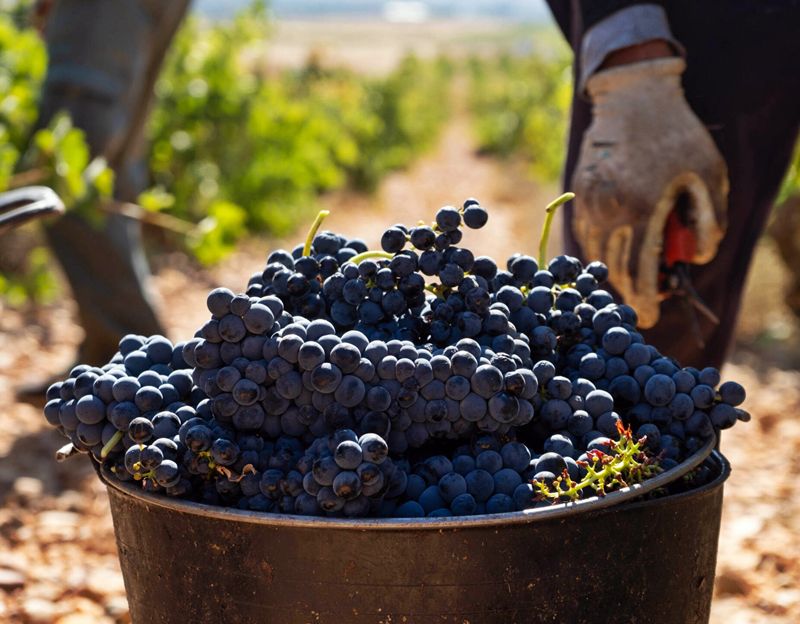
France is expected to produce about 34 million hectoliters of wine in 2026, according to the first official forecast released Monday by Agreste, the statistical office of the Agriculture Ministry. The estimate points to a smaller harvest than last year and a production level well below the recent average, reflecting pressure from dry and hot weather as well as a continued reduction in vineyard area.
Agreste said the forecast is based on grape maturity observations and weather conditions recorded through the start of September. At that level, French wine production would be down about 6% from 2025, when the country posted an unusually strong crop of nearly 36 million hectoliters. It would also be 17% below the average for 2021 through 2025, according to the official estimate published as of Sept. 1.
The ministry’s statistical service said production prospects are uneven across France’s wine regions. Vineyards in the southwest and southeast are expected to bring in smaller harvests. By contrast, some areas in the center-east could post a slight increase. That regional split shows how weather conditions and local growing patterns continue to shape the national picture in different ways.
Agreste said the broader plant health situation remains generally favorable, but growers are still watching the effects of hail and drought on grape quality. The estimate also reflects the impact of lower yields in some vineyards after periods of drought and heat waves. In practical terms, that means the volume of grapes harvested in several areas may not match the levels seen in stronger years, even where disease pressure has remained limited.
For France’s wine industry, the estimate is important because it gives producers, merchants, bottlers, and exporters an early view of supply before the harvest is fully completed and verified. A lower official production outlook can influence how wineries and buyers plan grape purchases, contracts, inventories, and shipments for the coming months. It could also affect pricing and availability in parts of the beverage sector if the smaller crop is confirmed later in the season, though the scale of any market effect will depend on final harvest results and demand.
France remains one of the world’s largest wine producers, so changes in its annual crop are closely watched beyond the farm sector. Wine companies use the first official forecasts to gauge how much product may be available for domestic sales and export markets, and growers look to them as an early signal of the year’s commercial balance. The estimate is especially relevant in a year when weather conditions have again become a central factor in agricultural output.
Agreste stressed that the figure is still preliminary. The final level of production will be confirmed in the fall, after the grape harvest is completed and more complete field data are available. Until then, the 34 million hectoliter figure serves as the government’s first benchmark for the 2026 French wine crop and for the direction of supply heading into the next marketing cycle.