Record heat is pushing Piedmont’s grape harvest up by a month
Growers say drought and violent storms are accelerating ripening in one of Italy’s most important wine regions
Monday, June 29, 2026
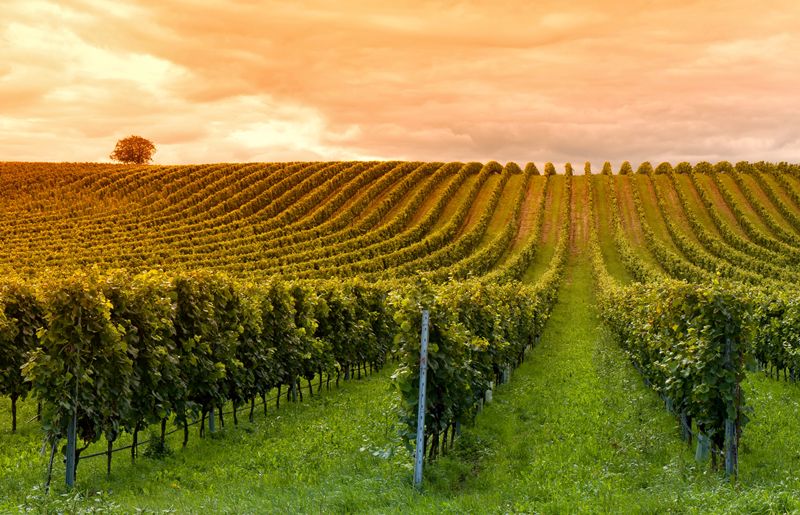
Record heat in Piedmont is pushing the grape harvest forward by as much as a month, according to wine producers in the region, as an intense hot spell, drought and violent storms add pressure to one of Italy’s main wine areas.
La Repubblica reported that in Turin, the overnight low reached 27.3 degrees Celsius at 4 a.m. on Sunday, based on data from the Arpa monitoring station on Via della Consolata in the city center. The newspaper said the reading was the highest minimum air temperature recorded there since measurements began in 1753.
The heat wave has also been tied to blackouts across Turin and several nearby municipalities, including Moncalieri, Rivoli and Druento. After the extreme nighttime heat, parts of Piedmont were hit by hail, thunderstorms and strong winds that brought down trees and damaged roofs between Turin and surrounding towns.
For vineyards, growers say the combination of sustained heat and lack of water is accelerating ripening and changing how they manage the vines. Franco Morando, general manager of Montalbera, a wine estate spread between Langhe and Monferrato, told La Repubblica that the region had not seen heat this severe since 2003. If conditions continue, he said, his company could begin harvesting in early August, about a month ahead of the usual schedule.
Morando said high temperatures do not automatically mean lower quality, but they require closer attention from producers. That view was echoed by Francesco Monchiero, president of the Consorzio Tutela Roero and of Piemonte Land of Wine, the umbrella group that brings together the region’s wine bodies. He said growers are adapting their vineyard practices to climate change. In the past, he said, leaves were removed to expose bunches to more sunlight. Now producers are trying to leave as much foliage as possible to shield grapes from sunburn.
Andrea Fontana, who leads the Consorzio Tutela Nebbioli Alto Piemonte, said vineyards are showing unusual signs for this point in the season. He told La Repubblica that for about two weeks some vines have already begun what growers describe as “agostando,” when shoots start to lignify in preparation for pruning later on. He added that some plants were already showing signs of sun stress on Sunday morning.
Producers also say the heat is affecting grape composition. With more sun and less water in the berries, sugar concentration rises, Monchiero said, which can push wines to higher alcohol levels. He told the newspaper that wines that once reached around 12% alcohol may now come in closer to 14%. That shift can influence style as well as cellar planning for fermentation and balance.
The weather threat is not limited to heat. Hailstones measuring 3 to 4 centimeters fell Sunday afternoon in municipalities north of Turin, including Varisella and Venaria, according to La Repubblica. Across the province, branches and trees fell, including one along Corso Trapani in Turin. The worst structural damage was reported in the Chierese area, where tiles were torn off and roofs were damaged between Riva and Pessione. In one case, part of a warehouse roof was blown onto Provincial Road 128 toward Chieri, striking power lines and forcing authorities to close the road.
For the beverage sector, an earlier harvest in Piedmont could have effects beyond the vineyard. A compressed picking window may tighten labor needs and winery logistics at a time when growers are also managing storm risk. Changes in ripening and sugar levels could also affect yields, contract timing and pricing, while shaping the final profile of wines from one of Italy’s most important producing regions.