Britain Will Launch a Nationwide Bottle Deposit Scheme in 2027
Consumers will pay a refundable 20p charge on bottles and cans under a long-delayed recycling plan across all four nations.
Thursday, July 23, 2026
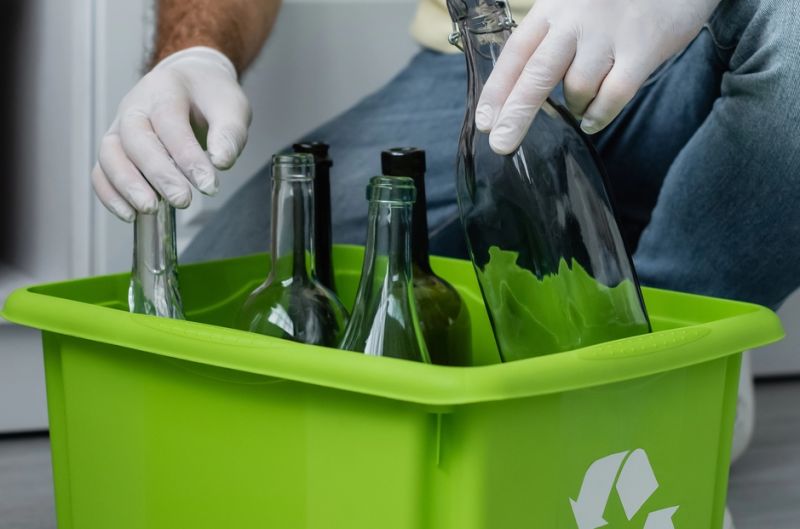
The United Kingdom is set to launch deposit return schemes for drinks containers across all four nations on Oct. 1, 2027, according to a new briefing from the House of Commons Library that lays out the timetable, scope and legal framework for the long-delayed policy.
Under the plan, consumers will pay a refundable 20p deposit when they buy drinks sold in single-use containers covered by the scheme. They will get that money back when they return the empty container to a designated collection point, such as a store or a reverse vending machine.
The policy is intended to cut litter, raise recycling rates and support a circular economy. The House of Commons Library said consumers in the U.K. use about 14 billion plastic drinks bottles and nine billion cans each year. It also cited research from Keep Britain Tidy showing that small plastic bottles and non-alcoholic cans account for 43% of litter by volume.
The broad start date is now aligned across the U.K., but the details will not be identical in every nation. England, Northern Ireland and Scotland plan to include single-use drinks containers from 150 milliliters to 3 liters made of PET plastic, steel and aluminum. Glass will not be included in those three markets. Wales plans to include glass bottles in its scheme, but initially without applying a deposit to them, in order to avoid immediate disruption to labeling and distribution. Wales also intends to add a reuse element, although full legislation for that part has not yet been completed.
For beverage producers, importers, retailers and distributors, the rules matter well beyond waste policy. Wine, beer, soft drink and spirits companies selling into the U.K. market may need to adjust packaging choices, labels, barcodes and take-back logistics depending on where products are sold. Different material coverage between Wales and the rest of the U.K. could also create practical issues for machine compatibility, stock handling and cross-border distribution, especially for businesses operating across several nations.
The briefing notes that waste and resources policy is devolved, which means each part of the U.K. can legislate separately. But that flexibility is limited by the United Kingdom Internal Market Act 2020, which generally requires goods lawfully sold in one part of the country to be accepted in others. That has made coordination important, because different schemes with different materials in scope could create operational problems for businesses and regulators. The law allows governments to seek exclusions if they want to diverge.
The legal basis for the schemes differs by nation. In England, Wales and Northern Ireland, powers come from the Environment Act 2021. In Scotland, powers come from the Climate Change (Scotland) Act 2009. The regulations already adopted include the Deposit Scheme for Drinks Containers (England and Northern Ireland) Regulations 2025, the Deposit and Return Scheme for Scotland Amendment Regulations 2025, the Deposit and Return Scheme for Scotland (Designation of Scheme Administrator) Order 2025, and the Deposit Scheme for Drinks Containers (Wales) Regulations 2026.
A central operator has already been named for most of the U.K. The House of Commons Library said the U.K. Deposit Management Organisation was appointed in May 2025 to run the scheme in England, Northern Ireland and Scotland. Its trading name is Exchange for Change. It will oversee operations and compliance in those markets. Wales has not yet appointed its own deposit management organization.
Environmental regulators in each nation will enforce the rules. In England, that role will fall to the Environment Agency. Similar regulators will oversee compliance elsewhere in the U.K.
The cost of building and running the system is substantial. An impact assessment for England and Northern Ireland estimated set-up costs at £632 million and annual operating costs at £1.065 billion. Expected annual benefits were put at £1.612 billion, including lower litter costs, greenhouse gas savings and revenue from recovered materials. In Scotland, an assessment projected costs of £900 million and benefits of £1.27 billion over 10 years.
The debate around the scheme remains divided. Local authority groups and parts of the waste sector have argued that deposit return systems add cost and complexity and that more investment should go into curbside recycling instead. Some recycling trade associations have questioned whether consumers will consistently return containers. Supporters include environmental groups that see deposit systems as an effective way to reduce drinks-related litter, as well as food and drink industry voices calling for a consistent U.K.-wide model.
Glass remains one of the most disputed points. The U.K. government decided not to include glass in England, Northern Ireland and Scotland because of concerns about safety, storage and recycling quality. Industry groups have also raised cost concerns around handling glass through deposit systems. Environmental advocates argue that excluding glass leaves out an important source of litter.
The new schemes will also interact with another major packaging reform already underway. A revised packaging extended producer responsibility system began across the U.K. in April 2025. Drinks containers covered by deposit return schemes in the U.K., including steel, aluminum and PET plastic, are excluded from those charges. Glass drinks bottles remain within the scope of extended producer responsibility.
Scotland’s path helps explain why policymakers have pushed for closer alignment this time. Scotland passed legislation for a deposit return scheme in 2020 that included glass, but implementation was delayed by the pandemic and disputes linked to internal market rules. Circularity Scotland, a nonprofit backed by the drinks industry that had been set up as scheme administrator, entered administration in 2023 after those delays derailed the original rollout. Waste company Biffa later brought a compensation claim against the Scottish government over the disruption, but that claim was dismissed by the Court of Session.
The House of Commons Library said Scotland will now align its approach with England and Northern Ireland rather than revive its earlier model.
Deposit return systems are already common outside the U.K. They operate across many countries in Europe and are due to become mandatory across the European Union by 2029 under packaging rules adopted there. Similar systems also operate in some U.S. states, across Canadian provinces and territories, and throughout Australia.
For drinks companies selling bottled water, soda, beer, ready-to-drink cocktails or other packaged beverages in Britain, the next phase is likely to focus on execution rather than principle. With just over a year before launch, businesses face decisions on container formats, supply chains, retailer obligations and consumer communication as they prepare for a system that will change how millions of bottles and cans move through the market every day.