Extreme weather pushes Northern Hemisphere wine harvests weeks ahead of schedule
Italy and California could see their earliest picks in a generation, but bulk buyers remain cautious in a weak market.
2026-08-21
Extreme weather in several major wine-producing regions is pushing harvests forward in the Northern Hemisphere, but buyers and sellers in the grape and bulk wine trade are responding with caution rather than urgency, according to Ciatti Company’s August 2026 Global Market Report released Aug. 17.
The report said abnormal weather has become a common theme across most of the countries it tracks, with a developing El Niño pattern intensifying conditions in different parts of the world. In Western Europe, the report described the current season as the hottest summer on record, with three straight months of prolonged heatwaves. In South America, heavy snow in the Andes has blocked border crossings between Chile and Argentina for about a month, disrupting transport routes used by the wine industry. On the Chilean side of the mountains, lower elevations have also faced flash flooding, while parts of Argentina have seen unusually mild temperatures. In South Africa, the Western Cape moved from serious autumn flooding to a winter that the report said has been unusually dry and mild.
The market impact of those events is still being assessed in some areas. Ciatti said flood damage in parts of Chile and South Africa’s vineyards remains under review. It also said thousands of trucks have been stranded at Andean crossings during the closure, adding pressure to logistics at a time when the wine trade is already dealing with weak demand and elevated costs.
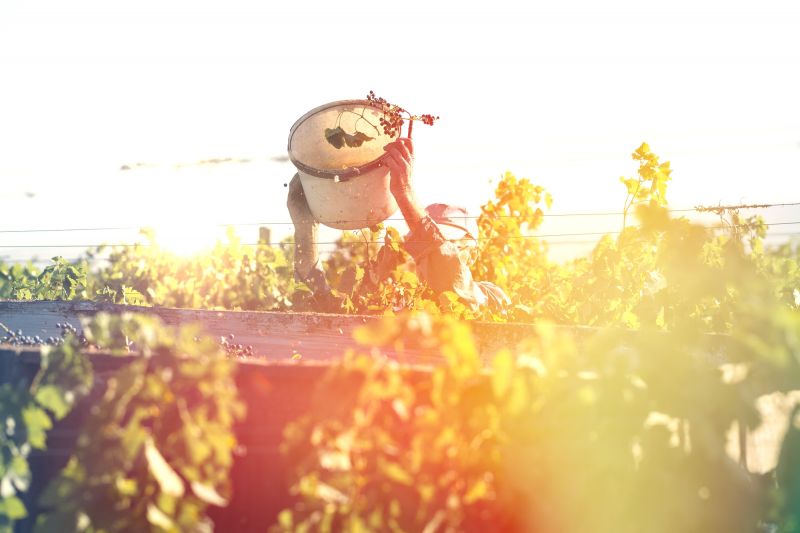
Even with those disruptions, harvest activity in the Northern Hemisphere has continued and, in several regions, has started earlier than usual. Ciatti said Italy and California are both facing what could be their earliest harvests in a generation. France is running about 7 to 14 days ahead of a normal schedule, and Spain is about 7 to 10 days ahead, the report said.
The early start has forced growers to adjust quickly. In Europe, producers have moved into vineyards during the middle of the summer holiday period as daytime temperatures often approach or exceed 40°C and nighttime temperatures stay above 20°C. Those conditions are affecting both harvest timing and the pace of vineyard work, while also raising questions about how grapes will develop in terms of yield, sugar levels, and acidity.
Ciatti said the picture on crop size and fruit condition is not uniform. Conditions vary sharply from one country to another and, in some cases, from one region, vineyard, or even row to the next. That level of variation has made it harder for industry groups to issue early national forecasts. In France, Agreste postponed its annual preliminary crop forecast. In Italy, Assoenologi, Ismea, and Unione Italiana Vini either delayed or canceled their first production estimates for the season.
That uncertainty has not translated into a broad rush in the bulk market. According to the report, global wine sales remain under pressure and inventory levels at many wineries are still considered adequate. As a result, the trade has not reacted aggressively to the harvest concerns now emerging from vineyards. Ciatti said activity is taking place, but not at a pace that would suggest panic buying or a sudden shortage.
The report’s assessment points to a market that is being shaped as much by weak demand as by weather risk. Even as growers confront heat, flooding, transport delays, and earlier picking dates, merchants and wineries are still weighing those issues against slower consumer sales and substantial carryover stocks from prior vintages. That balance appears to be limiting price movement and reducing the incentive for buyers to secure large volumes early.
Ciatti’s latest pricing material, available to its subscribers, includes new 2026-vintage bulk wine pricing in Australia and updated pricing in Spain. While the preview does not disclose the full figures, it indicates that trade is continuing selectively rather than broadly across producing countries.
Italy stands out in the report as an example of the strain facing producers. Ciatti said the 2026 harvest there has begun under difficult financial conditions, with rising input costs, declining wine sales worldwide, and large 2025 inventories still in storage at some wineries. The report said many operators are under financial pressure and are hoping the industry is near the bottom of the cycle.
The broader issue for the wine trade is whether the early harvest and weather extremes eventually tighten supply enough to shift market behavior. For now, Ciatti’s report suggests that is not happening in a major way. Buyers still appear to have enough stock on hand, and sellers remain limited by a market in which demand has not recovered at the same pace as production concerns have emerged.
What happens next will depend in large part on the rest of the Northern Hemisphere harvest. As picking expands through September and October, producers, brokers, and wineries are expected to get a clearer view of final yields, fruit quality, and how much wine will actually be available for the 2026 vintage. Ciatti said that period will help determine what kind of bulk wine market the industry is likely to face through calendar 2027.
