California Expands Trapping After Vine-Killing Pest Reaches Plants in 22 Counties
Officials say the insects have not reached commercial vineyards, but contaminated nursery stock may have spread across as many as 40 counties.
2026-08-18
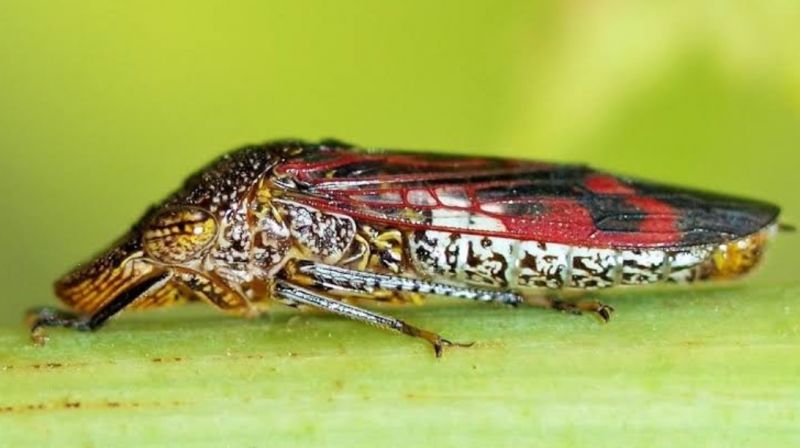
California officials are expanding inspections and insect trapping after the glassy-winged sharpshooter, an invasive pest that can spread the vine-killing Pierce’s disease, was detected on retail plants sold across much of the state.
The growing concern comes as California’s wine industry is already under economic pressure from weak demand. State officials said the insect has not been found in commercial vineyards, but its appearance on nursery stock and other plants in an increasing number of counties has raised fears that it could spread into grape-growing areas.
The glassy-winged sharpshooter is a non-native insect that can carry the bacteria that causes Pierce’s disease. The disease attacks a grapevine’s ability to take up water and is considered incurable. Infected vines decline and can die, creating a serious threat for vineyards if the insect becomes established near wine regions.
The pest is not new to California, and growers have seen the damage it can do. According to the University of California, the most destructive Pierce’s disease outbreak linked to the glassy-winged sharpshooter hit Northern California in the mid-1990s. That outbreak destroyed more than 1,000 acres of grapevines and caused $30 million in losses. A later outbreak in 2015 was less severe and was tied to the blue-green sharpshooter, a smaller related insect native to the region.
The latest round of detections began to draw wider public attention earlier this summer, when the California Department of Food and Agriculture said glassy-winged sharpshooters had been found on grapevines sold at Costco stores in Northern California. Those grapevines came from a Fresno nursery. State officials urged buyers to isolate the plants and contact authorities so the vines could be destroyed before the insects had a chance to spread.
The issue widened in July, when state officials also found glassy-winged sharpshooters and broad-headed sharpshooters on desert willow trees sold at Costco locations in 18 California counties, including Santa Clara, San Diego and Los Angeles counties. Both insects are invasive. The glassy-winged sharpshooter is native to the southeastern United States, while the broad-headed sharpshooter comes from Central America.
Joshua W. Bingham, from the California Department of Food and Agriculture’s Office of Public Affairs, said the desert willows came from a nursery in Texas and that the state’s investigation is continuing.
He said county agricultural commissioners are now trying to track down and inspect thousands of grapevines tied to the Fresno nursery shipment. He also said trapping for the glassy-winged sharpshooter will continue through the end of September.
On Aug. 4, state officials identified a glassy-winged sharpshooter that had been trapped in a nursery in San Luis Obispo County, adding to the list of detections. So far, the insect has been found on plants in 22 counties, according to the state. Officials believe contaminated plants from the Fresno nursery may have been distributed into as many as 40 counties.
The state said more than 3,100 customers who bought the grapevines have been contacted. Officials have also placed more than 2,700 additional insect traps as part of the response. The trapping program is meant to find any new pockets of infestation quickly and to help determine whether the insects have moved beyond the original plants.
For California grape growers, the main concern is that the pest could move from ornamental or nursery plants into vineyard areas. The glassy-winged sharpshooter can fly and feed on a range of plants. If it carries the Pierce’s disease bacterium, it can spread the infection as it feeds. That makes early detection important, especially in regions where vineyards and residential landscaping are close together.
State officials have committed $820,000 in emergency funding for inspections and trapping over at least the next three years. The money will come from assessments already paid by grape growers, meaning the industry is helping finance the effort to prevent a broader outbreak.
California’s two U.S. senators, Alex Padilla and Adam Schiff, also sought federal help. They asked the U.S. Department of Agriculture for $32 million in emergency funding for tracing, trapping and related work, but the request was denied.
The current response is focused on containment and surveillance rather than vineyard treatment, because officials say the insects have not been found in commercial grape plantings. For now, the state is concentrating on tracing where the infested plants were sold, contacting buyers, inspecting nurseries and monitoring traps in affected counties.
The concern is greatest in a state where grapes are one of the most valuable crops and where disease outbreaks can take years to control once they spread. Pierce’s disease has long been a risk in California, but the presence of the glassy-winged sharpshooter can make that risk much greater because the insect is an efficient carrier and can travel more widely than some native sharpshooter species.
That has left regulators and growers watching closely as the summer trapping season continues. The immediate goal is to keep the detections limited to retail and nursery plants before the pest reaches vineyard blocks in major grape-growing regions.
