The United States and Canada move toward a deal to block new 50% tariffs.
The framework would spare wine and other targeted goods before Wednesday in exchange for Canadian concessions on trade, energy, defense and minerals.
Monday, August 17, 2026
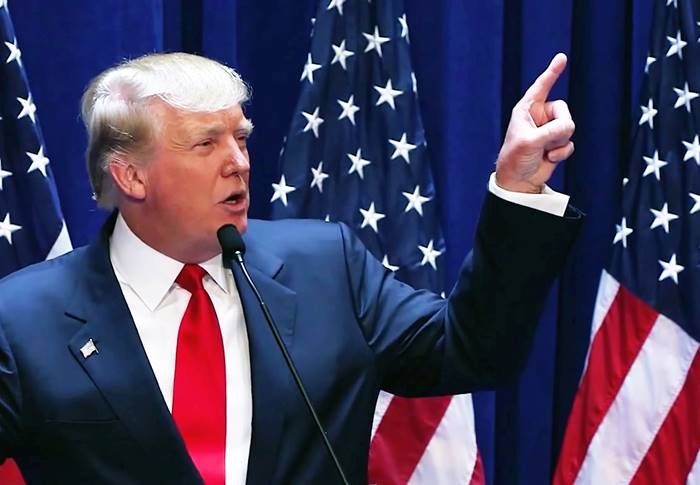
The United States and Canada are moving toward a deal that could stop new 50% tariffs from taking effect early Wednesday on a narrow but politically sensitive group of Canadian goods, including wine, according to industry executives and trade specialists following the talks.
The negotiations were still unsettled late Sunday, and people close to the discussions cautioned that details could change before the deadline. But those following the talks said the emerging framework would likely combine Canadian tariff concessions with broader commitments on energy, defense and critical minerals, while the United States would set aside President Donald Trump’s proposed tariffs under Section 338 and ease some existing duties on steel and aluminum.
The talks have become a high-stakes test of a trade relationship that has deteriorated sharply over the past year. If an agreement is reached, it could lower the immediate risk of a new cross-border trade fight and open the way for formal talks on revising the U.S.-Mexico-Canada Agreement, the North American trade pact negotiated during Trump’s first term. If the talks fail, the new tariffs could deepen political resentment in Canada and add another legal and commercial conflict to an already strained relationship.
“I’m optimistic that there’ll be a resolution in full or in part that will stave off the Section 338 tariffs. That’s the trajectory we’re on,” Dan Ujczo, a trade attorney in Columbus, Ohio, said. “Both sides want a deal.”
Trump announced the tariff threat last month by invoking Section 338, a little-used provision of a 1930 trade law. The administration argues that Canada’s retaliation against earlier U.S. tariffs amounted to discrimination against American goods. The measure would apply to about 5% of the $382 billion in Canadian products imported by the United States last year, according to the people tracking the discussions. Even though the share of trade is small, the proposed 50% rate is unusually steep and has raised concern among companies that see it as a sign of broader instability in North American trade.
Wine is among the products caught in the dispute, and the stakes go beyond one category. A 50% tariff on Canadian wine entering the United States could quickly affect prices, supply planning and shelf space for importers, retailers and restaurants. The broader trade fight has already touched alcohol sales on both sides of the border. After Trump imposed tariffs on Canadian goods in March 2025 over what he said was Canada’s failure to stop illicit fentanyl from entering the United States, several Canadian provinces, including Ontario, removed U.S. wines and spirits from government-run stores. That move disrupted a major outlet for American producers and became one of the clearest signs that trade retaliation was spilling into the beverage business.
U.S. officials have pointed to that response as evidence that Canada’s countermeasures hit American alcohol, auto and dairy interests. Canadian officials have said they were entitled to respond after the United States raised barriers against their exports.
Prime Minister Mark Carney has said he wants a full settlement rather than a limited arrangement. He has also warned that “all options are on the table” if Washington moves ahead with the new tariffs. That threat of retaliation has worried businesses that depend on steady cross-border shipments and fear a repeat of the cycle of tariffs and counter-tariffs that has marked much of Trump’s trade policy.
“You’ve now put the Canadian government, with these 338s, in a position where if we don’t do a comprehensive deal, we may just end up having to politically retaliate and we will be years away from having trade peace,” Flavio Volpe, president of the Automotive Parts Manufacturers’ Association in Toronto, said.
The administration’s use of Section 338 has also drawn attention because the law has not been tested in this way before. A deal would spare the White House from having to defend another aggressive use of presidential tariff authority in court, according to trade lawyers and business groups watching the dispute. It would also give both governments a way to shift from emergency brinkmanship to a more structured negotiation over the future of USMCA.
Business groups say that is the larger prize. The United States has already begun talking with Mexico about possible changes to the North American trade agreement, but formal negotiations with Ottawa have not started. A last-minute deal this week could serve as a confidence-building step toward those talks.
“Depending on the outcome, it’s either a confidence-building exercise that sets the stage for more progress on USMCA, or it’s another friction in the relationship that could spiral quickly,” Jake Colvin, president of the National Foreign Trade Council, said.
The issues on the table go well beyond the 50% tariff threat. People following the discussions said the United States is also seeking closer cooperation from Canada on defense and energy, including possible Canadian participation in Trump’s “Golden Dome” missile shield and purchases of F-35 fighter aircraft. U.S. officials also want better access to Canadian critical minerals, which are seen as important to reducing dependence on Chinese supply chains.
For Canada, one of the main goals is relief from the 25% national security tariffs the United States has imposed on steel and aluminum under Section 232, part of a different trade law. Those duties could eventually be converted into a mix of tariffs and import quotas, according to industry executives. Canada is also seeking gains on lumber, another politically sensitive export. Under a routine Commerce Department review, existing antidumping duties on Canadian lumber could fall by about 10 percentage points, people following the matter said.
The recent deterioration in U.S.-Canada ties has come after decades in which the two countries largely treated their border as one of the world’s most stable commercial corridors. Trump has repeatedly mocked Canada in public, including comments about making it the 51st state, language that has intensified anti-U.S. sentiment north of the border. Earlier this month, Trump called Canadian leaders “nasty” in a Las Vegas speech. Carney later used the same word to describe the state of the trade relationship itself.
The political damage matters because the economic links are unusually tight. Automakers, farmers, food companies, energy producers and beverage importers all rely on supply chains that cross the border repeatedly. In alcohol alone, policy changes can show up quickly: importers have to adjust orders, distributors may pause commitments, and restaurants can face higher costs or gaps in supply if products become harder to move profitably. Even when tariffs hit a limited set of goods, the uncertainty can affect broader purchasing decisions.
The wider consequences could be large if the dispute pushes the United States and Canada away from the current trade framework. Oxford Economics has estimated that a permanent move to higher tariffs after a collapse of USMCA would cost the U.S. economy $1 trillion over 10 years, according to a study cited by the Canadian American Business Council.
“There’s a lot at stake. This isn’t theoretical. This has real-life ramifications for Americans and Canadians,” Beth Burke, the head of the Canadian American Business Council, said.
Negotiators were still trying to balance Trump’s demands with what Canada’s domestic politics could accept, people following the talks said, as both sides worked against the clock before the 12:01 a.m. Wednesday deadline.