UNESCO Sends Ribeira Sacra World Heritage Bid Back for Revision
The committee gave Spain and Galicia a year to strengthen the nomination after doubts over the landscape’s universal value split members in Busan.
2026-07-27
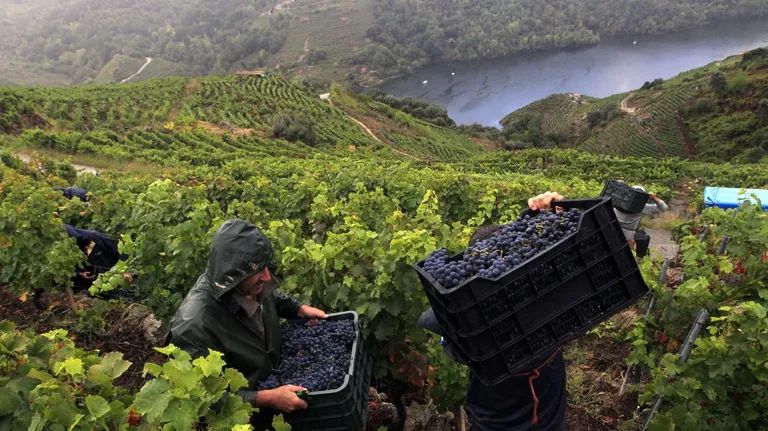
UNESCO has halted, for now, the bid by Ribeira Sacra in northwestern Spain to join the World Heritage list, sending the nomination back to Spanish authorities for revisions after a divided debate at the World Heritage Committee meeting in Busan, South Korea.
The decision, taken Monday by the 21-country committee, does not close the process. Instead, it gives Spain and the regional government of Galicia time to strengthen the file and return with a revised proposal next year. Alfonso Rueda, president of the Galician regional government, said after the vote that “we have one year to try again,” adding that officials would intensify their work and seek a successful outcome in the next round.
Ribeira Sacra, a river-carved landscape between the provinces of Lugo and Ourense, was Spain’s only candidate among the 33 sites under review at this year’s session. The nomination was presented under the name “Water Landscape of Ribeira Sacra,” with local and national authorities arguing that the area’s identity has been shaped over centuries by monastic settlement, terraced farming, hydraulic systems and wine growing on steep slopes known as heroic viticulture.
The candidacy arrived in Busan under pressure after a negative advisory report issued in March by Icomos, the International Council on Monuments and Sites, which evaluates cultural nominations for UNESCO. That report acknowledged the territory’s good state of conservation and the quality of its tourism infrastructure, but questioned whether Ribeira Sacra met the threshold of outstanding universal value required for inscription.
Icomos argued that the landscape had not been shown convincingly as an exceptional example of traditional human settlement or land use. It also raised doubts about whether the site met UNESCO standards for integrity and authenticity. Among its objections was the role of 20th-century reservoirs on the Miño and Sil rivers, which it said could not clearly be presented as part of an organic historical continuity with older water-related structures such as mills.
Spanish and Galician officials had insisted before the vote that the Icomos opinion was not binding. They pointed to previous cases in which sites were inscribed despite unfavorable advisory recommendations. But Monday’s debate showed that committee members remained split over how far they were willing to go.
In the end, the committee approved what is known as a technical referral, considered the least severe outcome when a nomination is not immediately inscribed. According to reports from the meeting, a bloc of 15 countries backed that formula, led by Peru. Other members, including Switzerland and the Czech Republic, favored a deferral, a tougher measure that would have forced Spain to substantially rebuild the nomination from scratch.
The adopted text asks Spain to provide a clearer and more detailed explanation of the site’s defining attributes. It also calls for continued documentation and mapping of hydraulic heritage elements, vernacular architecture and intangible traditions linked to water culture in Ribeira Sacra. In addition, UNESCO wants a fuller presentation of how the landscape evolved over time and how its different components fit together as a living cultural landscape.
The resolution also requests that Spain invite an advisory mission from Icomos to visit the area and help prepare the additional information needed before the nomination is reviewed again. Icomos welcomed that outcome and said it was ready to work with Spanish authorities on improving the file.
That distinction matters for Galicia because Ribeira Sacra has long been promoted as one of Spain’s most singular cultural landscapes. The region stretches along the canyons of the Miño, Sil and Cabe rivers and is known for vineyards planted on narrow terraces cut into steep slopes, Romanesque monasteries and churches, old villages and a dense network of water-related structures. The nomination dossier describes more than 1,500 years of continuous occupation shaped by eremitic and monastic traditions. It includes 83 documented monasteries, 668 traditional mills, sacred springs, drainage systems for terraced agriculture, 19th-century hydroelectric facilities and 20th-century dams.
For Galicia, inscription would have made Ribeira Sacra its fifth World Heritage site after Santiago de Compostela’s historic center, the Routes of Santiago de Compostela, Lugo’s Roman walls and the Tower of Hercules in A Coruña.
The road to UNESCO has already been long and uneven. In 2021, Spain and Galicia withdrew an earlier version of Ribeira Sacra’s candidacy before it came up for examination, after another unfavorable Icomos assessment. Authorities then reworked the proposal around water as the central theme of the landscape. The revised file was later endorsed by Spain’s national heritage council and formally advanced with support from both Madrid and Santiago de Compostela.
Monday’s debate in Busan underscored both that support and the limits of it. Several countries initially backed an amendment favorable to immediate inscription or a softer reading of the case, but consensus did not hold. After hours of discussion and internal consultations, committee members settled on referral as a compromise between outright rejection and full inscription.
The decision leaves local officials trying to frame the result as a setback but not a defeat. Tourism leaders in Ribeira Sacra said they viewed UNESCO’s demands as technical adjustments rather than a dismantling of the candidacy. Regional authorities also stressed that referral keeps alive a realistic path toward inscription within a year.
Political reaction in Galicia quickly turned to what should happen next on the ground. The Galician Nationalist Bloc called on Rueda’s government not only to improve the UNESCO paperwork but also to revise its policies in Ribeira Sacra itself. Lawmaker Iago Tabarés said preservation should go beyond seeking an international label and should focus on making the area a place that is actively protected, revitalized and lived in.
That point echoes one of Icomos’s concerns: depopulation. The advisory body described Ribeira Sacra as vulnerable to demographic decline, an issue that affects many rural landscapes across Spain. UNESCO’s recommendations also refer to maintaining efforts tied to demographic revitalization, preserving traditional farming practices and conserving terraces that are central both to wine production and to the visual identity of the region.
Those terraces are among Ribeira Sacra’s best-known features for visitors. The area has built much of its recent tourism image around river cruises through dramatic canyons, monastery routes and wines grown on near-vertical slopes where mechanization is limited and harvesting often must be done by hand. That combination has helped turn Ribeira Sacra into one of Galicia’s strongest food-and-wine destinations in recent years.
UNESCO did note strengths in conservation and visitor infrastructure, which may help Spanish authorities as they prepare their revised submission. But Monday’s decision made clear that scenic appeal and tourism development are not enough on their own. What UNESCO wants now is a tighter demonstration that Ribeira Sacra’s agricultural systems, settlement patterns, monastic traditions, hydraulic works and intangible heritage form one coherent cultural landscape with exceptional global significance.
For Spain, that means returning with more evidence, sharper historical framing and stronger links between each part of the territory’s story. For Ribeira Sacra’s wineries, monasteries, villages and tourism operators, it means another year of waiting while one of Europe’s most distinctive river landscapes tries again for recognition that remains within reach but still unconfirmed.
