Veneto bars stored 2025 Pinot Grigio from the Delle Venezie DOC market
The decree requires reclassification of reserve stocks to protect the appellation from oversupply and price erosion
Tuesday, November 3, 2026
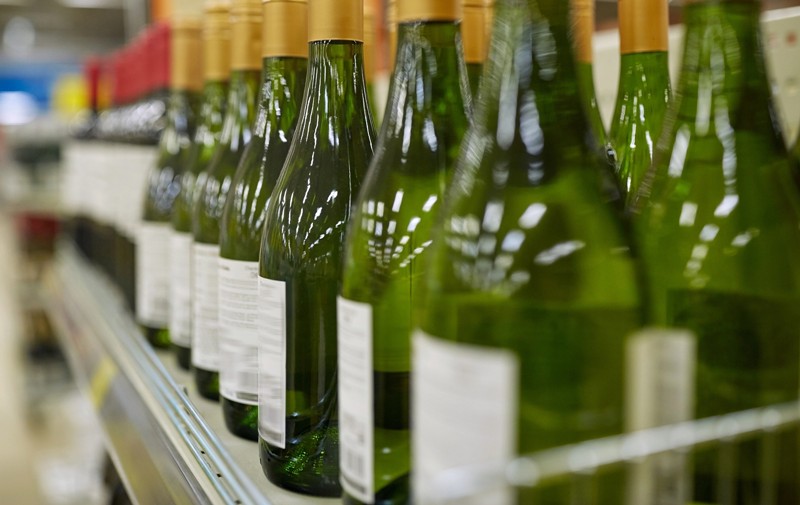
Authorities in Italy’s Veneto region have ordered the reclassification of 2025 Pinot Grigio stocks that are still under administrative storage, blocking those volumes from being sold as Pinot Grigio DOC Delle Venezie.
The measure was set out in regional decree No. 20022 of October 16 and published in the official regional bulletin on October 23. Veneto adopted it in agreement with the Friuli-Venezia Giulia region and the autonomous province of Trento, the three territories that make up the Delle Venezie appellation. The decision followed a request from the DOC Delle Venezie consortium, which said the move was needed to manage supply and protect the value of the denomination.
The order applies to wine, must or grapes from the 2025 harvest that had already been placed under administrative storage under earlier output controls. Those volumes had originally been intended for the DOC, but they will now have to move into other categories allowed under Italian wine law instead of returning to market under the Delle Venezie name.
Under the new decree, the product must be reclassified under Article 38 of Law 238/2016, Italy’s consolidated wine law. That means the affected lots may still be sold, but only if they meet the legal requirements for another commercial category. Depending on the case, that could mean wine with or without a geographic indication, or another designation of origin if all conditions are met. The decree does not require the wine to be destroyed or sent automatically to distillation.
The decision changes the outcome of a supply management system that had been put in place for the 2025 harvest. At that time, the Pinot Grigio DOC Delle Venezie production system reduced the maximum yield from 180 quintals of grapes per hectare to 170. Of that total, only 150 quintals per hectare could be used immediately for wine that could be marketed as DOC. The remaining 20 quintals were placed under administrative storage, to be held back pending a later market decision.
That later decision has now arrived, and it was not a release of the stored product. Instead, the decree says any 2025 volumes still under storage must leave the DOC channel. For producers, that matters because a DOC label can have a direct effect on price, market position and export potential. Reclassification does not remove the possibility of a sale, but it can change the value of the product and the segment in which it can be placed.
The decree assigns implementation to Triveneta Certificazioni, the control body responsible for handling the required procedures.
The consortium formally submitted its request on October 8 after talks with producer organizations and other parts of the supply chain. According to the regional documentation cited by the trade press outlet I Grandi Vini, the request was backed by a board resolution dated September 21, a technical and economic report, and minutes from a meeting with producer groups on September 28.
The stated reason was market conditions. Regional authorities said the available volumes needed to be managed to avoid possible depreciation of the denomination. In practical terms, that means giving up the chance to market part of the 2025 product as DOC in order to limit supply and support the market position of the wine that remains within the appellation.
The case is significant beyond the local regulatory issue because Delle Venezie is one of Italy’s largest Pinot Grigio denominations and is heavily exposed to foreign markets. Any forced shift of DOC stocks into lower or different categories could affect inventories, pricing and revenue expectations across the wine trade. For importers, distributors and other beverage businesses, the move may alter the volume and value mix of a major export-oriented Pinot Grigio stream, even if the full commercial effect will depend on where the reclassified wine is ultimately placed.
The decree does not state the total volume affected, and it does not provide an estimate of the economic consequences for producers. That leaves an important uncertainty for wineries and traders trying to assess the financial effect of the change.
The reclassification order also fits into a broader strategy already adopted for the 2026 harvest. Earlier measures for that vintage reduced the maximum yield again, this time to 160 quintals per hectare, with 30 quintals set aside under administrative storage. The system is therefore continuing to use preventive supply controls for current production while also redirecting unsold or restricted stocks from the previous harvest.
A separate 2026 measure also set an ordinary window from October 1 to November 30 for Pinot Grigio to move from other territorial DOCs into DOC Delle Venezie, with a later derogation for volumes intended for vintage blending. Together, those rules show that the denomination’s supply management is not limited to wine originally claimed under Delle Venezie, but also extends to possible incoming product from other DOC areas.
The latest decree underscores the extent to which production planning has become a central tool for large wine appellations that depend on export demand. In this case, the three regions behind Delle Venezie have chosen to keep part of the 2025 harvest out of the DOC market entirely rather than risk adding more volume under a name they are trying to defend commercially.