Vega Sicilia unveiled Deiva 2024 as its first Spanish white wine
The producer opened a new Galicia winery after investing 20 million euros in an eight-year Albariño project
Wednesday, October 28, 2026
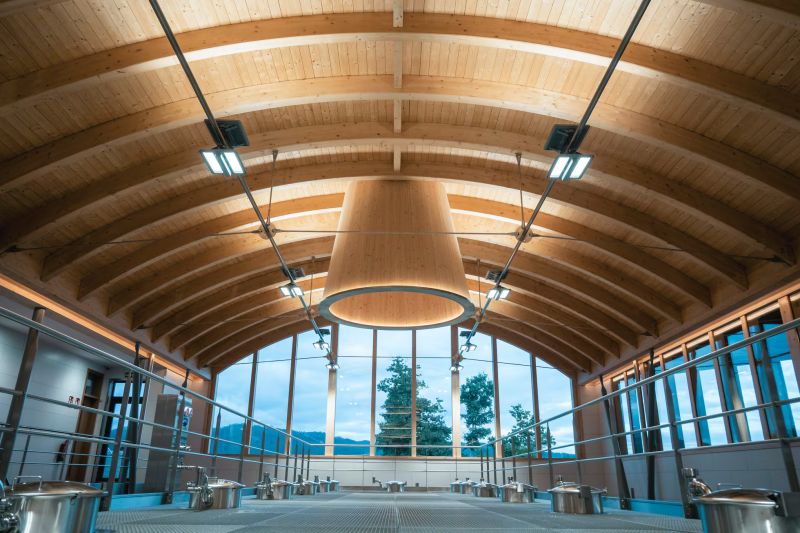
Vega Sicilia, one of Spain’s best-known wine producers, opened a new winery in Galicia on Wednesday, October 28, and presented its first commercially available white wine, marking the end of an eight-year effort to establish a foothold in the Rías Baixas region.
The debut wine, Deiva 2024, is the first white wine made by the Tempos Vega Sicilia group in Spain. It is a 100% Albariño aged for 18 months and produced from the company’s own vineyards in Rías Baixas. The wine takes its name from the waters of the Deva River, which reach some of the vineyards in the Condado do Tea area through traditional Galician irrigation channels known as levadas.
Pablo Álvarez, chief executive of Tempos Vega Sicilia since 1990, introduced the project to specialized media in Crecente, in the province of Pontevedra, alongside members of his team. The opening gives Vega Sicilia a presence in one of Spain’s most important white wine regions and adds a new category to a portfolio long associated with red wines.
The project began in 2018, when the company started quietly buying vineyard land in Galicia. Álvarez said the purchases were made discreetly, as Vega Sicilia had done in other regions, to avoid driving up prices. He said the group has paid as much as 240,000 euros per hectare in an area where land is expensive and often tightly held by local owners.
Eight years later, the company has assembled 24 hectares of vineyards spread across several sites in Galicia. Those include Caxín and Sisán in Val do Salnés, an area with stronger Atlantic influence, and Palancas, Framilo and Valexie in Condado do Tea, which has a more continental climate. The company has also completed a new winery in Crecente, where it says its initial investment has reached 20 million euros.
The building sits on elevated ground facing Portugal and was designed by Arkipolis Arquitectura y Urbanismo, a Valladolid-based firm that has worked on other Tempos Vega Sicilia properties. The studio previously designed the Alión winery in Valbuena de Duero and Pintia in San Román de Hornija, and also handled the restoration of Vega Sicilia’s barrel hall in Valbuena de Duero.
Although the winery has now opened, Deiva 2024 was not produced there. The company said it made that first vintage in other wineries in the region while the new facility was being completed. Gonzalo Iturriaga de Juan, technical director of Tempos Vega Sicilia, said that process helped the team learn about the area and shape the winery around the needs of its vineyards.
The new facility includes 26 stainless steel tanks in different sizes, ranging from 4,000 liters to 32,000 liters, allowing the company to ferment fruit from each parcel separately. It also includes aging spaces equipped with concrete eggs, granite vessels and large oak foudres, giving the winemaking team several options as it refines the style of Deiva in coming years.
Álvarez said the move into white wine grew from a long personal interest in the category. He said the company had previously explored the possibility of acquiring a winery in Jerez but was unable to complete a deal. After that effort failed, he turned his attention to Albariño, which he described as one of Spain’s most important grape varieties and one with strong long-term potential if producers across the region continue to raise quality.
That view helps explain why the group chose to invest in Galicia rather than release a one-off white wine from purchased fruit. Instead, Vega Sicilia spent years building a vineyard base and a winery before bringing its first bottle to market. The strategy reflects the company’s broader approach since the Álvarez family bought the historic Vega Sicilia estate in Ribera del Duero in 1982. Since then, the group has expanded to include Alión in Ribera del Duero, Pintia in Toro, Macán in Rioja with the Rothschild family as a partner, and Oremus in Hungary.
The company said the 2024 growing season in Rías Baixas was shaped by a warm, wet winter, a rainy spring and a hotter, drier summer, especially in August, which helped ripening. After several years of trials, Vega Sicilia selected the 2024 vintage as the first it considered ready for commercial release.
Álvarez said the wine is only a starting point and that the company expects to improve it over time. His team has described the opening in Crecente and the release of Deiva as a long-term project rather than a quick expansion into a fashionable region.
Deiva 2024 is expected to reach specialized wine shops in February 2027 at a price of about 40 euros a bottle. The release will place Vega Sicilia, a producer long defined by some of Spain’s most sought-after reds, into the market for high-end Spanish white wine for the first time.