E.U. Governments Keep Wine in Farm Aid Plan Through 2034
The Council adopted a negotiating position preserving mandatory support for producers, with the budget left to broader 2028-2034 talks
Monday, October 26, 2026
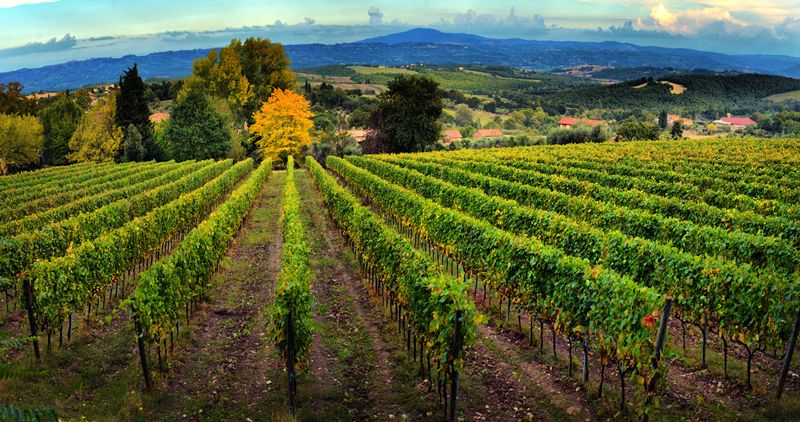
European Union member states have agreed to keep wine in the bloc’s farm support framework for the 2028-2034 period, preserving a key pillar of aid for producers even as the size of that support remains unsettled and a French growers’ union pushes for a different model.
The decision came on Oct. 19, when the Council of the EU adopted what it called a partial negotiating position on the rules governing agricultural markets under the next Common Agricultural Policy. Under that position, sectoral support programs would be mandatory for apiculture, fruit and vegetables and, “in certain circumstances,” the wine sector, with possible exemptions for countries where wine production is limited.
For wine producers, the step matters because the current system helps pay for vineyard restructuring, winery and cellar investments, and export promotion. The shape of that support in the next budget cycle could affect how European wine producers finance climate adaptation, modernization and sales outside the EU at a time of weaker consumption in some domestic markets.
The Council’s position does not set a budget for wine. That question is being left to the wider negotiation over the EU’s 2028-2034 multiannual budget, meaning the political agreement announced this month does not yet guarantee how much money the sector will receive.
In France, the current wine support program is worth about €270 million a year, according to the French trade press report that first detailed the latest debate. Those funds now cover measures such as replanting and restructuring vineyards, investment in production facilities, export promotion and the distillation of byproducts.
The Oct. 19 position marks a change from a draft circulated in September under the Irish presidency of the Council, according to sector reporting cited by Vinabox. That earlier text would have made the wine program mandatory only in countries that recognize producer organizations. The new position makes support for wine the general rule, while allowing member states to seek exemptions in their national plans if their wine sectors are very small.
The updated text also broadens who can receive support. Producer organizations would no longer be the only possible beneficiaries, and promotion is explicitly included among the eligible interventions, according to reporting on the draft changes.
Wine groups welcomed the shift, while some lawmakers said the move did not go far enough. Daniela Ida Zandonà, a Brussels representative of the European Federation of Origin Wines, said the Council text offered important guarantees, including a mandatory envelope for wine, broader access to support and the inclusion of measures such as promotion. She described it as a major improvement from the situation two months earlier, according to comments reported in the French trade press.
French member of the European Parliament Eric Sargiacomo, vice chair of Parliament’s agriculture committee, gave a much more skeptical assessment. He said the obligation to fund wine remained “largely fictitious” without a dedicated amount attached, and warned that parts of a broader wine package could still be lost in the next stage of talks.
That next stage is still to come. The Council’s position must be negotiated with the European Parliament and the European Commission, and the final funding level for wine will depend on the wider budget settlement. One concern for parts of the industry is that a nominally mandatory program without a guaranteed allocation could leave the sector exposed if money is compressed or folded into broader national plans.
The political debate widened three days after the Council decision, when the Modef farmers’ union in France’s Gard department called for the current wine support framework to be scrapped altogether. At a post-harvest news conference in Nîmes on Oct. 22, local union leader Xavier Fabre argued that the wine-specific system should be replaced by a flat payment per hectare, which he estimated at about €400.
Fabre’s calculation was based on dividing the current annual French wine support envelope of €270 million by what he said was roughly 670,000 hectares of vineyards. Using a different surface estimate changes the result. French agricultural statistics service Agreste counted 741,851 hectares of wine grape vineyards in 2025, which would lower the payment to about €364 per hectare.
Modef is not arguing that a hectare-based payment would solve growers’ problems on its own. Fabre also called for a state-guaranteed minimum price, saying wine growers are short about €1,500 per hectare to reach breakeven. In his view, the current system sends mixed signals by financing production capacity in some cases and then paying for crisis distillation or vine removal in others.
He also criticized the distribution of existing aid, saying investment support often benefits larger groups and that export aid tends to favor merchants rather than family growers. The union says France’s vineyard area has fallen to about 673,000 hectares from 800,000 two decades ago, though that figure is lower than the latest Agreste data.
The dispute reflects two different views of how public money should be used in Europe’s vineyards. Supporters of the current structure say targeted aid helps producers adapt to extreme heat, upgrade facilities and compete abroad. That is a sensitive issue for the broader drinks industry, because the rules being negotiated now could influence future financing for vineyard conversion, winery investment and overseas promotion across the European wine business. Critics such as Modef say the present model is too complex and does not do enough to stabilize farm income directly.
The debate comes as French wine regions face both market and production pressure. Vinabox, citing Agreste, said the 2026 harvest in Languedoc-Roussillon was expected to rise 20% from a year earlier, while separate crisis support measures, including distillation, have been criticized by growers as falling short of sector needs.
For now, the main point is that the Council has kept wine inside the structure of mandatory sectoral intervention under the next farm policy framework, but with possible derogations and no final budget. Whether that becomes meaningful support or a thinner commitment will be decided in the coming negotiations between the Council, Parliament and Commission, and in the larger fight over the EU’s 2028-2034 budget.